



APTA: Congress budget cuts will jeopardize transit investment
President William A. Millar said that proposed cuts to public transportation and high-speed rail made by the House Appropriations Committee to H.R. 1 will lead to fewer American jobs, fewer safety improvements for public transit users, and will decrease the U.S.’s ability to build for the future.

The American Public Transportation Association (APTA) is extremely concerned about the cuts the House Appropriations Committee made in public transportation investment in H.R. 1, the federal legislation that will appropriate funding for the remainder of FY 2011.
“The proposed cuts to public transportation and high-speed rail made by the House Appropriations Committee will lead to fewer American jobs, fewer safety improvements for public transit users, and will decrease our country’s ability to build for the future. None of these cuts makes sense,” said APTA President William Millar.
Under H.R. 1, funding for the New Starts Program under the Federal Transit Administration, which provides federal investment for large public transportation improvements, will be decreased by nearly 22 percent. “The New Starts program provides federal capital investment for public transportation projects that expand mobility, create and support American jobs, and help spur economic activity,” said Millar.
Every $1 billion invested in public transportation creates and supports 36,000 jobs. Every dollar invested in public transit generates $4 in economic returns.
The House Appropriations Committee proposal eliminates funding for positive train control (PTC) in the FY 11 budget and rescinds all funding in the FY 10 budget, effectively zeroing out two years of federal investment in the mandated PTC safety equipment that commuter rail lines must, by law, implement by 2015.
Noting that safety is and should always be the number one priority for public transportation, Millar said, “Implementing positive train control technology is a federal safety mandate which has been significantly underfunded. Now it is an unfunded mandate with a looming deadline.”
Pointing out that federal funding for Washington Area Metropolitan Transit Authority was also eliminated, Millar said, “Totally eliminating the investment of $150 million for the Washington Metro flies in the face of the findings by the National Safety Transportation Board of needed, critical safety upgrades.”
Nearly $3 billion in additional programs, including high-speed rail, were also eliminated for FY 11. Of this amount, $2.5 billion was previously appropriated for high-speed rail in 2010.
“Eliminating funds for high-speed rail is just wrong,” said Millar. “With a growing population and worsening highway and aviation congestion, we need to have a vision that will address transportation needs in the future. High-speed rail is a forward-looking transportation initiative that needs to be put in place now, so that generations to come will have a better transportation system, while creating hundreds of thousands of much-needed American jobs. Now is the time to invest in high-speed rail, not eliminate it.”
More Paratransit
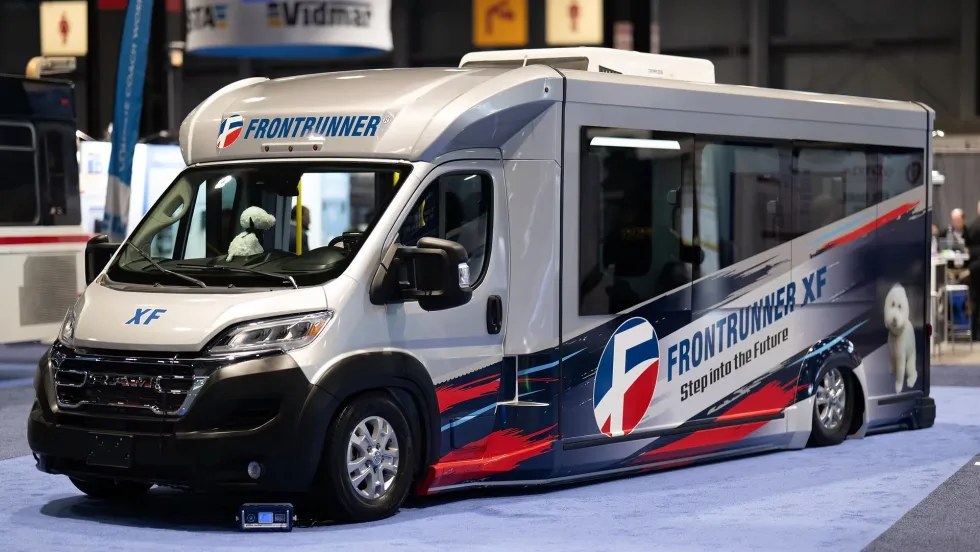
Frontrunner Bus Group Introduces XF Low-Floor Bus with Enhanced Accessibility
The new mid-sized bus features a full flat-floor design, eight-inch curbside step-in height, and zero-entry rear ramp to improve passenger access and operational flexibility.
Read More →
Scenes from APTA TRANSform & EXPO 2026
Transit leaders, manufacturers, and industry professionals gathered in Chicago to explore new technologies, share ideas, and discuss the future of public transportation.
Read More →
Indian River Transit’s Community-Focused Approach Earns National Recognition
Named APTA’s 2026 Outstanding Public Transportation System in its size category, Florida’s Indian River County transit system continues to grow ridership through fare-free service and a focus on evolving community needs.
Read More →
Everett Transit, Community Transit Outline Consolidation Agreement
The proposed agreement calls for a 50% increase in bus service in Everett, a new microtransit zone, continued paratransit service, and the transfer of Everett Transit operations to Community Transit.
Read More →
Driving Smarter Paratransit
John Hanlon shares how AlphaRoute is leveraging AI-powered technology to help paratransit providers optimize operations, support frontline staff, and enhance the rider experience.
Read More →
People Movement: Dan Dipert Coaches Adds Third-Generation Leader, Keolis Names New Valley Metro VP/GM, and More
In this edition, we also cover recent appointments and announcements at the Wabtec, SilverRide, HNTB, and more, showcasing the individuals helping to shape the future of transportation.
Read More →
Biz Briefs: RIPTA Unveils New Frontrunners, Clevland RTA Adds New Siemens, and More
In METRO's latest installment, we take a look at recent news from Siemens, Prevost, Dodge, and more partnerships making headlines across the transportation sector.
Read More →
King County Metro Makes ADA Paratransit Easier to Navigate
METRO's Innovative Solutions Award winner replaces complex service-area descriptions with an accessible, interactive map that puts paratransit information directly in customers’ hands.
Read More →
Jacksonville’s NAVI Project Charts a New Course for Autonomous Public Transportation
Through its NAVI program, JTA is showing how autonomous vehicles, intelligent infrastructure, and coordinated operations can work together to deliver everyday public transportation.
Read More →
Driving Smarter Paratransit
John Hanlon shares how AlphaRoute is leveraging AI-powered technology to help paratransit providers optimize operations, support frontline staff, and enhance the rider experience.
Read More →