



Baylor facility earns LEED certification
Is the first university in Texas to earn a coveted environmental rating by meeting stringent standards set out by an international building council.

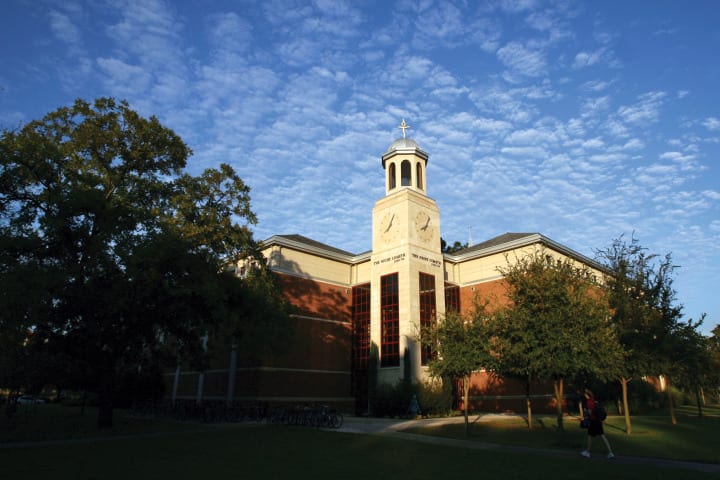
Photo courtesy Baylor University.
[IMAGE]Baylor-University-full.jpg[/IMAGE]Baylor University has become the first university in Texas to earn a coveted environmental rating by meeting stringent standards set out by an international building council.
Baylor's George W. Truett Theological Seminary has been awarded a Leadership in Energy and Environmental Design (LEED) certification by the U.S. Green Building Council in its existing buildings rating system.
"Baylor is committed to sustainable construction and being a leader locally and nationally in earning LEED certification for existing buildings and new construction," Dr. Reagan Ramsower, vice president for finance and administration, said. "I am delighted that Baylor has the first fully certified LEED designation in Waco and McLennan County."
The 66,000-square-foot structure was just two points away from snaring a "silver" rating, a step above certification, said Don Bagby, Baylor's director of facilities management. Buildings may earn additional points to achieve silver, gold or platinum status, he said.
Truett is the sixth Texas building to get the LEED certification for existing buildings. Internationally, 235 buildings have earned the rating, said Ashley Katz, communications manager for the Washington-based council, a nonprofit organization.
Truett also is the eighth higher education project internationally to earn certification.
In a separate category for new construction, 1,749 buildings internationally have earned certification, she said.
But a LEED certification is more difficult for an existing building to earn than for a new structure to do so, said Bill France, operational excellence manager for ARAMARK Higher Education, who worked with Baylor on the project. ARAMARK, a Fortune 500 company, addresses issues of environmental stewardship and employee advocacy.
"It's far easier to design a green building from scratch than to go back and retrofit and modify an existing building to make it operate as a green building," he said.
The seminary was completed in 2002, Bagby said.
"When you're talking about a building that's going to be around 50 or more years, we want to encourage people not just to build green but to keep it green," said Steve Guenther, associate vice president for operational excellence with ARAMARK Higher Education. "There's going to be ongoing positive environmental impact, benefits for building occupants and operating cost savings at the seminary -- a significant return on the investment."
Baylor tackled its task at Truett in early spring of 2008, Bagby said. "This means using energy and water efficiently, having a recycling program, paying attention to cleaning procedures and chemicals, changing or tightening the schedules of the heating and air conditioning systems," he said adding that transportation figured into the equation, too.
"A building should be accessible as far as using walkways, having bicycle racks and being accessible to mass transit," Bagby said. "We want to use energy wisely not only in the building, but in getting to and from the building."
Precision was vital for certification, said Ken Pollard, Baylor's physical plant director and ARAMARK resident district manager for facilities service.
More than 20 staff and faculty members spent hundreds of hours measuring, documenting and changing procedures, he said. He also led a team of three off-site ARAMARK employees and nine Baylor managers who oversaw grounds, energy, finances and customer service aspects of the project.
"Meters were installed, and inspections were made," Pollard said. "We weighed how much material was being recycled, how much water we used on the plants. We looked at places where we could use outdoor lighting instead of inside.
"There were just a multitude of things," he said. "There was some overtime, because we had to do some studies at night."
Housekeeping staff saw to it that green products were used and trash recycled, Pollard said. Truett personnel also monitored the number of people in classes and hours people were in the building.
Besides the environmental and money-saving benefits of earning certification, the achievement affects employee well-being, Guenther said.
For example, "several studies have shown that people have more positive feelings about work if they have natural light and the ability to see outside," he said.
"The standards encouraged builders to work on things that were proven," Guenther said. "Architects and contractors have a certain way of doing things, and human nature is to keep doing it that way. People may not change what they're doing without encouragement, even if it makes sense."
As respect grew for LEED standards, contractors and clients seeking renovation of existing buildings also wanted to join the movement, Guenther said. A category for existing buildings was established in 2004.
"This was a stretch on our people, but it was worth all the hard work," Pollard said. "Next year, we want to go even further and get a silver for Truett."
More Technology

From Hardware to Digital Partner: Luminator Charts Its Next Chapter
CEO Magnus Friberg discusses Luminator’s shift toward becoming a digital partner, the growing importance of software and interoperability, and how AI can help agencies improve operations and passenger experience.
Read More →
Beyond the Checklist: A Structured Approach to Transit Maintenance
Reliability-Centered Maintenance helps transit agencies move beyond routine checklists to focus limited resources on the assets and failures that have the greatest impact on safety, reliability, and service.
Read More →
NJ TRANSIT Advances Bus Technology Upgrades Across Statewide Fleet
More than 1,500 buses now feature upgraded technology designed to improve arrival predictions and provide free Wi-Fi, with deployment expected to reach nearly 2,000 buses by the end of 2026.
Read More →

Building a Flexible Path to Transit Electrification
John Hroncich discusses BAE Systems’ modular and scalable approach, lessons learned from decades of real-world operations, and how agencies can identify electrification strategies that fit their fleets.
Read More →
Biz Briefs: Alstom Lands Canadian Contract, LYT to Supply California TSP, and More
In METRO's latest installment, we take a look at recent news from Complete Coach Works, Beep, FlixBus, and more partnerships making headlines across the transportation sector.
Read More →
From Legacy Silos to Conversational Intelligence
What if transit leaders could ask any operational question and get a trusted answer in seconds? Conversational AI is transforming how agencies use their data.
Read More →
USDOT Announces Rail Vehicle Replacement Grants, Chattanooga AV Shuttle Funding
More than $191 million in federal funding will help three transit agencies replace aging rail vehicles and support a new autonomous shuttle service in Chattanooga.
Read More →
Bus Tech Talk: Keeping Transit Technicians Ahead of the Technology Curve
LA Metro’s Obed Mejia discusses technician training, evolving maintenance technology, fleet replacement, and strategies for getting the most out of today’s transit fleets.
Read More →
Biz Briefs: RIPTA Unveils New Frontrunners, Clevland RTA Adds New Siemens, and More
In METRO's latest installment, we take a look at recent news from Siemens, Prevost, Dodge, and more partnerships making headlines across the transportation sector.
Read More →
Why Simulating Pedestrian Movement Has Become Essential for Modern Rail Stations
Pedestrian microsimulation is helping rail planners identify bottlenecks, test station designs, and prepare complex transit hubs for growing passenger volumes.
Read More →