




RELATED: MBTA, STV, partners launch new Boston Landing Station
Boston Mayor unveils $5M plan to boost city's transportation
The investments will contribute to the ongoing implementation of the 58 projects and policies identified in Go Boston 2030, which is the city’s long-term transportation plan unveiled in 2017.
April 3, 2018
The investments will contribute to the ongoing implementation of the 58 projects and policies identified in Go Boston 2030, which is the city’s long-term transportation plan unveiled in 2017.
MBTA
4 min to read
The investments will contribute to the ongoing implementation of the 58 projects and policies identified in Go Boston 2030, which is the city’s long-term transportation plan unveiled in 2017.
MBTA
Building on his commitment to create a safer, more equitable transportation future for Boston, Mayor Martin J. Walsh announced a $5 million annual investment included in the city's recommended Fiscal Year 2019 (FY19) operating budget and capital plan aimed at upgrading transportation infrastructure to benefit all modes of travel. The investments will contribute to the ongoing implementation of the 58 projects and policies identified in Go Boston 2030, which is the city’s long-term transportation plan unveiled in 2017. These proposed investments complement the transportation investments in the full operating budget and capital plan.
"Getting from point A to point B should be safe, affordable, and reliable -- and this strategy is a bold, progressive way to ensure transportation in Boston is equitable for everyone," said Mayor Walsh. "Last year, we promised to make transportation in Boston better for all with our Go Boston 2030 plan, and these improvements and investments do just that. We're committed to creating a strong transportation network by investing in both short and long-term projects that will create greater transportation access that is reliable and safe for all users of our city's streets."
As the funding that the city provides to the state for public transit continues to increase, Boston must utilize its limited revenue streams to support its own new projects and plans. To increase investments in Boston's streets and transportation options, this package of investments is funded through a strategic set of increases to its current parking fine structure, designed to reduce congestion and emissions, increase cleanliness, and improve the parking experience.
Altering the city's current parking fines will encourage better compliance with existing laws and bring Boston's fines in line with some peer U.S. cities. For example, the fine for double parking in Boston is currently $30 for Zone B and $45 for Zone A and is recommended to be increased to $55 and $75 respectively. However the double parking fine is already significantly higher in San Francisco at $110, New York City at $115, and Chicago at $100. The City of Boston has not raised parking ticket fines in 10 years. The expected new revenue from the modified parking fees will be invested back into city streets.
The estimated increase in revenue through the updated fines will be $5 million, with that new revenue reinvested back into priorities identified by constituents through the Go Boston 2030 plan. These include:
Strengthening Bus Transit
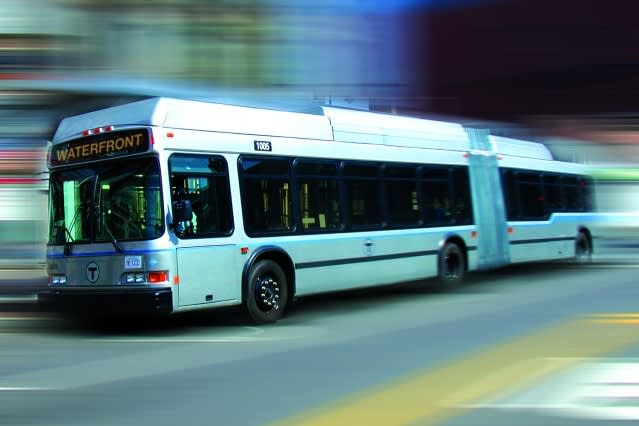
Through the recommended budget, the city will launch its first "Transit Team." This team will work with the MBTA to improve public transit, with a particular focus on bus service, which services 350,000 trips each day.
Through the Transit Team, the city will work with the MBTA to identify key bus corridors and implement strategies such as transit signal priority and dedicated bus lanes to improve the bus riding experience.
The transit team is expected to include:
A transit coordinator and an additional staff person to design bus lanes and implement transit signal improvements.
Four operations staff focused on managing dedicated bus lanes in the City of Boston.
Among the strategic bus corridors identified in Go Boston 2030 are Washington Street between Roslindale Square and Forest Hills, Washington Street Silver Line service, and Brighton Avenue, Blue Hill Avenue, and North Washington Street.
State Representative Russell Holmes, who co-chaired the Go Boston 2030 advisory committee, said, "The Mattapan neighborhood realizes heavy bus ridership, but there is no direct public transportation connection between Mattapan and the Longwood Medical Area. Building a direct connection will have dual benefits, providing the community with reliable bus access to area medical institutions, as well as offering Mattapan and Dorchester residents with a quick connection to the many economic opportunities available in the LMA."
Increasing Safety for Walking & Biking
The top priority in Go Boston 2030 is increasing safety on our streets. As part of this recommended budget, the city proposes a series of investments to accelerate our ability to deliver on that priority, including:
An additional $750,000 for the Walkable Streets program, nearly doubling the city's investment in building out a better pedestrian network.
$400,000 for the Green Links program, a new dedicated source of funding for filling missing bike and pedestrian connections to parks and paths, such as three that are currently underway: the Roxbury-Fenway Connector linking the Southwest Corridor and the Emerald Necklace; the Roslindale Gateway path; and a multi-use path connecting Fenway and Yawkey Stations.
An additional $300,000 for the strategic bike network program, raising the annual investment to $1.2 million for building out high quality bike infrastructure in Boston.
Two new planners and two new engineers to focus on designing and implementing key Vision Zero programs, such as Neighborhood Slow Streets, and efforts to make quick improvements to some of Boston's most challenging intersections.
Up to four new maintenance & operations personnel to ensure that infrastructure added to improve street safety, such as pedestrian delineators and flex posts, are kept in a state of good repair.
Through these investments, and the investments the city has already made in its capital budget, it expects, over the next four years, to build 15 Neighborhood Slow Streets areas, complete 15 miles of protected bike lanes, and make improvements to 15 of the most challenging intersections.
More New Mobility

From Hardware to Digital Partner: Luminator Charts Its Next Chapter
CEO Magnus Friberg discusses Luminator’s shift toward becoming a digital partner, the growing importance of software and interoperability, and how AI can help agencies improve operations and passenger experience.
Read More →
Biz Briefs: Alstom Lands Canadian Contract, LYT to Supply California TSP, and More
In METRO's latest installment, we take a look at recent news from Complete Coach Works, Beep, FlixBus, and more partnerships making headlines across the transportation sector.
Read More →
CharterUP’s Armir Harris on Technology, AI, and the Future of Group Mobility
In a recent episode of METROspectives, CharterUP Founder/CEO Armir Harris discussed the company’s evolution from an online charter bus marketplace into a technology platform supporting public- and private-sector mobility and much more.
Read More →
Jacksonville’s NAVI Project Charts a New Course for Autonomous Public Transportation
Through its NAVI program, JTA is showing how autonomous vehicles, intelligent infrastructure, and coordinated operations can work together to deliver everyday public transportation.
Read More →
Biz Briefs: Luminator Marks Milestone and More
From manufacturers and suppliers to transit agencies and motorcoach operators, these updates offer a snapshot of the projects, partnerships and business moves driving the industry forward.
Read More →
New Tricks for Old Bureaucracies: Joshua Schank on Making Transit Innovation Stick
Former LA Metro Chief Innovation Officer Joshua Schank discusses why good ideas aren't enough, how transit agencies can overcome resistance to change, and why today's challenges demand more innovation.
Read More →
How DART's GoPass Is Redefining Regional Mobility
Serving 14 transit agencies, GoPass simplifies multimodal travel by allowing riders to plan, pay for, and manage an entire trip through one app.
Read More →
Biz Briefs: OCTA Taps Clean Energy for Hydrogen Station, Stadler to Supply Via Rail Vehicles, and More
From manufacturers and suppliers to transit agencies and motorcoach operators, these updates offer a snapshot of the projects, partnerships and business moves driving the industry forward.
Read More →CharterUP Expands Into New Mobility and Autonomous Transportation
Vice President of New Mobility Stephen Joos discusses how CharterUP is leveraging its nationwide transportation network, technology platform, and autonomous vehicle partnerships to expand into workforce mobility, campus shuttles, and transit solutions.
Read More →
METRO Magazine Announces 2026 Innovative Solutions Awards Winners
Projects Recognized for Advancing Mobility Through Technology, Accessibility, Workforce Innovation, and Operational Excellence
Read More →