



Boston Transit, Partners to Improve Bus Reliability
Up to 50% of transit delays consists of waiting at red lights in signalized intersections and these upgrades have the potential to significantly reduce that time.

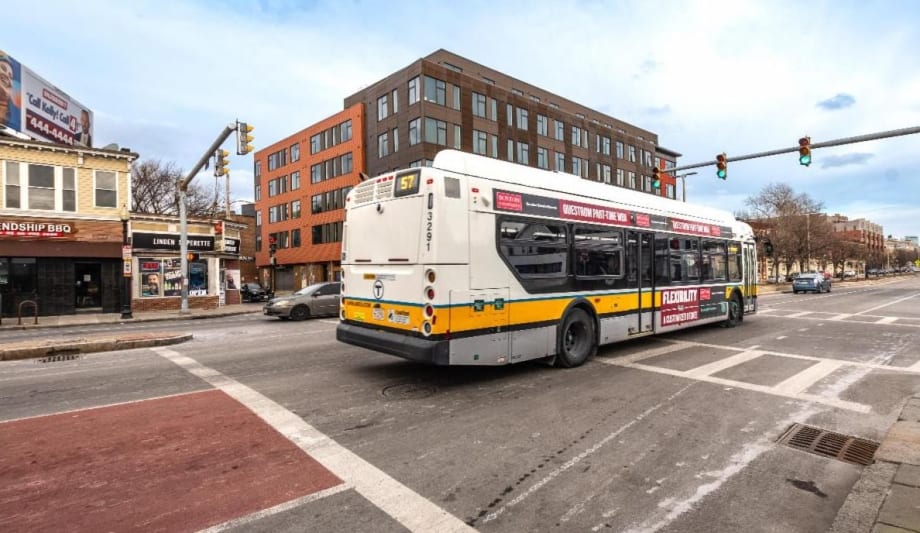
Before scaling the upgrades citywide, the MBTA and City of Boston have been running a three-intersection one-year proof-of-concept test to make sure the system would function properly.
Photo: MBTA
The MBTA and the City of Boston announced a partnership to improve transit reliability and travel times through an upgrade to Boston’s Traffic Management Center that integrates MBTA bus locations into real-time traffic signal adjustments.
Up to 50% of transit delays consists of waiting at red lights in signalized intersections and these upgrades have the potential to significantly reduce that time.
“The MBTA has great municipal partners who continue to collaborate with us on improving bus services, and we’re grateful to the City of Boston for building on the success of the 2019 Brighton Avenue bus lane project to add Transit Signal Priority to the bus lane corridor,” said MBTA GM/CEO Phillip Eng. “This will add to the reliability benefits already felt by riders on Routes 57 and 66 every day, improve bus service for the community, and bring riders to their destinations more quickly.”
Scaling Citywide
Before scaling the upgrades citywide, the MBTA and City of Boston have been running a three-intersection one-year proof-of-concept test to make sure the system would function properly.
The three-intersection transit signal priority (TSP) test is along Brighton Avenue at the intersections of Allston Street, Harvard Avenue, and Linden Street, improving reliability on two key bus routes, the 57 and 66.
Combined, Routes 57 and 66 have about 15,000 daily riders and both routes are in the top 10 for highest ridership with the Route 66 being the third highest.
The traffic signal software was deployed and running as of July 2024.
Since installation, buses traveling through the corridor spent 21% less time waiting at red lights on average and arrived at a green light 5% more often. This resulted in 8% faster travel times with each bus saving an average of 16 seconds for a combined total of 110 minutes saved each weekday.
Travel time savings were even greater during peak hours as each inbound Route 57 trip through the corridor was over 60 seconds faster.
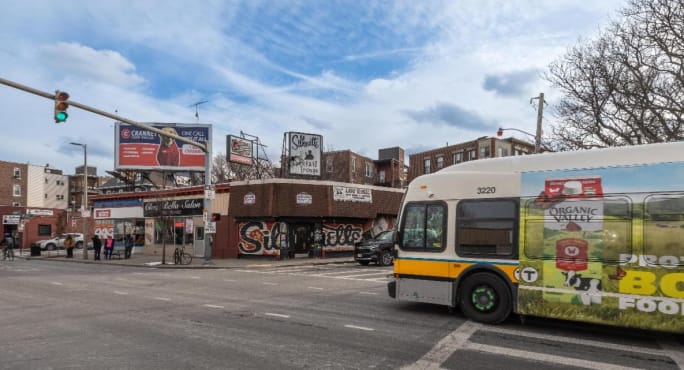
The MBTA Transit Priority Group was created in 2019 to further bus priority projects around the region.
Photo: MBTA
MBTA’s Partners
The MBTA and the City of Boston have been working hand in hand with Boston’s traffic signal vendor, Control Technologies Inc (CTI), to manage the project and update Boston’s traffic management center software to be more flexible in signal timing.
Helping CTI will be LYT who will use their machine-learning TSP technology to track and predict the bus location, enabling Boston’s traffic management center to be able to prioritize a green light for the bus as the bus approaches each intersection.
Development on the system began in 2023 and the proof-of-concept test started in July 2024.
MBTA’s Transit Priority Group
The MBTA Transit Priority Group was created in 2019 to further bus priority projects around the region.
As an important part of the Better Bus Project and guided by the MBTA’s Transit Priority Vision, the team works closely with municipal and state partners to deliver over 40 miles of bus lanes and activate transit signal priority at 110 locations in six cities. These reliability benefits have had a far-reaching impact. While 3% of the bus system operates in a bus lane, travel time and reliability benefits extend to 65% of bus passengers system-wide.
More Technology

From Hardware to Digital Partner: Luminator Charts Its Next Chapter
CEO Magnus Friberg discusses Luminator’s shift toward becoming a digital partner, the growing importance of software and interoperability, and how AI can help agencies improve operations and passenger experience.
Read More →
Beyond the Checklist: A Structured Approach to Transit Maintenance
Reliability-Centered Maintenance helps transit agencies move beyond routine checklists to focus limited resources on the assets and failures that have the greatest impact on safety, reliability, and service.
Read More →
NJ TRANSIT Advances Bus Technology Upgrades Across Statewide Fleet
More than 1,500 buses now feature upgraded technology designed to improve arrival predictions and provide free Wi-Fi, with deployment expected to reach nearly 2,000 buses by the end of 2026.
Read More →

Building a Flexible Path to Transit Electrification
John Hroncich discusses BAE Systems’ modular and scalable approach, lessons learned from decades of real-world operations, and how agencies can identify electrification strategies that fit their fleets.
Read More →
Biz Briefs: Alstom Lands Canadian Contract, LYT to Supply California TSP, and More
In METRO's latest installment, we take a look at recent news from Complete Coach Works, Beep, FlixBus, and more partnerships making headlines across the transportation sector.
Read More →
From Legacy Silos to Conversational Intelligence
What if transit leaders could ask any operational question and get a trusted answer in seconds? Conversational AI is transforming how agencies use their data.
Read More →
USDOT Announces Rail Vehicle Replacement Grants, Chattanooga AV Shuttle Funding
More than $191 million in federal funding will help three transit agencies replace aging rail vehicles and support a new autonomous shuttle service in Chattanooga.
Read More →
Bus Tech Talk: Keeping Transit Technicians Ahead of the Technology Curve
LA Metro’s Obed Mejia discusses technician training, evolving maintenance technology, fleet replacement, and strategies for getting the most out of today’s transit fleets.
Read More →
Biz Briefs: RIPTA Unveils New Frontrunners, Clevland RTA Adds New Siemens, and More
In METRO's latest installment, we take a look at recent news from Siemens, Prevost, Dodge, and more partnerships making headlines across the transportation sector.
Read More →
Why Simulating Pedestrian Movement Has Become Essential for Modern Rail Stations
Pedestrian microsimulation is helping rail planners identify bottlenecks, test station designs, and prepare complex transit hubs for growing passenger volumes.
Read More →