Inside Look: How Hayden AI, LYT Plan to Bring Expanded Tech to Transit
The two technology providers recently announced a partnership designed to holistically enhance public transportation. Here's a look at how they plan on doing that.
Both Hayden AI and LYT have a track record of delivering transit reliability and safety improvements in cities across the U.S.
Photo: Pixabay
3 min to read
Technology providers Hayden AI and LYT announced a partnership designed to holistically enhance public transportation.
Together, Hayden AI, a provider of vision AI and spatial analytics technologies, and LYT, a provider of intelligent connected traffic technology solutions, seek to combine the real-time data and location accuracy applications of Hayden AI’s bus-mounted vision AI platform and LYT’s transit signal priority system to create technology solutions that help transit agencies improve road safety, on-time bus performance, and accessibility.
Ad Loading...
“Partnering with LYT gives our transit agency customers the opportunity to use the location data from equipment already installed on their buses to improve on-time arrival and reduce red light wait time, increasing efficiency and helping the agency to further enhance the rider experience,” said Charles Territo, chief growth officer at Hayden AI.
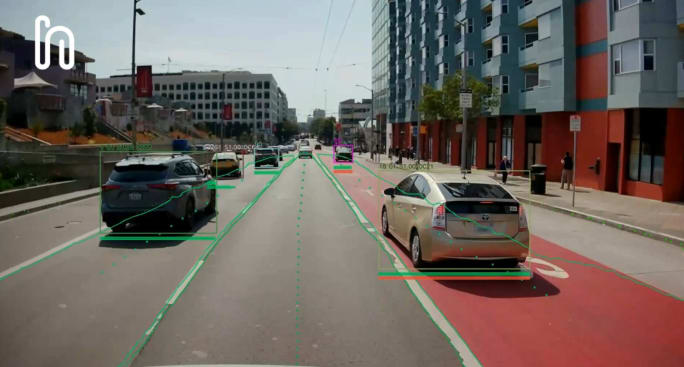
Hayden AI’s automated bus lane and bus stop enforcement platform is installed on hundreds of transit buses across the country to improve road safety, transit reliability, transportation accessibility for people with disabilities, and sustainability.
Photo: Screenshot via Hayden AI
Bringing AI Tech to Public Transit
Hayden AI’s automated bus lane and bus stop enforcement platform is installed on hundreds of transit buses across the country to improve road safety, transit reliability, transportation accessibility for people with disabilities, and sustainability.
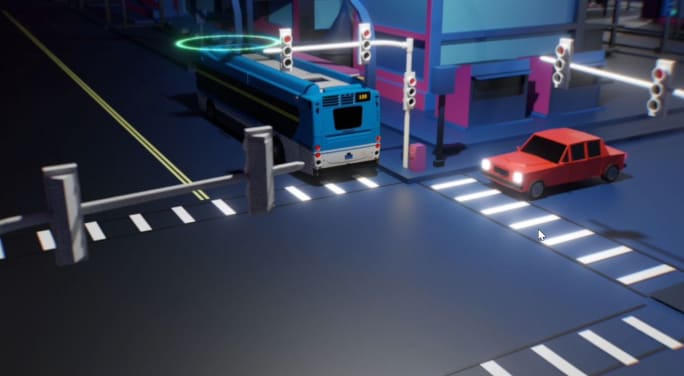
LYT.transit, LYT’s transit signal priority solution, uses cloud technology powered by AI and edge processing to successfully time traffic signals so that transit buses regularly receive green lights at intersections while minimally disrupting the normal flow of traffic.
Both companies have a track record of delivering transit reliability and safety improvements in cities across the U.S.
In New York City, where Hayden AI technology is installed on Metropolitan Transportation Authority buses, transit speeds have increased by as much as 36% on certain routes and vehicle collisions have decreased by 20% on average on streets with transit routes using this technology.
Ad Loading...
Meanwhile in Portland, Ore., TriMet's FX2 Route experienced a 70% reduction in signal delay and a 13.2% savings on fuel costs when using LYT.transit.
“There is so much we can do together to help transit agencies improve service and grow ridership. Increasing transit ridership is key to reducing emissions from the transportation sector, which is the largest contributor to greenhouse gas emissions in the U.S.,” said Territo about supplier partners teaming up to help solve transit issues. “By helping transit agencies deliver on-time service, together we can help reduce emissions, improve road safety, and make cities work better.”
LYT.transit, LYT’s transit signal priority solution, uses cloud technology powered by AI and edge processing to successfully time traffic signals so that transit buses regularly receive green lights at intersections while minimally disrupting the normal flow of traffic.
Territo told METRO they believe AI solutions will continue to make an impact in the transit industry, specifically the solutions created from the Hayden/LYT partnership.
“As companies like Hayden AI continue to refine vision AI, spatial analytics, and deep learning technologies, there will be more solutions available to transit agencies that solve long-standing problems,” Territo said. “A good example of this is how the data generated by Hayden AI’s platform can help transit agencies better understand trends impacting their service — if a large number of bus lane parking violations are occurring in a certain area, and how that impacts on-time arrivals.
Ad Loading...
“With LYT, AI and machine learning open doors that in the past were just not possible, and we’re just getting started,” Territo added. “The value that AI brings from optimizing traffic flow to reducing emissions and creating more sustainable modes of transportation allows for a better, safer, more efficient option within cities.”
CEO Magnus Friberg discusses Luminator’s shift toward becoming a digital partner, the growing importance of software and interoperability, and how AI can help agencies improve operations and passenger experience.
Reliability-Centered Maintenance helps transit agencies move beyond routine checklists to focus limited resources on the assets and failures that have the greatest impact on safety, reliability, and service.
More than 1,500 buses now feature upgraded technology designed to improve arrival predictions and provide free Wi-Fi, with deployment expected to reach nearly 2,000 buses by the end of 2026.
John Hroncich discusses BAE Systems’ modular and scalable approach, lessons learned from decades of real-world operations, and how agencies can identify electrification strategies that fit their fleets.
In METRO's latest installment, we take a look at recent news from Complete Coach Works, Beep, FlixBus, and more partnerships making headlines across the transportation sector.
What if transit leaders could ask any operational question and get a trusted answer in seconds? Conversational AI is transforming how agencies use their data.
More than $191 million in federal funding will help three transit agencies replace aging rail vehicles and support a new autonomous shuttle service in Chattanooga.
LA Metro’s Obed Mejia discusses technician training, evolving maintenance technology, fleet replacement, and strategies for getting the most out of today’s transit fleets.
In METRO's latest installment, we take a look at recent news from Siemens, Prevost, Dodge, and more partnerships making headlines across the transportation sector.
Pedestrian microsimulation is helping rail planners identify bottlenecks, test station designs, and prepare complex transit hubs for growing passenger volumes.