




Keep Reading: Regulatory Rollback Could Stall Zero-Emission Bus Innovation
Brampton and Zenobē Power Up Largest Zero Emission Transit Project in Canada
The framework aims to deploy 1,000 zero-emission buses, drawing on U.K.-Canada collaboration to decarbonize transit, boost local jobs, and transform public transportation in Ontario.
June 23, 2025
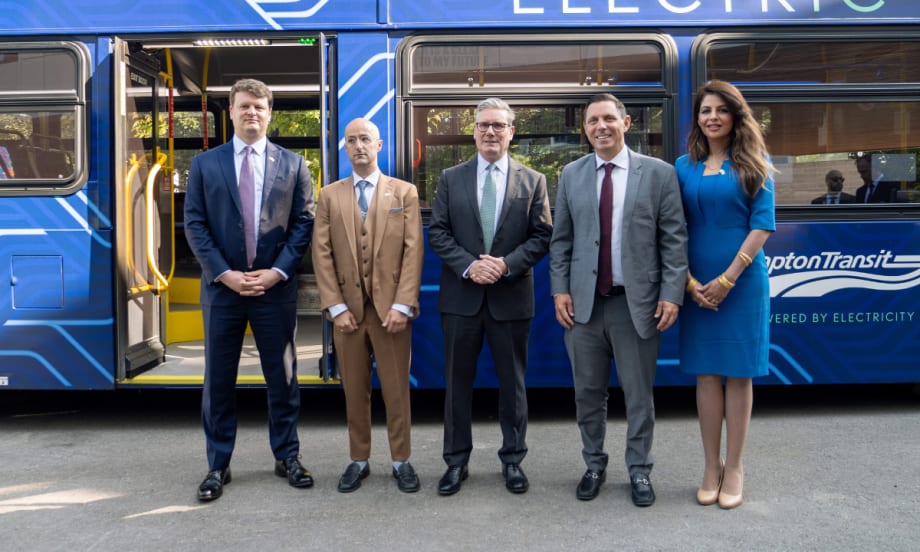
Left to Right: Zenobē Global Direcor of EV Fleet Tim Boothman; Zenobē Co-Founder and Director Steven Meersman; The Rt Hon Sir Keir Starmer; Brampton Mayor Patrick Brown, and Hon. Fouzia Younis, U.K.’s Consul-General to Ontario.
Photo: Zenobē
3 min to read
Zenobē, a global fleet electrification and battery storage specialist headquartered in London, and the City of Brampton, Ontario, recently announced their leadership of a group of U.K. and Canada-based partners, including TD Securities Inc. and OEMs.
The group will launch an approximately $2.9 billion partnership to support the zero emissions transition of the Brampton Transit bus fleet.
This effort will mark the first phase of a 10-year electrification framework, serving Toronto’s largest suburb and supporting the transition to a zero-emission public transit system.
According to a company release, this initiative highlights the power of public and private partnerships and will bring approximately $725 million in foreign investment into Canada, further strengthening U.K.-Canadian business ties.
“Canada is showing real leadership through this partnership,” Steven Meersman, co-founder and director of Zenobē, said. “What makes Brampton unique is its long-term vision and willingness to lean into innovation and collaboration. Electrifying an entire fleet is a cultural shift. We’re proud to help Brampton lead the way in zero-emission transit as a model for other communities.”
Brampton Rolls Out Zero Emission Transit Goals
Plus, using zero-emission buses (ZEB) in the Brampton project will help reduce greenhouse gas emissions, improve local air quality, and decrease noise pollution.
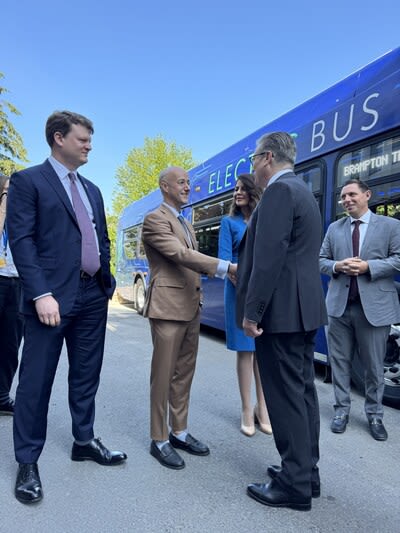
The delegation gathers in Ottawa, Canada, highlighting international collaboration and the growth of clean transit solutions.
Photo: Zenobē
According to a release from the city of Brampton, the program is expected to eliminate the majority of transit-related greenhouse gas emissions, accounting for approximately 70% of the city’s corporate GHG emissions.
The partnership intends to bring 1,000 electric buses to the roads and replace the city’s diesel vehicles. It will initially support current routes and ridership numbers of more than 40 million passengers annually.
The first stage should be completed in 2027 with a third of the entire fleet electrified and two existing transit facilities upgraded.
According to a company statement, the framework expects that all three Brampton facilities and targeted on-route locations will be fully electrified to support the zero-emission fleet by 2030.
“This landmark partnership between Zenobē and the City of Brampton is a powerful example of how U.K.-Canada collaboration can deliver real-world solutions to global challenges,” Hon. Fouzia Younis, U.K.’s consul-general to Ontario, said.
Coordinated Effort Drives Brampton’s Shift to a Fully Electric Bus Fleet
Brampton will procure electric buses from Canadian suppliers, with planning and design, software, supply chain relationships, and capital markets expertise provided through the Zenobē team.
The initiative also includes comprehensive technical experience and knowledge from the U.K. and dedicated electrical and civil engineering teams on the ground in Brampton.
However, transitioning a city’s bus fleet to electric while keeping day-to-day operations running smoothly can be complex. Still, Zenobē’s responsibility for infrastructure, financing, workforce training, and long-term operations and Brampton’s local leadership and vision are joining together to mitigate any transition risks.
Infrastructure must be upgraded or built without disrupting current service, and charging schedules, grid capacity, and vehicle range must be balanced. When paired with the right planning, this approach de-risks the transition and ensures value for riders and the greater community of stakeholders.
“This historic investment marks a turning point for Brampton and for public transit across Canada,” Brampton Mayor Patrick Brown said. “By transitioning to a fully electric bus fleet, we’re not only reducing emissions — we’re creating jobs, improving air quality, and building a cleaner, healthier future for our residents.”
More Bus

New York MTA Plans Largest Bus Fleet Upgrade in More Than a Decade
The agency is seeking manufacturers for 650 new CNG buses to replace aging vehicles, improve reliability, and advance its broader fleet modernization strategy.
Read More →
Building a Flexible Path to Transit Electrification
John Hroncich discusses BAE Systems’ modular and scalable approach, lessons learned from decades of real-world operations, and how agencies can identify electrification strategies that fit their fleets.
Read More →
Bus Tech Talk: Keeping Transit Technicians Ahead of the Technology Curve
LA Metro’s Obed Mejia discusses technician training, evolving maintenance technology, fleet replacement, and strategies for getting the most out of today’s transit fleets.
Read More →
Biz Briefs: RIPTA Unveils New Frontrunners, Clevland RTA Adds New Siemens, and More
In METRO's latest installment, we take a look at recent news from Siemens, Prevost, Dodge, and more partnerships making headlines across the transportation sector.
Read More →
People Movement: Holly Arnold Joins Transdev and More
In this edition, we also cover recent appointments and announcements at Pace, CamTran, MCI, and more, showcasing the individuals helping to shape the future of transportation.
Read More →
The High Cost of Transit Buses: Industry Leaders Look to Procurement Reform
Transit leaders and policymakers examine how standardized bus designs, streamlined procurement, and predictable funding could help agencies stretch budgets and deliver better service.
Read More →
The Business Voice Behind Public Transportation
As chair of APTA’s Business Members Board of Governors, Ray Melleady explains how more than 850 business members are partnering with transit agencies to advance funding, innovation, and industry-wide collaboration.
Read More →
From Surviving to Thriving: Building Stronger Transportation Organizations
Bus Business Consultants founder Brian Dickson shares lessons on leadership, organizational health, and creating options for long-term success in a changing transportation industry.
Read More →
Finding the ‘Happy Medium’: Optimizing Maintenance Without Sacrificing Reliability
The key to maintenance optimization isn’t doing less work—it’s doing the right work at the right time on the right assets.
Read More →
LA Metro, City of West Hollywood, and Partners Advance Smarter Bus Lane Enforcement
The award-winning partnership combines AI-powered detection with human oversight to improve bus reliability, accessibility, and enforcement efficiency.
Read More →