



A Journey to Electrification: Mountain Line Overcomes Challenges, Navigates a Developing Industry
The agency, based in Missoula, Mont., is pursuing a zero-emissions fleet by 2035 by adopting electric vehicles.

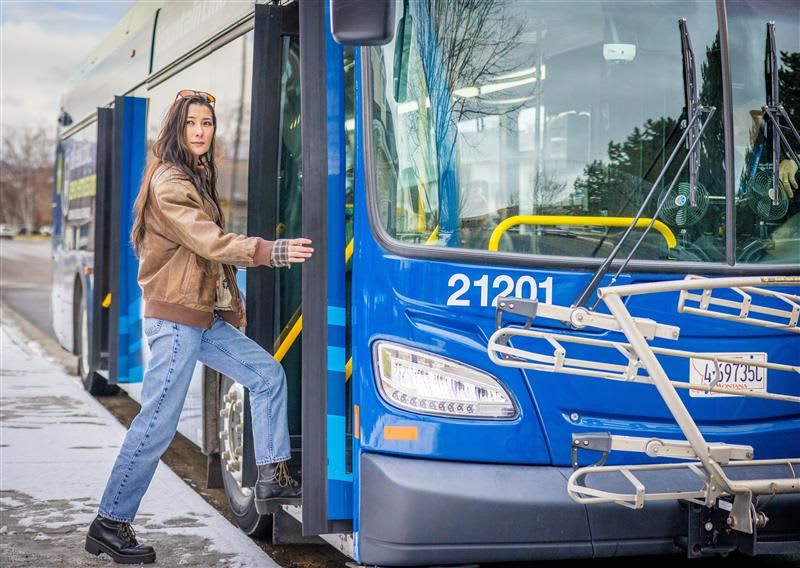
Mountain Line’s electric buses provide clean, quiet transportation options for Missoula residents and help reduce sources of pollution, especially in the winter.
Photo: Mountain Line
- Mountain Line in Missoula, Montana, is working towards a fully zero-emissions fleet by 2035.
- The transition involves the implementation of electric vehicles into their transportation services.
- This effort represents their commitment to overcoming industry challenges and contributing to environmental sustainability.
*Summarized by AI
One transit agency in Montana is taking steps to help keep the air clean in its mountain valley home.
Mountain Line, based in Missoula, Mont., is taking steps to transition to a fully zero-emission fleet and recently converted over half of its fixed-route fleet to electric buses.
With this milestone, the company is well on its way to achieving its goal of having a zero-emission fleet by 2035.
Mountain Line has 29 buses in its fleet, including 16 electric buses. Ten more electric buses will be put into service this spring, leaving only three diesel buses in service.
Choosing Electrification
The agency naturally decided to electrify its fleet to help combat the poor air quality, especially noticeable in winter.
While removing a source of pollutants is a major goal of the project, a forward-thinking mindset also contributed.
“Our agency’s always been pretty forward-looking and excited about innovating,” said Jordan Hess, CEO/GM of Mountain Line. “We are really inquisitive about new technologies and keeping tabs on new technologies, but some of the practicalities around electrification were really appealing to our board. Missoula is a community that really cares about its people and the natural environment and is a community that has ambitious climate goals.”
In 2015, Mountain Line experienced electric bus technology firsthand when Proterra gave them a demonstration. This demonstration led to the decision to pursue electrification.
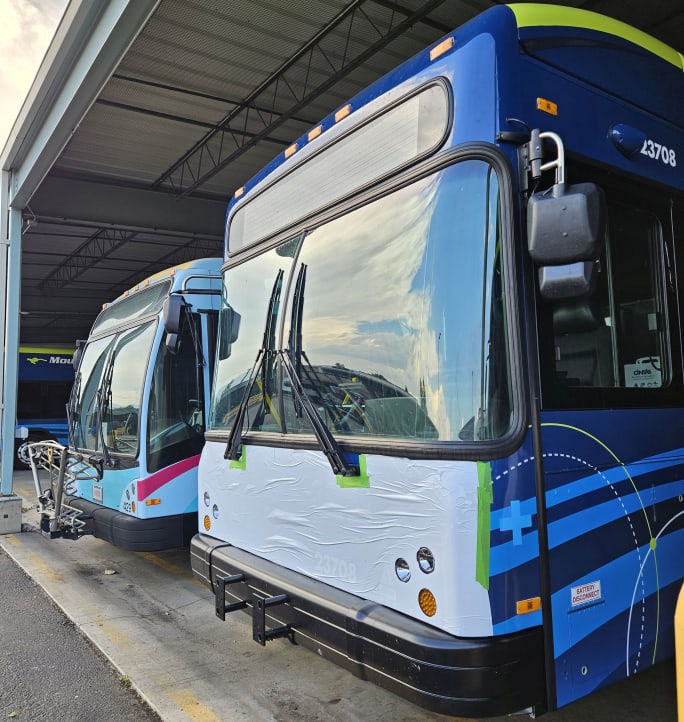
Mountain Line’s new electric buses are replacing its diesel vehicles and have been well received by the community.
Photo: Mountain Line
Funding the Project
When making a significant shift in how a fleet operates, funding is often one of the first things that need to be addressed.
With help from the Center for Transportation and the Environment, the agency was able to secure grant funding for six buses in their 2017 grant cycle. This enabled them to launch a pilot program for electric bus technology.
“It truly was a pilot; we did not get rid of any diesel buses, and we were unsure of what to expect from them,” said Jennifer Sweten, Mountain Line’s director, operations. “It was a fast-learning curve, we relied a lot on OEMs and the few agencies that were ahead of us at that time in electrification. One of those is our local university system, which had some of the first-generation electric buses on their campus.”
Since the initial pilot funding, the project has changed thanks to programs such as the bipartisan infrastructure law, which opened up several funding opportunities for electrification projects.
Mountain Line’s grant team also played a significant role in keeping the project moving forward by securing federal grants.
In addition, the community of Missoula is supporting the project through two ballot measures that help fund the agency.
Getting Infrastructure in Place
Transitioning to electric vehicles involves a lot more than buying buses, however.
When the initial six buses were secured, Mountain Line had many preparations to make before putting them into service.
The first step was meeting with the utility company to ensure there would be enough power to charge the buses.
To keep costs down, the agency started talks to get a rate tariff that would be friendly to a transit agency, which is still in progress today.
New equipment was also needed, apart from electricity to power the buses. A new lift for the buses to allow maintenance was installed, along with chargers and electrical service upgrades.
“When the buses arrived in the summer of 2019, we were pretty confident,” said Sweten. “We thought we had done everything we needed to do, but it quickly became evident that we did not.”
As an early adopter of electric bus technology, unexpected challenges became apparent. One of these was the need to redo the HVAC system in their bus barn due to the height of the buses.
In addition, they needed to purchase a forklift to help personnel perform maintenance on the top of the buses.
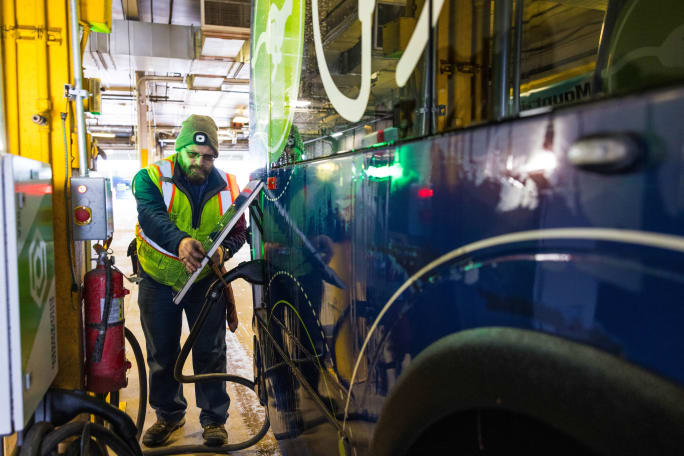
Mountain Line Technicians have adapted to the new electric buses and are constantly improving their maintenance practices.
Photo: Mountain Line
Training the Workforce
Training is an important part of transitioning to electric vehicles, and Mountain Line also encountered obstacles on that front.
With the buses arriving in the summer of 2019, it was not long before air travel restrictions were put in place due to the COVID-19 pandemic.
This made it challenging for the OEMs to send staff to help train the agency’s maintenance team.
Determined to make the pilot a success, Mountain Line’s maintenance team turned to technology to help them connect with experts who could explain what they needed to know.
With limited resources for training on electric vehicle technology, the agency has begun hosting their training in-house.
The electric vehicle space is quickly changing, and technicians must constantly learn about new tools and equipment.
The differences also saw Mountain Line evaluate what parts they needed to keep on hand, as they differed between electric and diesel buses.
Tackling Range
A common challenge that needs to be addressed is the range of electric vehicles. The cold climate that the agency experiences complicates this.
“We knew that in our cold climate, we would have range issues,” said Sweten. “We were not anticipating the range issues to be as severe as they were. Nor were we expecting other conditions to factor into that range, such as icy streets, because once the wheels break loose, the regenerative braking power shuts off.”
Route modeling and increasing onboard storage capacity found a solution.
In addition, a change management system was implemented to use the fleet more effectively.
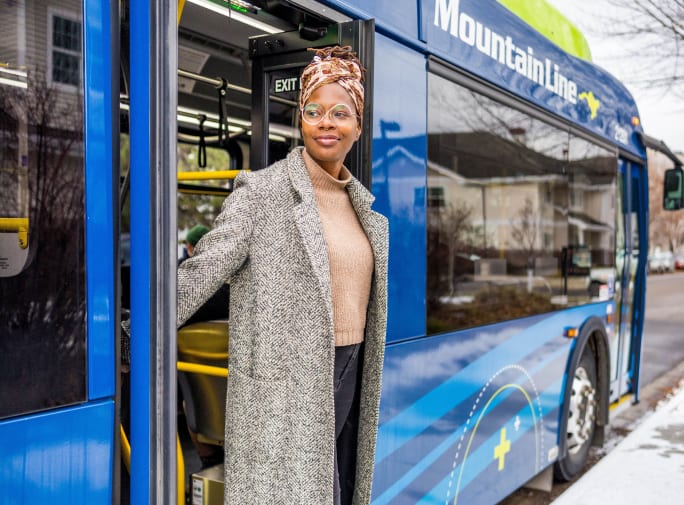
As Mountain Line continues to navigate the challenges of an ever-changing electric vehicle industry, the community of Missoula is taking pride in the electric buses.
Photo: Mountain Line
Moving Forward
With the fixed route fleet on track to be fully zero-emission soon, Mountain Line hopes to apply what they learned to their paratransit service and smaller vehicles.
In addition to buses, the agency is planning to replace all of its vehicles, including shop trucks and snowplows, with electric vehicles. Plans for a new zero-emission facility are also being developed to further reduce the agency's pollutants.
Mountain Line has also partnered with the Big Sky Passenger Rail Authority to prepare for future connectivity between rail and bus services.
While Missoula does not currently have a rail stop, this partnership will allow residents to expand their travel options further.
While the journey to electrify its fleet has seen a fair share of challenges, the agency is hopeful about the future.
“Some of the challenges are ongoing, and they’re similar to what other places are seeing: continued supply chain issues, new technology hiccups, and growing pains in the industry,” said Hess. “But on the other side of that coin is that challenges create opportunities to grow. They create opportunities to learn new things, to develop new processes, and I would say that we’ve come out really strong as an agency because we’ve had to work through a few challenges.”
As Mountain Line continues to navigate the challenges of an ever-changing electric vehicle industry, the community of Missoula is taking pride in the electric buses. The effort of electrifying their fleet is paying off, from cost savings to improved air quality.
Quick Answers
Mountain Line aims to achieve a zero-emissions fleet by 2035 by adopting electric vehicles.
*Summarized by AI
More Zero Emissions
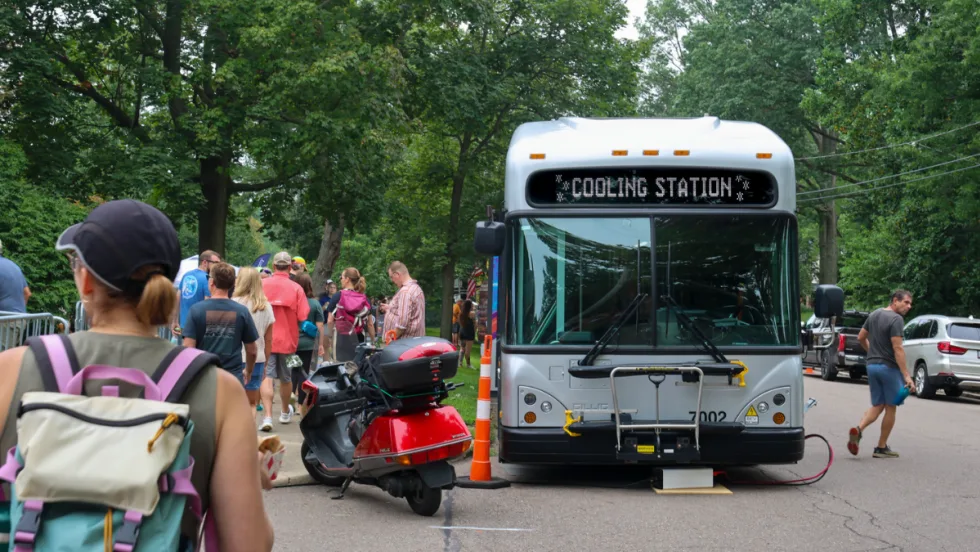
Ohio’s METRO RTA Turns Electric Buses into Mobile Power Sources at PorchROKR
See how three Gillig battery-electric buses powered festival stages while the agency’s new Park & Ride service carried approximately 1,000 attendees, demonstrating another potential use for transit agencies’ electric fleets.
Read More →
CALSTART and Forth Combine to Form Catalyst Mobility
The new name represents a renewed vision for the nonprofit focused on advancing clean, equitable, and affordable transportation solutions that move people and goods.
Read More →
Building a Flexible Path to Transit Electrification
John Hroncich discusses BAE Systems’ modular and scalable approach, lessons learned from decades of real-world operations, and how agencies can identify electrification strategies that fit their fleets.
Read More →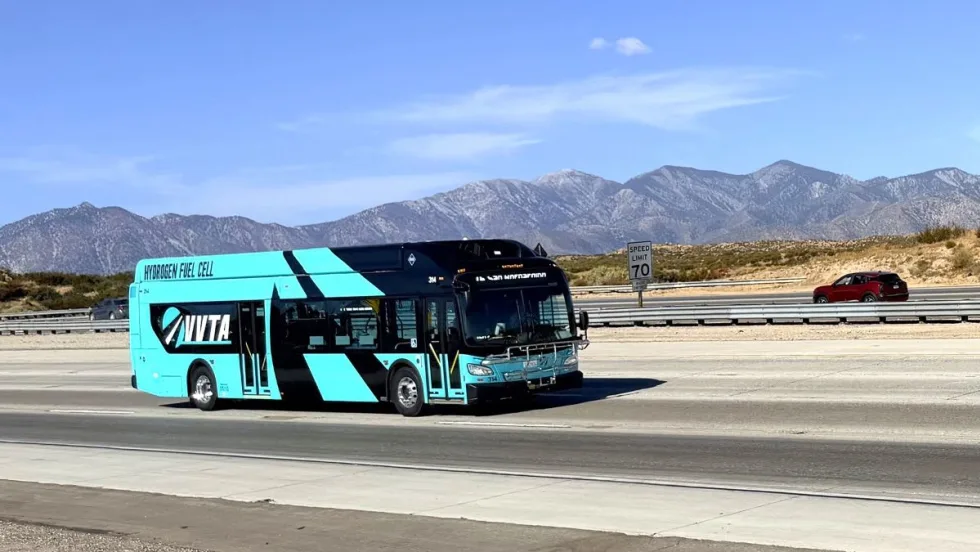
California's VVTA Begins Phased Rollout of Hydrogen Fuel Cell Buses
The agency is introducing 13 zero-emission buses into revenue service while evaluating performance across its urban, rural, and long-distance routes.
Read More →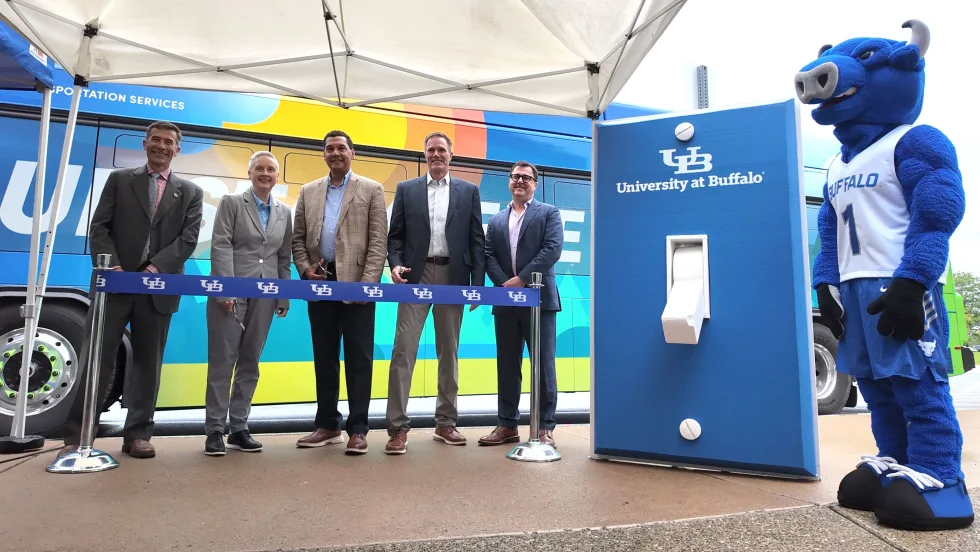
Inside Look: University at Buffalo Puts First 8 Electric Buses Into Stampede Service
UB, transportation solutions provider WeDriveU, and fleet electrification specialist Zenobē marked the deployment in the presence of students, university administrators, and local officials.
Read More →
Biz Briefs: OCTA Taps Clean Energy for Hydrogen Station, Stadler to Supply Via Rail Vehicles, and More
From manufacturers and suppliers to transit agencies and motorcoach operators, these updates offer a snapshot of the projects, partnerships and business moves driving the industry forward.
Read More →
AC Transit’s Cecil Blandon on Building the Next Generation of Transit Maintenance Leaders
The agency’s maintenance chief discusses leadership, workforce development, zero-emission technology, and preparing technicians for the future of public transportation.
Read More →
CTDOT Taps STV for Electric Bus Facility Design
The firm will work with CTDOT and RVT to define the facility layout, operational requirements, and long-term flexibility for RVT’s growing electric fleet.
Read More →
Chicago’s Pace Deploys 24 Hybrid-Electric Buses in Will County
The new buses reduce emissions and fuel consumption while advancing the agency's long-term goal of transitioning to a fully zero-emission fleet.
Read More →
DASH Breaks Ground on First On-Route Electric Bus Chargers in D.C. Region
The fast-charging infrastructure will help extend electric bus range, improve fleet utilization, and support DASH's goal of transitioning to a fully zero-emission fleet.
Read More →