




RELATED: Fla. transit, motorcoach operators back to full service
Broward County Transit takes residents to safety during Hurricane Irma
Bus evacuation pick-up routes included people living along the beaches, in mobile home parks, and the homeless. BCT’s paratransit service also assisted with transporting their most fragile customers.
September 18, 2017
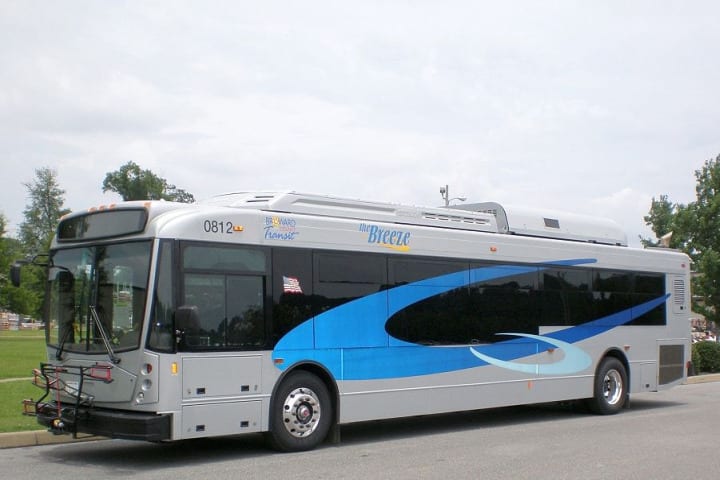
As roadways were cleared and deemed safe for travel, BCT quickly resumed bus service with limited hours of operation from 7 a.m. to 7 p.m., due to power outages and numerous traffic signals not working in many neighborhoods.
BCT
2 min to read
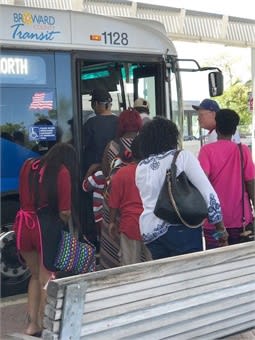
Florida-based Broward County Transit's bus evacuation pick-up routes included people living along the beaches, in mobile home parks, and the homeless. Photo: Broward County Transit
Broward County Transit (BCT) buses rolled out quickly, on Thursday morning, Sept. 7, to designations across Broward County picking up residents evacuating from Hurricane Irma to the safety of shelters opened throughout the county.
Entire families, the young and the elderly, carrying what they could, boarded BCT buses, relieved that they were being transported to the safety of the shelters.
Bus evacuation pick-up routes included people living along the beaches, in mobile home parks, and the homeless. BCT’s paratransit service, TOPS, also assisted with transporting their most fragile customers, those living in assisted-living facilities and hospitals, to shelters set up to meet their specific needs.
“Our goal was to get people to safety and leave no one behind who contacted us needing transportation to a shelter. As part of our plan, we designated pick-up locations and conducted sweeps picking up people who waved to our bus operators to stop. BCT’s evacuation plan was well executed and I couldn’t be prouder of our bus operators and other staff members who worked tirelessly to ensure that Broward County residents got to safety, “said BCT Director Chris Walton.
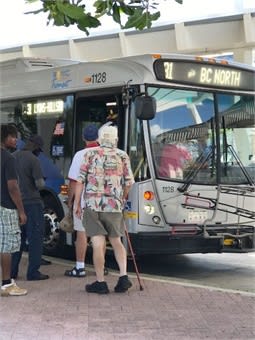
Broward County Transit services are now fully operational. The agency is the second-largest transit system in Florida and also services locations in Palm Beach and Miami-Dade Counties. Photo: Broward County Transit
BCT also shuttled 130 National Guardsmen, from Wisconsin, to various locations across the county to assist with clean-up efforts and distributing supplies after Hurricane Irma left a trail of destruction of downed power lines, trees and debris, which cut off many neighborhoods.
As roadways were cleared and deemed safe for travel, BCT quickly resumed bus service with limited hours of operation from 7 a.m. to 7 p.m., due to power outages and numerous traffic signals not working in many neighborhoods.
“As the county begins to get back to normal and conditions improve, BCT will continue to increase its bus services, until fully operational, to meet the needs of our customers,” Walton said.
BCT services are now fully operational. The agency is the second-largest transit system in Florida and also services locations in Palm Beach and Miami-Dade Counties.
More Security and Safety

Transit Agencies Highlight Safety Gains at National Summit
Leaders from 15 major transit systems shared crime-reduction results and safety initiatives while discussing the role of continued federal support.
Read More →
DART Launches Major Security, Fare Enforcement Initiative
The 90-day demonstration will deploy coordinated security teams at five light rail stations while testing controlled access and gathering data to guide future investments.
Read More →
RTD Launches NextRide App to Consolidate Trip Planning, Fares, Security Reporting
The app expands on RTD’s existing NextRide web application and allows customers to view real-time vehicle locations and service alerts, purchase and store digital fares, and access customer support.
Read More →

TAPTCO Updates OSHA Compliance Training for Transit Maintenance Operations
The revamped program addresses 26 OSHA standards for maintenance facilities, with TAPTCO pointing to training, documentation, and everyday shop hazards as continuing challenges for transit operations.
Read More →
Sponsored•August 18, 2026
How VaporVision Adds Value to Transit Door Systems
Wabtec engineers explain how the system improves doorway detection, strengthens diagnostics and gives transit agencies and OEMs greater operating flexibility.
Read More →
FRA Announces $5.3B in Rail Investments, Including $2B for Amtrak
Funding will support grade-crossing improvements, infrastructure upgrades, and new Amtrak equipment in 23 states.
Read More →
Chicago, Maryland Expand Non-Law-Enforcement Safety, Rider Support
The CTA and MTA are launching new programs aimed at de-escalation, crisis response, rider assistance, and greater transparency.
Read More →
LA Metro, City of West Hollywood, and Partners Advance Smarter Bus Lane Enforcement
The award-winning partnership combines AI-powered detection with human oversight to improve bus reliability, accessibility, and enforcement efficiency.
Read More →
LA Metro Reports 57% Decline in Homelessness on Transit System Since 2024
The agency's latest homelessness count offers new data on how care-based services and cross-sector partnerships can complement traditional transit security strategies.
Read More →
FTA Launches 'Transit Moves America' Dashboard to Highlight Agency Safety and Performance
The online dashboard transforms National Transit Database information into a public-facing resource that allows users to compare transit agencies on key operational and safety metrics.
Read More →