



The Role of AI in Public Safety for Smart Transit Systems
As transit systems generate more data than ever, AI-powered safety tools are helping agencies detect incidents faster, improve response times and enhance situational awareness.
Both transport hubs and the transit systems themselves pose unique security risks that can be difficult to address.
METRO
- AI-powered tools enhance public safety by rapidly detecting incidents in smart transit systems.
- The use of AI improves response times, allowing agencies to act swiftly in emergencies.
- AI increases situational awareness, aiding transit agencies in managing complex data flows.
*Summarized by AI
AI has found its way into supply chain management, emergency dispatch offices, and anywhere smart systems thrive worldwide. Public transport is no different: a constant flow of data from arrivals, departures, and station devices keeps operators on their toes, leaving them barely able to keep up with alerts without assistance from intelligent automation.
Public safety systems broadly encompass communication systems, smart surveillance cameras, integrated platforms, and emergency notification systems. They help police and firefighters do their jobs safely and more efficiently, and their expanding utility has led to their adoption across a range of public-facing spaces, including transit systems.
The Demand for Better Intelligence
Both transport hubs and the transit systems themselves pose unique security risks that can be difficult to address.
Stations combine crowds and often multiple entrances, making them a hotbed for pickpockets, fare dodgers, and instances of aggression toward staff. Though unrelated to public safety in the traditional sense, a rise in rail cargo theft also presents transit managers with an additional avenue of concern and a need for more reliable security.
On board, these incidents compound with the fact that victims and onlookers have nowhere to escape to.
In motion and at rest, acts of violence and harassment must be addressed as early as possible to avoid escalation, harm, and a loss of public trust in transit system security.
AI Cameras Across Transit Systems
Though public safety technology is a broad term that covers multiple systems, security cameras are perhaps the most obvious and widespread component. They have evolved from passive devices that need constant monitoring to autonomous systems that analyze footage in real time without supervision.
AI builds on existing infrastructure to extract more operational insights into safety and security concerns. Whereas before incidents and supporting footage were investigated after the fact, AI cameras now detect when something is amiss and inform staff through smart notification systems.
When packages are left unattended, platforms are overcrowded, or a visitor shows signs of aggression towards staff or other travelers, security teams are made instantly aware of the situation and directed to its source.
Smart transit systems already combine data from across systems, and AI can correlate these streams of information to produce rich reports. By surfacing relevant details and footage without manual searching, these AI systems save valuable time operators can use to patrol, creating an active security presence that instills confidence in passengers.
Response and Coordination
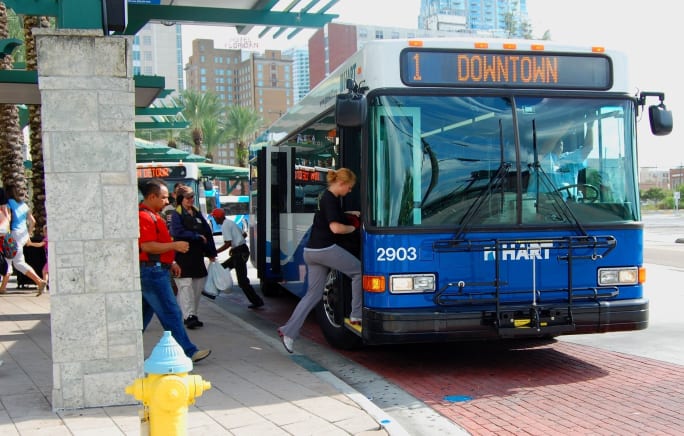
AI-powered surveillance and analytics tools can help transit agencies detect potential safety incidents in real time, enabling faster response and improved situational awareness across stations and vehicles.
Transit systems are used and enjoyed by all, but the presence of vulnerable groups such as women, children, and the elderly requires quick, multifaceted responses.
Every incident has the capacity to escalate and cause harm, meaning emergency services are often involved when they do occur, or maintain a regular presence at transit hubs as a preventative measure.
Coordinating multiple teams is much more complicated when vehicles and sprawling transit hubs are involved. Those nearest the scene would investigate and radio into the control office, which would then contact emergency services and relay details of the situation gathered from camera feeds and verbal reports.
Each step in this manual process, though essential, leaves room for oversights and miscommunications that can leave responders without a clear picture of what awaits them.
AI has changed this dynamic, as public safety systems treat voice, video, and data as one unified workflow. The AI automatically transcribes audio communications and can analyze them to highlight key points and surface relevant evidence from other channels.
Governance and Trust
As transit systems use more AI, there is renewed discussion about how to use this technology fairly and in line with regulations. Since AI systems handle large amounts of video and audio data, questions arise about how long to retain this information and who can access it.
Transit agencies are also facing greater cybersecurity challenges as safety infrastructure moves to the cloud.
If analytics are not regularly tested and configured, they might incorrectly flag certain behaviors, generate too many alerts, or behave differently across settings.
In addition to following legal requirements, those using AI should adopt a human-in-the-loop approach to managing and maintaining these systems.
Building on Smart Transit Systems
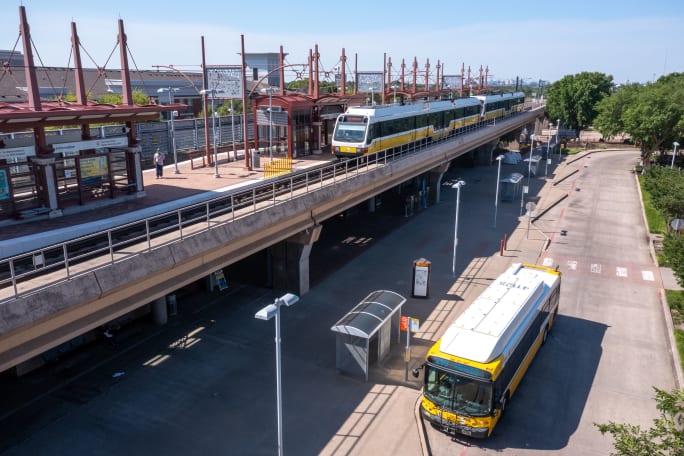
By integrating video, voice and operational data, AI-enabled public safety systems are helping transit agencies enhance security, support emergency coordination and build rider confidence.
Photo: DART
Data integration has improved the efficiency and connectivity of public transit, and public-safety AI is applying similar principles to security.
The most effective implementations use AI as an additional safeguard, supporting human decision-making and building confidence amid increasing threats and the need to maintain public trust.
Adopting AI in sensitive environments requires careful consideration. Implementation should be purposeful, with attention to integration with existing systems and scalability for future needs.
Quick Answers
AI-powered safety tools benefit transit systems by enabling faster incident detection, improving response times, and enhancing situational awareness.
*Summarized by AI
More Security and Safety

FTA Ends Direct Oversight of MBTA Safety Actions
The federal agency closed its remaining special directive to the Massachusetts Department of Public Utilities following a safety review that began in 2022.
Read More →
Transit Agencies Highlight Safety Gains at National Summit
Leaders from 15 major transit systems shared crime-reduction results and safety initiatives while discussing the role of continued federal support.
Read More →
DART Launches Major Security, Fare Enforcement Initiative
The 90-day demonstration will deploy coordinated security teams at five light rail stations while testing controlled access and gathering data to guide future investments.
Read More →
RTD Launches NextRide App to Consolidate Trip Planning, Fares, Security Reporting
The app expands on RTD’s existing NextRide web application and allows customers to view real-time vehicle locations and service alerts, purchase and store digital fares, and access customer support.
Read More →
TAPTCO Updates OSHA Compliance Training for Transit Maintenance Operations
The revamped program addresses 26 OSHA standards for maintenance facilities, with TAPTCO pointing to training, documentation, and everyday shop hazards as continuing challenges for transit operations.
Read More →
FRA Announces $5.3B in Rail Investments, Including $2B for Amtrak
Funding will support grade-crossing improvements, infrastructure upgrades, and new Amtrak equipment in 23 states.
Read More →
Chicago, Maryland Expand Non-Law-Enforcement Safety, Rider Support
The CTA and MTA are launching new programs aimed at de-escalation, crisis response, rider assistance, and greater transparency.
Read More →
LA Metro, City of West Hollywood, and Partners Advance Smarter Bus Lane Enforcement
The award-winning partnership combines AI-powered detection with human oversight to improve bus reliability, accessibility, and enforcement efficiency.
Read More →
LA Metro Reports 57% Decline in Homelessness on Transit System Since 2024
The agency's latest homelessness count offers new data on how care-based services and cross-sector partnerships can complement traditional transit security strategies.
Read More →
FTA Launches 'Transit Moves America' Dashboard to Highlight Agency Safety and Performance
The online dashboard transforms National Transit Database information into a public-facing resource that allows users to compare transit agencies on key operational and safety metrics.
Read More →