



Buttigieg Recommends $2.5B for New, Expanded Public Transit Services
The projects will create hundreds of construction and operations-related jobs and help communities expand transportation options that improve access and mobility for residents.
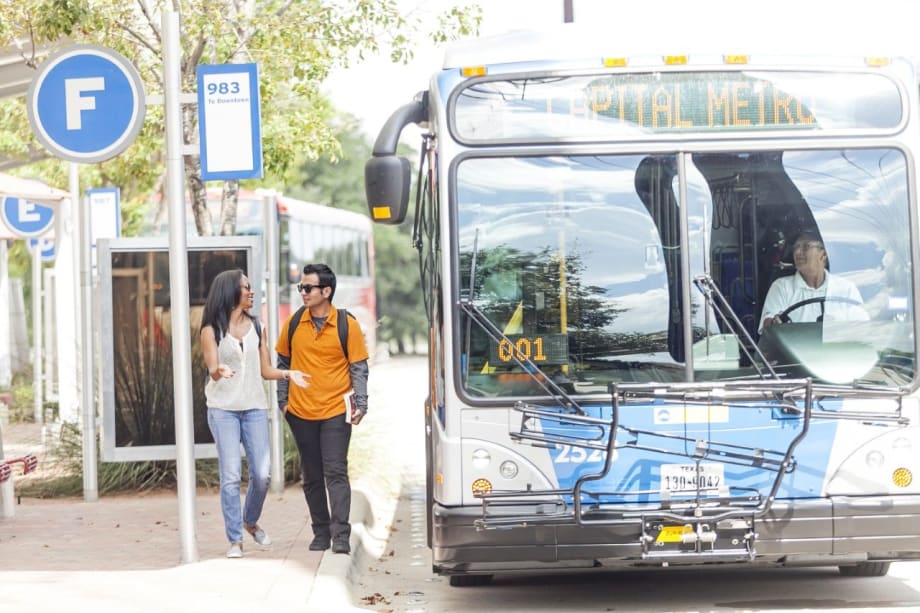
The announcement is consistent with the President’s FY 2022 budget, which includes first-time funding recommendations for eight transit projects in five states, including Austin, Texas.
Cap Metro
U.S. Transportation Secretary Pete Buttigieg announced the recommendation of $2.5 billion to advance the construction or completion of 25 rail, bus rapid transit (BRT), and streetcar projects in 12 states, as well as other projects that may become ready for funding in Fiscal Year (FY) 2022. These projects, competitively funded through the Federal Transit Administration’s (FTA) Capital Investment Grants (CIG) Program, will create hundreds of construction and operations-related jobs and help communities expand transportation options that improve access and mobility for residents.
“Across the country, communities are seeking to expand public transit as a way to create economic opportunity, improve safety, advance equity, reduce congestion and pollution, and lower the cost of living for their residents,” said U.S. Transportation Secretary Pete Buttigieg. “These capital projects will improve life in 25 communities and are the start of what we hope will be a once-in-a-generation investment to modernize and expand public transit across the country.”
FTA’s FY 2022 Annual Report on Funding Recommendations includes $1.56 billion for 17 CIG projects with existing grant agreements, and $461.1 million for eight new CIG projects estimated to be ready for grants in FY 2022. An additional $427.2 million is recommended for other CIG and Expedited Project Delivery (EPD) Pilot Program projects that may become ready for funding during FY 2022.
The announcement is consistent with the President’s FY 2022 budget, which includes first-time funding recommendations for eight transit projects in five states. These include:
In Phoenix, the Northwest Extension Phase II project would extend Valley Metro’s light rail system 1.5 miles from the existing end of line station in Northwest Phoenix to the Metrocenter Mall, improving access to the region’s light rail system for residents in various communities in north and west Phoenix, Glendale, and Peoria, and support transit-oriented land-use planning in the corridor, including the planned redevelopment of the Metrocenter Mall site.
In Minnesota, two BRT projects are recommended for funding: 1) The METRO Gold Line BRT project in St. Paul would better connect transit riders traveling along a 10.3-mile corridor on I-94 between downtown Saint Paul and the suburban cities of Maplewood, Landfall, Oakdale and Woodbury and, more broadly, connect the eastern part of the Twin Cities metropolitan area to the regional transit network via Union Depot in downtown Saint Paul; and 2) The Rochester Rapid Transit BRT project in Rochester would bring BRT service to a 2.6-mile corridor that includes Downtown Rochester, Mayo Clinic campuses, commuter lots, and residential neighborhoods.
In Austin, Texas, two BRT projects are recommended for funding: 1) The Expo Center BRT project would bring BRT service to residents along a 12-mile corridor, connecting East Austin to the University of Texas, downtown Austin and other major employment areas; and 2) The Pleasant Valley BRT project would bring BRT service to a 14-mile corridor connecting residents of the Mueller neighborhood in northeast Austin to the Goodnight Ranch neighborhood in southeast Austin, and other major employment areas such as Dell Children’s Medical Center and Austin Community College (ACC) Eastview.
In Washington, two BRT projects are recommended for funding: 1) The RapidRide I Line BRT project in South King County would bring BRT service to suburban communities along a 17-mile corridor between the cities of Renton, Kent, and Auburn; and 2) The Pacific Avenue/State Route 7 BRT project in Pierce County would bring BRT service to communities along a 14.3-mile corridor between downtown Tacoma and Spanaway, connecting residents to key destinations such as the Broadway Center for the Performing Arts/Pantages Center, the Greater Tacoma Convention and Trade Center, and the University of Washington Tacoma Campus.
In Madison, Wis., the Madison East-West BRT project would provide fast, reliable bus service for residents in a key 15.5-mile corridor running along East Washington Avenue, around the State Capitol building, through downtown Madison and the University of Wisconsin-Madison campus, and continuing west on University Avenue to the West Transfer Point or West Towne Mall.
The CIG Program is the federal government’s primary grant program for supporting transit capital projects that are locally planned, implemented, and operated. It provides funding for investments such as new and expanded heavy rail, commuter rail, light rail, streetcars, bus rapid transit, and ferries, as well as corridor-based BRT investments that emulate the features of rail. The program includes funding for three categories of eligible projects, as defined by the FAST Act: New Starts, Small Starts, and Core Capacity.
More New Mobility

Public Transit Conference Returning to GFX in 2027, Call for Papers Now Open
The Call for Papers is now open, allowing transit agency professionals and industry experts to help shape the PTC educational program by submitting session ideas for consideration.
Read More →
Everett Transit, Community Transit Outline Consolidation Agreement
The proposed agreement calls for a 50% increase in bus service in Everett, a new microtransit zone, continued paratransit service, and the transfer of Everett Transit operations to Community Transit.
Read More →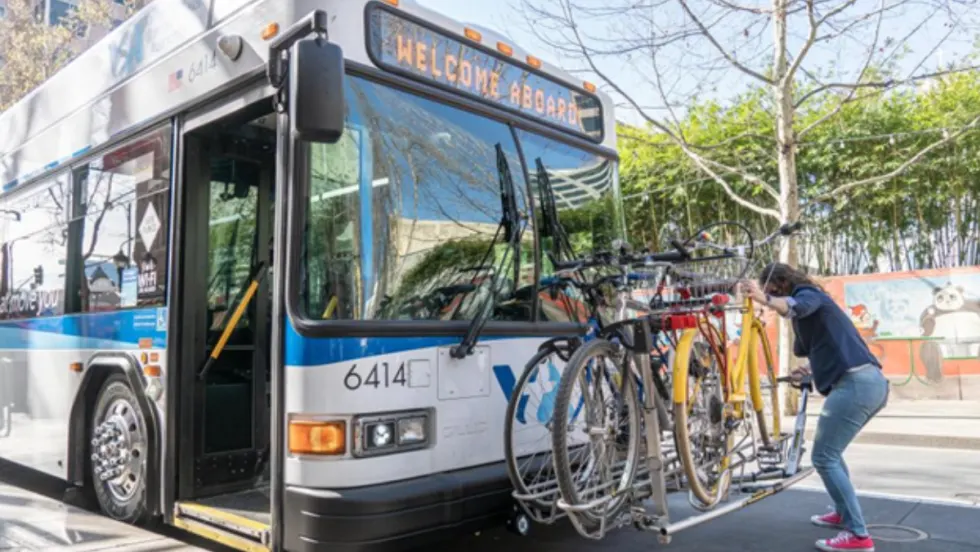
What Multimodal Data Can Tell Transit Agencies About Rider Demand
See how bike-on-bus data is giving transit agencies new insight into rider demand, capacity constraints, and gaps in first- and last-mile connections.
Read More →
From Hardware to Digital Partner: Luminator Charts Its Next Chapter
CEO Magnus Friberg discusses Luminator’s shift toward becoming a digital partner, the growing importance of software and interoperability, and how AI can help agencies improve operations and passenger experience.
Read More →
Biz Briefs: Alstom Lands Canadian Contract, LYT to Supply California TSP, and More
In METRO's latest installment, we take a look at recent news from Complete Coach Works, Beep, FlixBus, and more partnerships making headlines across the transportation sector.
Read More →
CharterUP’s Armir Harris on Technology, AI, and the Future of Group Mobility
In a recent episode of METROspectives, CharterUP Founder/CEO Armir Harris discussed the company’s evolution from an online charter bus marketplace into a technology platform supporting public- and private-sector mobility and much more.
Read More →
Jacksonville’s NAVI Project Charts a New Course for Autonomous Public Transportation
Through its NAVI program, JTA is showing how autonomous vehicles, intelligent infrastructure, and coordinated operations can work together to deliver everyday public transportation.
Read More →
Biz Briefs: Luminator Marks Milestone and More
From manufacturers and suppliers to transit agencies and motorcoach operators, these updates offer a snapshot of the projects, partnerships and business moves driving the industry forward.
Read More →
New Tricks for Old Bureaucracies: Joshua Schank on Making Transit Innovation Stick
Former LA Metro Chief Innovation Officer Joshua Schank discusses why good ideas aren't enough, how transit agencies can overcome resistance to change, and why today's challenges demand more innovation.
Read More →
How DART's GoPass Is Redefining Regional Mobility
Serving 14 transit agencies, GoPass simplifies multimodal travel by allowing riders to plan, pay for, and manage an entire trip through one app.
Read More →