




Looking Back: California's OCTA Successfully Delivering on Commitment, Review Finds
California's OCTA Highlights Major Transportation and Transit Milestones in 2025
OCTA advanced transit, highway, and environmental projects in 2025, improving mobility, easing congestion, and expanding access across Orange County.
January 5, 2026
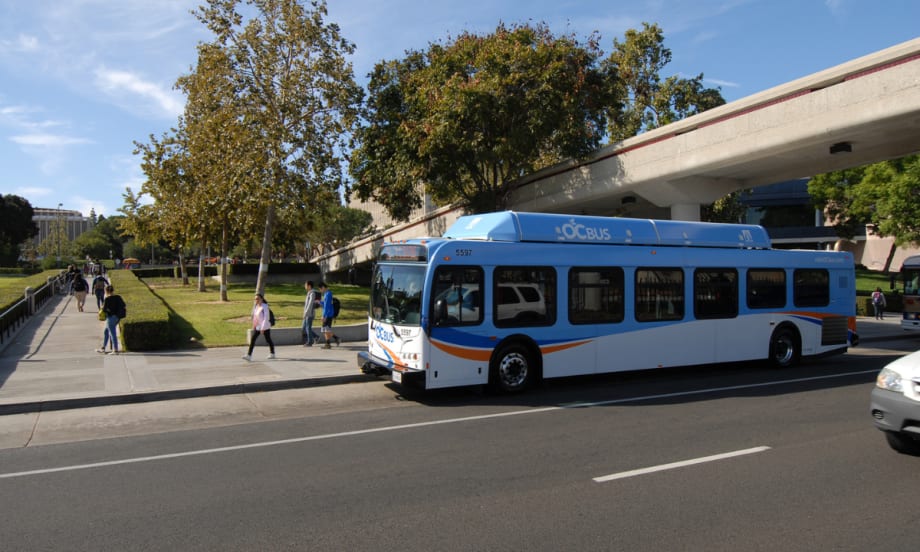
Throughout the year, OCTA focused on enhancing mobility, easing congestion, and strengthening the county’s transportation system while managing taxpayer funds.
Photo: Orange County Transportation Authority
3 min to read
The Orange County Transportation Authority achieved major milestones and advanced transportation projects in 2025, completing major highway improvements, expanding transit access, and enhancing travel for millions of residents, commuters, and visitors across the region.
Throughout the year, OCTA focused on enhancing mobility, easing congestion, and strengthening the county’s transportation system while managing taxpayer funds.
“Every project we advanced in 2025 delivers real benefits to the public – safer roads, more reliable travel, and better transit options — all while protecting our environment,” said OCTA Chair Doug Chaffee. “These accomplishments reflect our commitment to meeting Orange County’s transportation needs today and for the future.”
Public transit saw multiple advancements, including:
OCTA’s introduction of the Wave Card, a paperless fare system that speeds boarding, offers flexible reload options and easy mobile payments, and guarantees riders the lowest fares always.
Enhancing seasonal transit services, such as the OC Fair Express, which welcomed more riders than ever, providing families, seniors, and youth with another way to reach the Fairgrounds while helping reduce traffic congestion.
Continuing to promote and boost ridership on public transit: OC Bus recorded more than 29.2 million boardings through the end of November, on track to exceed 30 million for the year. And local city shuttles funded by OCTA’s Measure M notched more than 626,000 boardings through the first three quarters of the year.
Testing also began on the OC Streetcar, a 4.15-mile modern streetcar connecting Santa Ana and Garden Grove. All eight streetcar vehicles were completed and delivered in 2025, and testing is set to begin on city streets in the coming weeks. The streetcar will connect riders to Metrolink, OC Bus, and Amtrak Pacific Surfliner.
OCTA’s Environmental Projects Impacting Transit
OCTA also continued its commitment to protect the environment, including the county’s waterways, by funding $3.1 million in local projects that remove transportation-related pollutants before they reach rivers and the ocean.
This year’s funding will help install over 1,400 devices across the county that trap pollutants, improving community health and advancing a 14-year effort that has prevented more than 80 million gallons of trash from reaching waterways. According to an OCTA release, that is the equivalent of covering Angel Stadium’s entire playing field nearly 100 ft. deep in waste.
OCTA also strengthened rail resiliency through projects like the sand-placement project in San Clemente, which protects the coastal rail corridor from erosion and weather-related disruptions, and began work on a 1,400-ft. catchment wall as part of an ongoing effort focused on four priority areas to protect the rail line.
Collectively, these achievements highlight OCTA’s ongoing work to provide reliable and accessible transportation solutions while maximizing the value of taxpayer investments through Measure M, the county’s half-cent sales tax for transportation improvements.
Other major accomplishments include:
Completing the I-5 South County Improvements Project, upgrading 6.5 miles of the highway with new carpool and regular lanes, rebuilding interchanges, and improving pedestrian and bicycle access.
Making major progress with improvements along SR-55, set to finish in 2027, and breaking ground on SR-91 improvements in Anaheim, which will help drivers move more efficiently through some of the county’s busiest freeways.
More Management

METRO Opens Submissions for 2026 Motorcoach Awards
Nominations are now being accepted for METRO Magazine’s Operator of the Year and Innovative Operator of the Year awards.
Read More →
New York MTA Advances Final Contract for Second Avenue Subway Expansion
Contract Four is the largest in the Second Avenue Subway Phase 2 project and includes construction of station infrastructure, tracks, and signals for the subway expansion, MTA officials said. Work on Contract Four will begin in 2027.
Read More →
Transit Agencies Highlight Safety Gains at National Summit
Leaders from 15 major transit systems shared crime-reduction results and safety initiatives while discussing the role of continued federal support.
Read More →

NITA Names New Leadership, Expands Reduced-Fare Program at First Board Meeting
The new regional transit authority appointed its first board chair and interim executive director while extending reduced fares across CTA, Metra, and Pace for eligible riders.
Read More →
Beyond the Checklist: A Structured Approach to Transit Maintenance
Reliability-Centered Maintenance helps transit agencies move beyond routine checklists to focus limited resources on the assets and failures that have the greatest impact on safety, reliability, and service.
Read More →
APTA 2026 Nominating Committee Selects Leadership Slate, Names Chair and Vice Chair Nominees
Leadership changes will help shape the association’s priorities and its representation of the transportation industry during the 2026–2027 term.
Read More →
DART Launches Major Security, Fare Enforcement Initiative
The 90-day demonstration will deploy coordinated security teams at five light rail stations while testing controlled access and gathering data to guide future investments.
Read More →
Sponsored•September 9, 2026
Advancing Fare Collection Through Technology and Innovation
Learn about delivering 1300 gates at 91 stations while managing fare evasion. Explore the large scale deployment, solution customization and real-world results that affect the region. Prepare for deployment in your region now.
Read More →
Game Day in Motion: Moving Millions During the 2026 World Cup
Between packed transit stations and team motorcoaches, see how agencies and operators across North America tackled the transportation demands of the 2026 FIFA World Cup.
Read More →
Surface Transportation Extension Averts Shutdown, Leaves Transit Funding Gap
The stopgap keeps federal transportation programs moving, but missing advance funding could complicate the transit and rail projects agencies are planning next.
Read More →