




RELATED: S.F. to regulate Chariot, other private bus services
Chariot launches crowd-sourced shuttle in NYC
In addition to commuter service, Chariot is launching enterprise and charter services in the city.
August 3, 2017

Ford Motor Co. is launching its crowd-sourced shuttle service Chariot in New York City in August, aiming to provide new mobility solutions to consumers. Photo: Business Wire
2 min to read
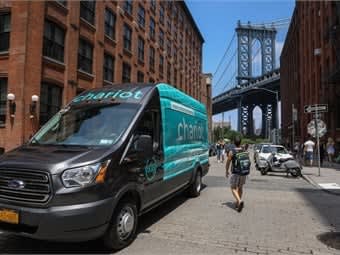
Ford Motor Co. is launching its crowd-sourced shuttle service Chariot in New York City in August, aiming to provide new mobility solutions to consumers. Photo: Business Wire
Ford Motor Co. is launching its crowd-sourced shuttle service Chariot in New York City in August, aiming to provide new mobility solutions to consumers.
Chariot offers commuters, some of whom live in transit deserts — areas that are not within walking distance of public transportation — a new way of getting from point A to point B, according to the company. During typical commuting times, Chariot shuttles will travel to busy areas where people work, then bring them back at the end of the day. Each shuttle accommodates more than a dozen people and guarantees seats for every rider.
New York is the latest market to get Chariot’s service, which is launching with two pre-planned service areas in Manhattan and Brooklyn, at a flat rate of $4 per ride. People can create additional service areas through crowd-sourcing. By this fall, Chariot plans to have 60 vehicles operating in New York City.
As part of the New York launch, commuters will be able to use a streamlined crowd-sourcing process to make the experience more user-friendly. The Chariot map will display service areas being crowd-sourced — giving commuters the chance to choose and contribute to these potential service areas.
Users can even create a custom route for areas they feel would benefit from Chariot, then share their proposal with friends, family and neighbors who may be taking similar commutes. Once enough riders sign up to support and fund a proposed route, as many Chariots as needed will be dispatched to service the area.
Ford’s own Global Data, Insights and Analytics team is supplementing Chariot’s planning. The group helps Chariot identify potential routes using advanced optimization algorithms based on commuter demand and behavior, as well as traffic data and existing infrastructure.
To use Chariot, riders simply check the app to find commuter routes near them, then reserve a guaranteed seat as they head toward their assigned vehicle. Keeping the service affordable is a priority, and solutions such as WageWorks and commuter checks — which allow people to use pretax wages to pay for commuting costs — are fully compatible with Chariot use, the company says.
In addition to commuter service, Chariot is launching enterprise and charter services in New York City. Enterprise is available for companies that would like to provide shared commutes for their employees, while charters allow users to directly book a private 14-passenger Chariot for day trips or events.
More Bus

New York MTA Plans Largest Bus Fleet Upgrade in More Than a Decade
The agency is seeking manufacturers for 650 new CNG buses to replace aging vehicles, improve reliability, and advance its broader fleet modernization strategy.
Read More →
Building a Flexible Path to Transit Electrification
John Hroncich discusses BAE Systems’ modular and scalable approach, lessons learned from decades of real-world operations, and how agencies can identify electrification strategies that fit their fleets.
Read More →
Bus Tech Talk: Keeping Transit Technicians Ahead of the Technology Curve
LA Metro’s Obed Mejia discusses technician training, evolving maintenance technology, fleet replacement, and strategies for getting the most out of today’s transit fleets.
Read More →
Biz Briefs: RIPTA Unveils New Frontrunners, Clevland RTA Adds New Siemens, and More
In METRO's latest installment, we take a look at recent news from Siemens, Prevost, Dodge, and more partnerships making headlines across the transportation sector.
Read More →
People Movement: Holly Arnold Joins Transdev and More
In this edition, we also cover recent appointments and announcements at Pace, CamTran, MCI, and more, showcasing the individuals helping to shape the future of transportation.
Read More →
The High Cost of Transit Buses: Industry Leaders Look to Procurement Reform
Transit leaders and policymakers examine how standardized bus designs, streamlined procurement, and predictable funding could help agencies stretch budgets and deliver better service.
Read More →
The Business Voice Behind Public Transportation
As chair of APTA’s Business Members Board of Governors, Ray Melleady explains how more than 850 business members are partnering with transit agencies to advance funding, innovation, and industry-wide collaboration.
Read More →
From Surviving to Thriving: Building Stronger Transportation Organizations
Bus Business Consultants founder Brian Dickson shares lessons on leadership, organizational health, and creating options for long-term success in a changing transportation industry.
Read More →
Finding the ‘Happy Medium’: Optimizing Maintenance Without Sacrificing Reliability
The key to maintenance optimization isn’t doing less work—it’s doing the right work at the right time on the right assets.
Read More →
LA Metro, City of West Hollywood, and Partners Advance Smarter Bus Lane Enforcement
The award-winning partnership combines AI-powered detection with human oversight to improve bus reliability, accessibility, and enforcement efficiency.
Read More →