Chicago Awards Construction Contract for Red Line Extension
The Chicago Transit Board approved the award of a $2.9 billion contract to Walsh-VINCI Transit Community Partners following a comprehensive, two-year procurement process.
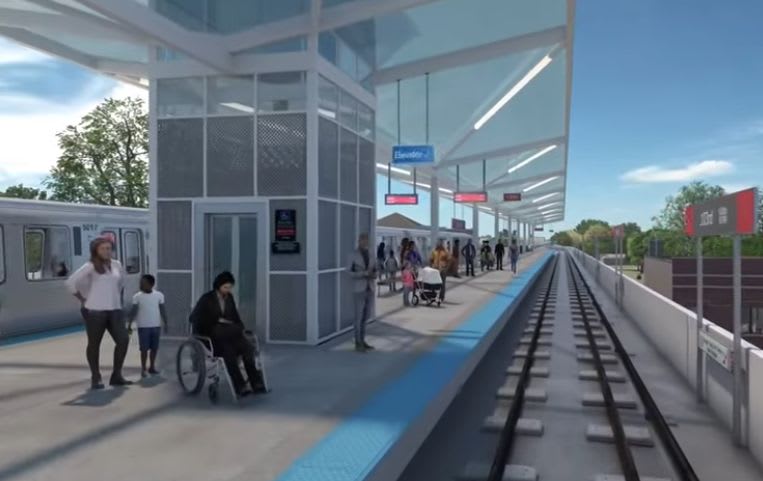
The RLE is a transit equity project that fulfills a commitment to the Far South Side by significantly improving transportation to this part of the city with 5.6 miles of new track and four new fully accessible rail stations.
Photo: CTA
3 min to read
The Chicago Transit Authority (CTA) has taken the next major step in the transformational Red Line Extension (RLE) Project by selecting an experienced contracting team, Walsh-VINCI Transit Community Partners, to design and build the 5.6-mile extension of the Red Line from 95th Street to 130th Street, including four new Red Line stations.
The Chicago Transit Board approved the award of a $2.9 billion contract to Walsh-VINCI Transit Community Partners following a comprehensive, two-year procurement process.
Ad Loading...
The Red Line Extension
RLE is the largest project in CTA history and will provide faster connections from the Far South Side to the rest of the city while serving as an economic catalyst to one of the most disinvested parts of Chicago.
The RLE is a transit equity project that fulfills a commitment to the Far South Side by significantly improving transportation to this part of the city with 5.6 miles of new track and four new fully accessible rail stations.
By selecting the team that provided the best value to design and build the RLE Mainline Project, the CTA has reached yet another significant milestone for this historic project.
The RLE is a critical project for Chicago because:
The Far South Side is the only area where CTA’s rail rapid transit service stops short of the city border.
Communities here are largely populated with low-income, minority residents.
For more than 50 years residents have been promised the line would be extended.
Ad Loading...
“The Red Line Extension corrects past transit inequity and increases access to the most affordable transportation in the city. Hiring the contracting team that can provide the best value to the CTA to construct the RLE is a consequential step that demonstrates our vow to build this project,” said CTA President Dorval R. Carter Jr. “The CTA’s Red Line Extension Project is an example of how transportation dollars can be distributed to have lasting impact on the Far South Side including workforce and small business opportunities that create jobs and support families.”
The Design-Build Contractor
The Chicago Transit Board approved the award of a $2.9 billion contract to Walsh-Vinci Transit Community Partners, which will engineer, design, and build the Red Line Extension Mainline Project.
The contractor was selected following a nearly two-year comprehensive procurement process. The contracting team will be responsible for building the Mainline project, which includes:
Extension of the Red Line 5.6 miles from the 95th Street to south of 130th Street.
Building four new, accessible stations near 103rd Street, 111th Street, Michigan Avenue and 130th Street, each expected to include bus, bike, pedestrian, and parking facilities.
Construction is expected to start in late 2025 and be completed by 2030.
RLE is the largest project in CTA history and will provide faster connections from the Far South Side to the rest of the city while serving as an economic catalyst to one of the most disinvested parts of Chicago.
Photo: CTA
The Contractor Process
To find and select a contractor to design and build the project, CTA underwent a two-step procurement process to select the most qualified contractor that provides the best value to CTA.
Ad Loading...
The first step was issuing a Request for Qualifications in 2022 to find contracting teams that had the experience and ability to build a large, complex rail project like the Red Line Extension.
CTA subsequently qualified three contracting teams, including FH Paschen, Ragnar Benson, Milhouse and BOWA Joint Venture, Kiewit Infrastructure, and Walsh-VINCI Transit Community Partners.
CTA issued a Draft Request for Proposals to the potential bidders followed by a Final Request for Proposals in September 2023.
Following the rigorous two-year bid process, CTA determined that the proposal submitted by Walsh-VINCI Transit Community Partners provided the best value to CTA.
In considering the bids, CTA considered the technical proposals on how the project would be built and the proposed cost. The Walsh-VINCI Transit Community Partners team brings to CTA its local, national, and global transit construction experience.
Ad Loading...
Walsh-Vinci’s proposal was selected because it provided an innovative design and construction approach that will minimize impacts to community. Walsh-VINCI Transit Community Partners includes Walsh Construction, VINCI Construction, EXP, Systra, and other subcontractors.
Contract Four is the largest in the Second Avenue Subway Phase 2 project and includes construction of station infrastructure, tracks, and signals for the subway expansion, MTA officials said. Work on Contract Four will begin in 2027.
The Garden State Initiative analysis examines the roles of Amtrak infrastructure, fleet management, and agency operations while recommending a more performance-based approach to improving reliability.
Beginning in 2027, Stadler will provide on-site technical expertise, spare parts support, training, and obsolescence management to help extend the reliability and longevity of CapMetro’s GTW fleet.
In METRO's latest installment, we take a look at recent news from Complete Coach Works, Beep, FlixBus, and more partnerships making headlines across the transportation sector.
Pedestrian microsimulation is helping rail planners identify bottlenecks, test station designs, and prepare complex transit hubs for growing passenger volumes.
The privately developed project would offer a 15-minute trip between downtown and O’Hare’s Terminal 2, with trains operating every 15 minutes on a dedicated track. The service would use battery-electric trains and three existing freight rail rights-of-way.
The draft feasibility report identifies strategies to protect the coastal rail line for decades as the agency continues near-term stabilization and sand placement efforts.