



Chicago RTA highlights accessibility of region's transit systems
Commemorating the 24th anniversary of the Americans with Disabilities Act, which was signed into law by President George H.W. Bush on July 26, 1990.

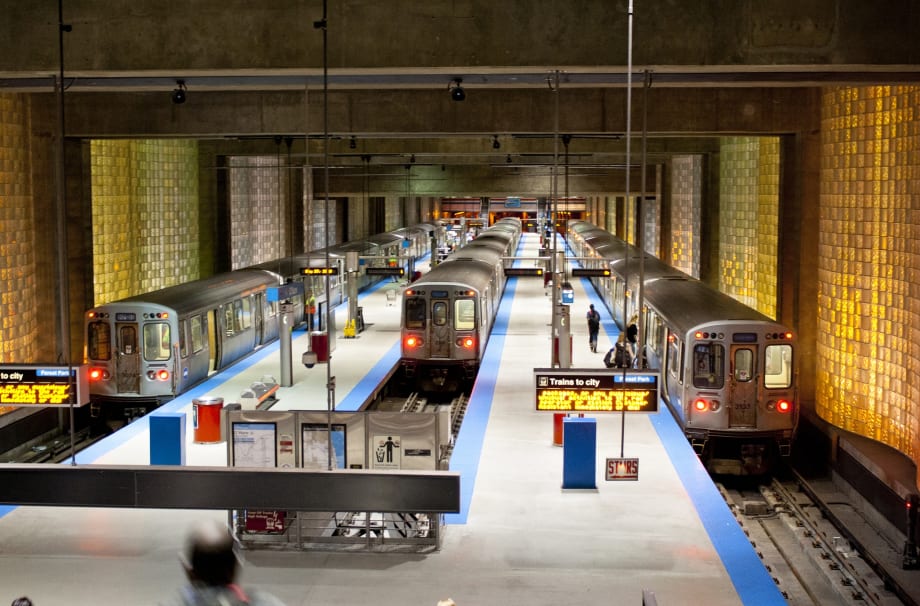
Photo CTA Web via Flickr
Photo CTA Web via Flickr
The RTA region’s transit system offers a variety of accessibility features. Many riders are likely aware of some of them which include accessibility of most CTA and Metra rail stations; buses and trains making automated stop and route announcements; Pace and CTA operating “low floor” buses equipped with ramps for easy boarding; and CTA Real-Time Train Tracker signs throughout the CTA “L” system.
Over the past few years, the RTA has awarded federal dollars to the CTA, Metra and Pace to fund a variety of accessibility features in the region’s transit system.
Highlights include:
1. The RTA awarded federal and RTA funds to Pace to install concrete pads and connections to accessible paths at 65 Pace bus stops. This work is complete throughout the region.
2. The RTA awarded federal funds to the City of Chicago to reimburse taxicab companies for the cost of purchasing wheelchair accessible taxis, or converting existing taxis to accessible taxis. It’s estimated that these funds could result in 133 more accessible cabs in the City.
3. The RTA awarded federal funds to the CTA to produce guides for customers who are blind or have a vision impairment. The guides, currently being designed, will be produced in Braille, plain text, and audio files.
4. The RTA awarded federal and RTA funds to Metra to install Visual Information Systems which are now being designed and will provide display signage that lists real-time information about Metra train service and facilitate greater mobility for people who are deaf or hard of hearing.
Additionally, the RTA, along with the CTA, Metra and Pace, is participating in AccessChicago 2014 this Thursday, July 17, from 10 a.m. to 5 p.m. at Navy Pier. This is the City’s premier event that brings more than 100 of Chicagoland’s top disability-related service providers, product merchandisers, assistive technology suppliers and recreational exhibitors together under one roof. For more information on the event, visit http://tinyurl.com/ngwdncr.
This year, both the CTA and Pace will have buses at the event, so riders can practice boarding buses and using wheelchair securements to become more aware of the accessibility features of the region’s fixed-route system.
More Paratransit

Biz Briefs: RIPTA Unveils New Frontrunners, Clevland RTA Adds New Siemens, and More
In METRO's latest installment, we take a look at recent news from Siemens, Prevost, Dodge, and more partnerships making headlines across the transportation sector.
Read More →
King County Metro Makes ADA Paratransit Easier to Navigate
METRO's Innovative Solutions Award winner replaces complex service-area descriptions with an accessible, interactive map that puts paratransit information directly in customers’ hands.
Read More →
Jacksonville’s NAVI Project Charts a New Course for Autonomous Public Transportation
Through its NAVI program, JTA is showing how autonomous vehicles, intelligent infrastructure, and coordinated operations can work together to deliver everyday public transportation.
Read More →
Driving Smarter Paratransit
John Hanlon shares how AlphaRoute is leveraging AI-powered technology to help paratransit providers optimize operations, support frontline staff, and enhance the rider experience.
Read More →
METRO Magazine Announces 2026 Innovative Solutions Awards Winners
Projects Recognized for Advancing Mobility Through Technology, Accessibility, Workforce Innovation, and Operational Excellence
Read More →
Biz Briefs: STV teams with Amtrak, Motorcoach Operators Boost Fleet and Land Contracts, and More
From manufacturers and suppliers to transit agencies and motorcoach operators, these updates offer a snapshot of the projects, partnerships and business moves driving the industry forward.
Read More →
Biz Briefs: Masabi Teams with St. Louis Metro and More
In METRO's latest installment, we take a look at recent news from Transdev, Hitachi, and more partnerships making headlines across the transportation sector.
Read More →
New York MTA Leverages Zoning Program to Advance Station Accessibility
Accessibility enhancements at Nevins St Station will be financed through a development agreement tied to the MTA's Zoning for Accessibility initiative.
Read More →
Reinventing Fleet Maintenance with Real-time Visibility and AI
Transit leaders need to know what needs fixing, where to look, who is responsible, when work is completed, and what it costs without having to chase information across disconnected systems.
Read More →
SamTrans Sets Priorities for Potential Connect Bay Area Revenue
The board-approved framework allocates future funding to maintaining service, rider improvements, equity initiatives, and infrastructure repairs.
Read More →