



Chicago taps manufacturer for next generation railcars
The new 7000-series railcars — the largest railcar order in CTA history — will be built by CSR Sifang America JV, which as part of its winning bid has pledged to build a brand-new rail car assembly facility in Chicago.

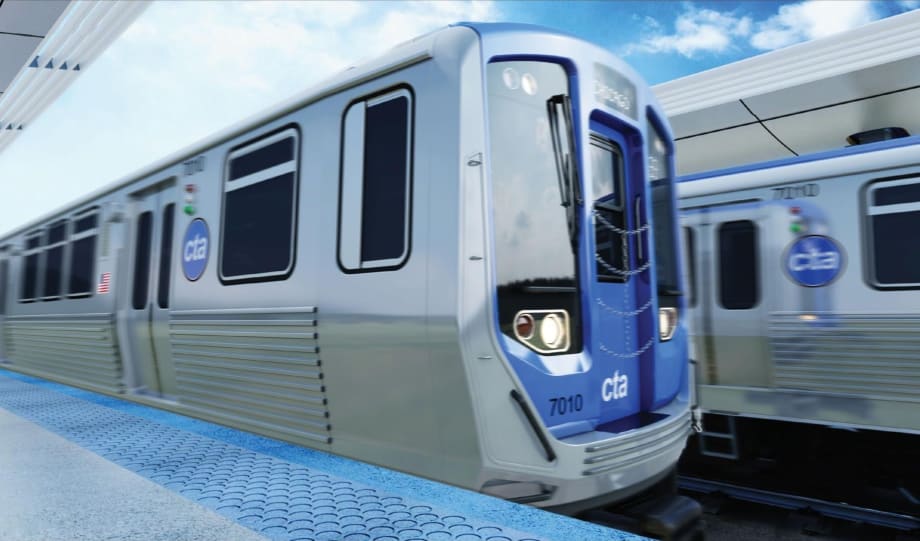
A conceptual rendering courtesy CTA.
A conceptual rendering courtesy CTA.
The Chicago Transit Authority (CTA) Board awarded a contract for the newest generation of CTA railcars — the 7000-series — continuing the unprecedented modernization of the CTA under Mayor Rahm Emanuel while fostering economic development and job creation in Chicago.
The new 7000-series railcars — the largest railcar order in CTA history — will be built by CSR Sifang America JV, which as part of its winning bid has pledged to build a brand-new rail car assembly facility in Chicago — the first of its kind in 35 years. The facility is expected to generate 170 jobs and represents an investment of $40 million.
“Providing modern trains and buses is a critical part of having a world-class transit system,” said CTA President Dorval R. Carter, Jr. “This railcar purchase — the largest in CTA history — will give CTA one of the newest fleets in the United States and provide our customers with state-of-the-art trains providing comfortable, reliable rides.”
Related: CTA completes wireless installation on Red, Blue lines
In July 2014, Mayor Emanuel and the Chicago Federation of Labor announced a partnership to encourage the creation of U.S. manufacturing jobs, by working with CTA to include a “U.S. Employment” provision in the bids for the new 7000-series cars. The bid solicitation asked bidders to provide the number and type of new jobs they planned to create related to the production of the new railcars, as well as an outline of their job recruitment and workforce training plans.
CSR submitted the lowest bid of $1.309 billion for 846 railcars. CTA will purchase a base order of 400 cars first, with options to purchase the remainder in coming years.
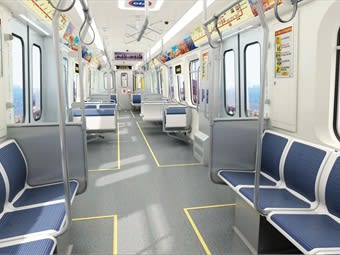
A conceptual rendering of the interior of the CTA's future railcars.
Prototype models are expected to be complete in 2019; following testing, the cars will go into service in 2020. The cars will be assembled in a new facility CSR plans to build in Chicago.
CSR is one of the world’s largest railcar manufacturers, and since 1962 has built more than 30,000 railcars for more than 20 countries in Asia, South America and the Middle East. In the U.S., CSR is building railcars for Boston’s transit system.
The new railscars will feature of mix of forward-facing and aisle-facing seats, a seating configuration designed to ensure customer comfort while maximizing passenger flow and capacity. The design was based on studies CTA conducted to solicit feedback from CTA riders on preferences related to seating and design — the first time the CTA has sought rider input on seating layout.
Related: Crimes on CTA decreased 25% in 2015
The cars’ design will resemble the 5000-series, the CTA’s newest railcars, with stainless steel bodies, LED lighting and signage, and AC power propulsion for a smoother, quieter ride. The cars will replace the oldest cars on the CTA system, some of which are more than 30 years old.
Once delivery of the new railcars is complete, the CTA will have its youngest rail fleet in decades — reducing the average age of CTA rail cars from 26 years in 2011 to 13 years when the 7000-series are delivered. The new railcars are projected to save the CTA about $7M annually in reduced maintenance costs and reduced use of power.
More Rail

New York MTA Advances Final Contract for Second Avenue Subway Expansion
Contract Four is the largest in the Second Avenue Subway Phase 2 project and includes construction of station infrastructure, tracks, and signals for the subway expansion, MTA officials said. Work on Contract Four will begin in 2027.
Read More →
San Diego MTS Breaks Monthly Trolley Ridership Record
Agency officials said July’s ridership indicates MTS’s continued recovery from the pandemic.
Read More →
Report Examines NJ TRANSIT Reliability, Funding Challenges
The Garden State Initiative analysis examines the roles of Amtrak infrastructure, fleet management, and agency operations while recommending a more performance-based approach to improving reliability.
Read More →
Stadler, CapMetro Sign Long-Term Rail Fleet Support Agreement
Beginning in 2027, Stadler will provide on-site technical expertise, spare parts support, training, and obsolescence management to help extend the reliability and longevity of CapMetro’s GTW fleet.
Read More →
Biz Briefs: Alstom Lands Canadian Contract, LYT to Supply California TSP, and More
In METRO's latest installment, we take a look at recent news from Complete Coach Works, Beep, FlixBus, and more partnerships making headlines across the transportation sector.
Read More →
CATS Gold Line Marks 5 Years of Service, 2.8M Passenger Trips
With a six-mile expansion planned, the Charlotte streetcar is positioned to connect more neighborhoods and major transit hubs across the region.
Read More →
Why Simulating Pedestrian Movement Has Become Essential for Modern Rail Stations
Pedestrian microsimulation is helping rail planners identify bottlenecks, test station designs, and prepare complex transit hubs for growing passenger volumes.
Read More →
Amtrak Begins Major Construction at New York’s Sunnyside Yard
The new maintenance facility will support Amtrak’s Airo trainsets while improving maintenance efficiency and turnaround times in New York.
Read More →
Chicago Leaders Unveil Plans for O’Hare Airport Express Train
The privately developed project would offer a 15-minute trip between downtown and O’Hare’s Terminal 2, with trains operating every 15 minutes on a dedicated track. The service would use battery-electric trains and three existing freight rail rights-of-way.
Read More →
OCTA Maps Out 30-Year Strategy to Protect Coastal Rail Corridor
The draft feasibility report identifies strategies to protect the coastal rail line for decades as the agency continues near-term stabilization and sand placement efforts.
Read More →