



Chicago Transit Authority awards several contracts
Among announcements are overhaul of 3200-series railcars and $15.7 million of city tax-increment financing funds to make the historic Quincy station accessible to customers with disabilities.

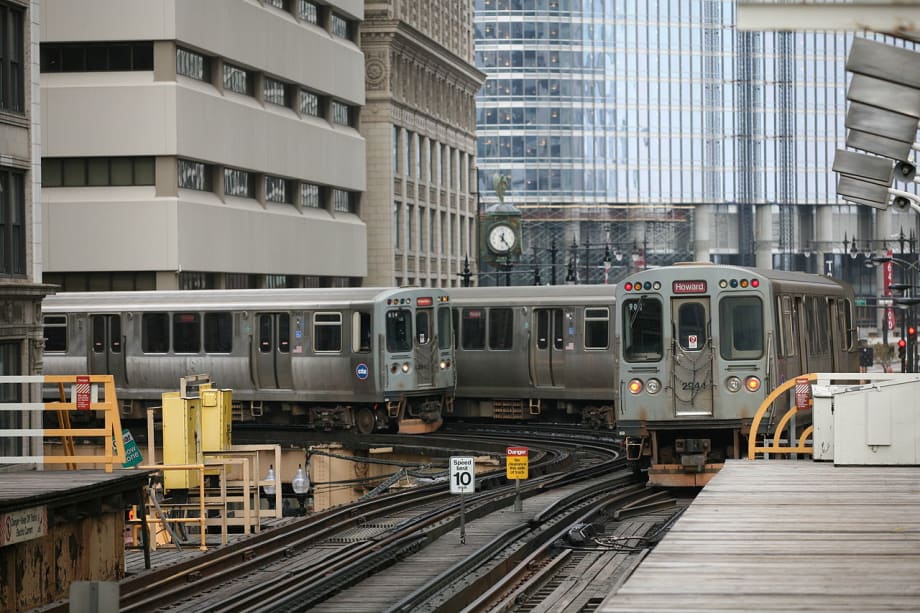
The Chicago Transit Authority (CTA) board approved several decisions, including the award of two contracts that will be part of an overhaul of CTA’s 3200-series railcars. The mid-life overhaul is part of an aggressive modernization and infrastructure plan by Mayor Rahm Emanuel and CTA President Forrest Claypool that will extend the life of the railcars and improve their performance, efficiency and reliability.
The overhaul of the 3200s will replace many of the railcars’ major operating systems, including installation of new air conditioning systems and the rebuilding of the propulsion system, passenger door motors, and the wheel and axle assemblies. The 3200-series was manufactured by Morrison-Knudsen in 1992 and 1993.
Following separate competitive bid processes, the board approved a contract valued at $8.2 million to Ellcon National Inc. for the purchase of new auxiliary power systems that will be more efficient and reliable for the remaining years of service of the 3200-series railcars.
A second contract valued at $4.1 million was awarded to Axion Technologies for the purchase of color light-emitting diode (LED) signs, which will replace the roller-curtain signs on the sides and ends of each railcar that are used to display the color of a rail line and its respective destination. The LED destination displays are brighter, provider larger text and are easier for customers to read.
The board approved a plan that would use $15.7 million of city tax-increment financing (TIF) funds to make the historic Quincy station accessible to customers with disabilities. Improvements will include the addition of two elevators, the replacement of two sets of entrance stairs, as well as painting, lighting improvements, and other repairs — while retaining the historic appearance of the station, one of the few surviving original Loop ‘L’ stations.
In addition, a contract was awarded for a project that will make numerous improvements to three substations that provide power to CTA’s Red and Brown lines. The Kimball, Princeton and State Substation Rehabilitation project will improve service and reliability for customers by upgrading the equipment that provides power to Red and Brown line train tracks as well. The project will also upgrade existing substation buildings.
The board awarded the $25.6 million contract to Clark Construction Group. The scope of the work will upgrade existing electrical equipment and buildings at Princeton substation on West 63rd Street, the State Street substation in the Loop and the Kimball substation at the Brown Line terminal. The project will also increase the electrical power capacity at both State and Kimball by 20%.
Finally, following a competitive bid process, a contract valued at $20.4 million was awarded to Kiewit Infrastructure Co. for the Milwaukee Blue Line Track Renewal project.
The project will address slow zones not repaired during previous construction projects. “Slow zones” are implemented when track conditions are too poor to allow trains to travel at top speeds of 55 mph.
Currently, Blue Line trains operating to and from O’Hare and the Loop incur speed restrictions ranging from 35 mph to 15 mph as a precautionary measure following track inspections that found that the wooden rail ties were in poor condition and in need of replacement.
More Paratransit

Biz Briefs: RIPTA Unveils New Frontrunners, Clevland RTA Adds New Siemens, and More
In METRO's latest installment, we take a look at recent news from Siemens, Prevost, Dodge, and more partnerships making headlines across the transportation sector.
Read More →
King County Metro Makes ADA Paratransit Easier to Navigate
METRO's Innovative Solutions Award winner replaces complex service-area descriptions with an accessible, interactive map that puts paratransit information directly in customers’ hands.
Read More →
Jacksonville’s NAVI Project Charts a New Course for Autonomous Public Transportation
Through its NAVI program, JTA is showing how autonomous vehicles, intelligent infrastructure, and coordinated operations can work together to deliver everyday public transportation.
Read More →
Driving Smarter Paratransit
John Hanlon shares how AlphaRoute is leveraging AI-powered technology to help paratransit providers optimize operations, support frontline staff, and enhance the rider experience.
Read More →
METRO Magazine Announces 2026 Innovative Solutions Awards Winners
Projects Recognized for Advancing Mobility Through Technology, Accessibility, Workforce Innovation, and Operational Excellence
Read More →
Biz Briefs: STV teams with Amtrak, Motorcoach Operators Boost Fleet and Land Contracts, and More
From manufacturers and suppliers to transit agencies and motorcoach operators, these updates offer a snapshot of the projects, partnerships and business moves driving the industry forward.
Read More →
Biz Briefs: Masabi Teams with St. Louis Metro and More
In METRO's latest installment, we take a look at recent news from Transdev, Hitachi, and more partnerships making headlines across the transportation sector.
Read More →
New York MTA Leverages Zoning Program to Advance Station Accessibility
Accessibility enhancements at Nevins St Station will be financed through a development agreement tied to the MTA's Zoning for Accessibility initiative.
Read More →
Reinventing Fleet Maintenance with Real-time Visibility and AI
Transit leaders need to know what needs fixing, where to look, who is responsible, when work is completed, and what it costs without having to chase information across disconnected systems.
Read More →
SamTrans Sets Priorities for Potential Connect Bay Area Revenue
The board-approved framework allocates future funding to maintaining service, rider improvements, equity initiatives, and infrastructure repairs.
Read More →