



Cincinnati Metro chief, Garcia Crews resigns
Terry Garcia Crews, who joined Metro in November 2010, plans to return to a successful consulting career in the transit industry and spend more quality time with her family.

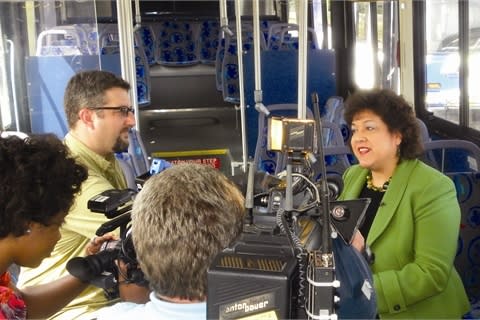

Garcia Crews, who joined Metro in November 2010, plans to return to a successful consulting career in the transit industry.
“The time is right for me to turn my focus to a consulting career and spend more quality time with my family, including my aging parents who live out west and my children,” Garcia Crews said. “My service in Cincinnati builds upon my decades of experience in transportation. I look forward to being able to help and support organizations all over the country.”
RELATED:Cincinnati's SORTA celebrates 40 years
Darryl Haley, Metro’s executive director of development and Disadvantaged Business Enterprises Officer, will serve as interim GM.
SORTA Board member and vice chair Ken Reed will serve as chair of the search committee for Metro’s next CEO and general manager. The Board will conduct a national search to fill this position, said Southwest Ohio Regional Transit Authority (SORTA) Board chair Jason Dunn.
“Terry has led our organization through a period of great transition, and we appreciate and respect the tremendous service she has provided to this community and to those who depend on public transportation,” Dunn said.
“She also has led the development of the go*FORWARD plan that we recently presented to the community and which we intend to build upon in the coming months and years to improve public transportation in this region. We wish only the best for Ms. Garcia Crews as she pursues other career opportunities.”

Garcia Crews said she is proud of Metro’s progress over the past four years – from the introduction of Metro*Plus to increased service in this region’s major corridors, including more east-west routes and reduced focus on downtown transfers, new destinations and increased efficiency and productivity of operations.
“I am especially gratified by the teamwork and planning that has led Metro to develop a vision for the future and that an independent study determined that Metro is the top transit system among peer cities in terms of operational efficiency,” Garcia Crews said.
“I have great confidence in the leadership and the team at Metro and community leaders to carry forth the discussion and implementation of expanding public transportation in this community. I want to extend my deepest appreciation to a passionate and dedicated staff. I am grateful for my time working with this team.”
Metro is a non-profit, tax-funded public service of the SORTA, providing about 17 million rides per year in the Greater Cincinnati area.
More Paratransit

King County Metro Makes ADA Paratransit Easier to Navigate
METRO's Innovative Solutions Award winner replaces complex service-area descriptions with an accessible, interactive map that puts paratransit information directly in customers’ hands.
Read More →
Jacksonville’s NAVI Project Charts a New Course for Autonomous Public Transportation
Through its NAVI program, JTA is showing how autonomous vehicles, intelligent infrastructure, and coordinated operations can work together to deliver everyday public transportation.
Read More →
Driving Smarter Paratransit
John Hanlon shares how AlphaRoute is leveraging AI-powered technology to help paratransit providers optimize operations, support frontline staff, and enhance the rider experience.
Read More →
METRO Magazine Announces 2026 Innovative Solutions Awards Winners
Projects Recognized for Advancing Mobility Through Technology, Accessibility, Workforce Innovation, and Operational Excellence
Read More →
Biz Briefs: STV teams with Amtrak, Motorcoach Operators Boost Fleet and Land Contracts, and More
From manufacturers and suppliers to transit agencies and motorcoach operators, these updates offer a snapshot of the projects, partnerships and business moves driving the industry forward.
Read More →
Biz Briefs: Masabi Teams with St. Louis Metro and More
In METRO's latest installment, we take a look at recent news from Transdev, Hitachi, and more partnerships making headlines across the transportation sector.
Read More →
New York MTA Leverages Zoning Program to Advance Station Accessibility
Accessibility enhancements at Nevins St Station will be financed through a development agreement tied to the MTA's Zoning for Accessibility initiative.
Read More →
Reinventing Fleet Maintenance with Real-time Visibility and AI
Transit leaders need to know what needs fixing, where to look, who is responsible, when work is completed, and what it costs without having to chase information across disconnected systems.
Read More →
SamTrans Sets Priorities for Potential Connect Bay Area Revenue
The board-approved framework allocates future funding to maintaining service, rider improvements, equity initiatives, and infrastructure repairs.
Read More →
Chicago's NITA Act Moves Into Next Phase as Service Improvements Begin
Rider-focused improvements will begin rolling out across the system immediately as CTA, Metra, and Pace increase service this summer in the six-county region.
Read More →