




Read More: California's VTA: 3 of 4 Unions Have Ratified Contracts
California City Announces Community-Centered Transit Corridor Plan
The Inglewood Transit Connector is a community-centered transit plan aimed to improve connectivity around the corridor.
April 23, 2025
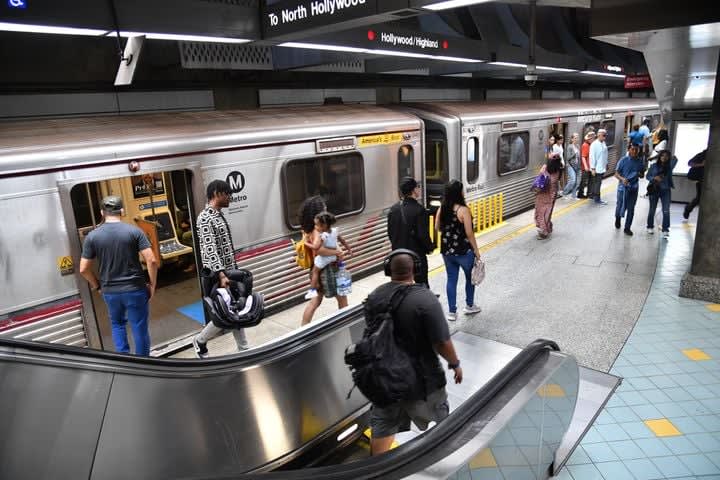
The Inglewood Transit Connector looks to make connections in the city easier, including helping riders reach LA Metro's K and C lines.
Photo: LA Metro
3 min to read
The City of Inglewood announced a reimagined approach to the Inglewood Transit Connector (ITC), a community-rooted transportation investment designed to make it easier for residents to travel within and around the city.
The rephrased plan is based on insights gained from engagement with the Inglewood community, including workshops and one-on-one meetings with business owners and community members.
Officials view the reimagined approach as a critical first step in meeting the core needs of Inglewood residents and businesses, including traffic relief, connected and walkable neighborhoods, and a more accessible downtown.
“With the world watching us as we prepare to host the 2028 Olympics, we’re also looking inward—listening to our community and taking strategic steps to deliver on what matters most to the people who live and work here,” said Inglewood Mayor James T. Butts. “This updated and phased approach to the ITC is our response to what we’ve heard: a desire for traffic relief and improved quality of life, connected and walkable neighborhoods, and a revitalized downtown reflecting Inglewood’s existing vibrant culture.”
Phasing for Impact
Transportation agency partners, including CalSTA and LA Metro, Inglewood City Councilmembers, Assemblymember Tina McKinnor, and other civic leaders support the phased approach to the plan.
Phase 1 of the ITC will focus on investing in the city’s downtown Market Street area, with improved storefronts and tenant-friendly improvements and a transit plan that delivers several mobility hubs with access from LA Metro’s K and C lines. Improved shuttle services, bus-only lanes, and enhanced smart traffic technology will also be implemented.
This phase is designed to reduce congestion, enhance transportation options, and better connect neighborhoods with Metro lines, local businesses, and community hubs.
These elements will be invested in the downtown area, which holds deep historical and economic significance for Inglewood.
“Market Street is more than historic business corridor—it’s a reflection of who we are,” said Mayor Butts. “That’s why we’re starting there first.”
The phasing strategy allows the City to jumpstart improvements that benefit residents and small businesses immediately while avoiding construction disruptions near Prairie Avenue before or during the Olympics.
Phase 1 improvements will also preserve the option for a high-capacity automated people mover to serve the city's long-term growth.
The mobility enhancements are funded and on track for delivery, demonstrating real momentum and the city’s commitment to get things done.
Recognizing the importance of local storefronts to the community is also a priority, and the city is taking a proactive and transparent approach to ensuring small businesses can thrive.
With careful planning and community engagement, the number of businesses impacted by the ITC project has been reduced to 23. Each impacted business will receive robust relocation support, supplemental grants, and promotional assistance.
“Our goal isn’t just to minimize disruption—it’s to help these businesses build back stronger,” said Councilmember Alex Padilla. “We’re providing the tools and resources businesses need to stay rooted right here in Inglewood.”
The city is also launching Destination Market Street to provide grants for storefront upgrades and tenant improvements, invest in streetscape investments, and update transit-oriented plans to support Market Street businesses.
Looking Forward
A contract was recently authorized with Elevate Inglewood Partners (EIP) to investigate design activities.
During the design phase, public engagement will continue throughout 2025 as details are shaped in partnership with EIP and the community. Upcoming opportunities will include pedestrian and bike safety upgrades, transit-oriented development updates, and collaborative planning around the new community mobility hubs.
“The City committed to a transparent public engagement effort—including workshops, focus groups, one-on-one meetings, and open houses—to shape the core components of the plan, and there will be robust outreach and assistance to all businesses that will be subject to relocation,” said Councilmember Gloria Gray.
More Management

METRO Opens Submissions for 2026 Motorcoach Awards
Nominations are now being accepted for METRO Magazine’s Operator of the Year and Innovative Operator of the Year awards.
Read More →
New York MTA Advances Final Contract for Second Avenue Subway Expansion
Contract Four is the largest in the Second Avenue Subway Phase 2 project and includes construction of station infrastructure, tracks, and signals for the subway expansion, MTA officials said. Work on Contract Four will begin in 2027.
Read More →
Transit Agencies Highlight Safety Gains at National Summit
Leaders from 15 major transit systems shared crime-reduction results and safety initiatives while discussing the role of continued federal support.
Read More →

NITA Names New Leadership, Expands Reduced-Fare Program at First Board Meeting
The new regional transit authority appointed its first board chair and interim executive director while extending reduced fares across CTA, Metra, and Pace for eligible riders.
Read More →
Beyond the Checklist: A Structured Approach to Transit Maintenance
Reliability-Centered Maintenance helps transit agencies move beyond routine checklists to focus limited resources on the assets and failures that have the greatest impact on safety, reliability, and service.
Read More →
APTA 2026 Nominating Committee Selects Leadership Slate, Names Chair and Vice Chair Nominees
Leadership changes will help shape the association’s priorities and its representation of the transportation industry during the 2026–2027 term.
Read More →
DART Launches Major Security, Fare Enforcement Initiative
The 90-day demonstration will deploy coordinated security teams at five light rail stations while testing controlled access and gathering data to guide future investments.
Read More →
Sponsored•September 9, 2026
Advancing Fare Collection Through Technology and Innovation
Learn about delivering 1300 gates at 91 stations while managing fare evasion. Explore the large scale deployment, solution customization and real-world results that affect the region. Prepare for deployment in your region now.
Read More →
Game Day in Motion: Moving Millions During the 2026 World Cup
Between packed transit stations and team motorcoaches, see how agencies and operators across North America tackled the transportation demands of the 2026 FIFA World Cup.
Read More →
Surface Transportation Extension Averts Shutdown, Leaves Transit Funding Gap
The stopgap keeps federal transportation programs moving, but missing advance funding could complicate the transit and rail projects agencies are planning next.
Read More →