



LA Metro Enforces Bus Lane Ticketing
Originally announced in November, the bus lane enforcement pilot program is rolling out on major corridors where bus lanes have been established to prioritize public transit in areas with high bus ridership and traffic congestion.

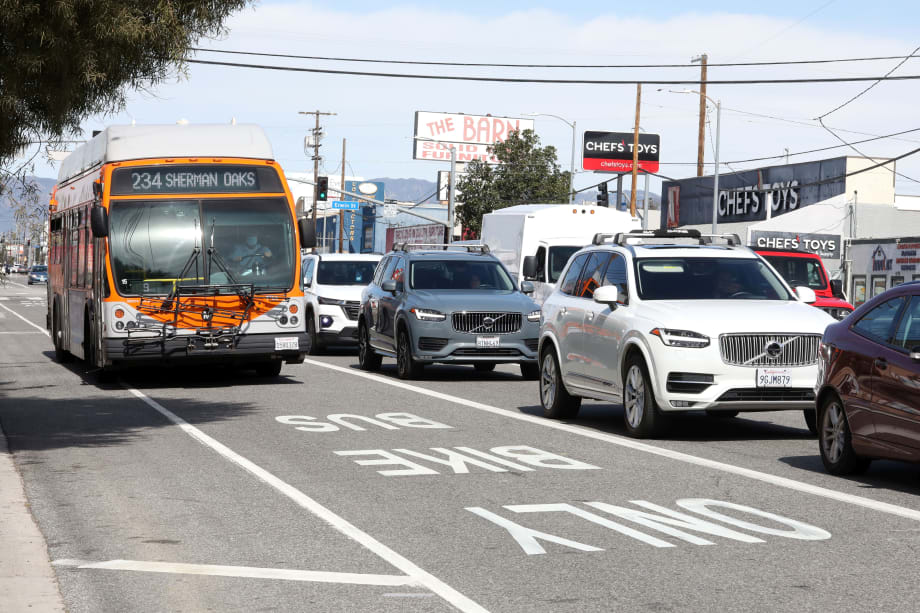
Effective immediately, violators will face a penalty starting at $293 for illegally parking in designated bus lanes, helping to ensure buses can travel without obstruction and reduce delays for passengers.
Photo: LA Metro
The Los Angeles County Metropolitan Transportation Authority (Metro), in partnership with the Los Angeles Department of Transportation (LADOT), announced its bus lane enforcement program will begin ticketing violators.
LA Metro Bus Lane Enforcement
Originally announced in November, the bus lane enforcement pilot program is rolling out on major corridors where bus lanes have been established to prioritize public transit in areas with high bus ridership and traffic congestion.
During the initial 60-day period (December–January), motorists illegally parked in bus lanes on those lines received notices by mail warning that future violations would be subject to fines.
Effective immediately, violators will face a penalty starting at $293 for illegally parking in designated bus lanes, helping to ensure buses can travel without obstruction and reduce delays for passengers.
“Without enforcement, a single parked car in a bus lane can delay dozens or even hundreds of riders. So, this is not just about issuing tickets, it’s about making sure our Metro buses run on schedule and get our riders to their destinations on time,” said Metro Board Chair and LA County Supervisor Janice Hahn.
Efforts to Improve Safety
The initiative is part of LA Metro’s ongoing efforts to improve safety and ensure equitable access, as well as enhancing the reliability and speed of bus services, particularly along high-traffic corridors where bus lanes are critical to keeping buses on time.
Blocking bus lanes has a disproportionate impact on bus riders, resulting in delays and disruptions. One vehicle can have an outsized burden on the dozens of riders on each bus, resulting in missed transfers and late arrivals.
In addition, for those passengers with mobility challenges, it impacts their ability to easily enter or exit the bus.
“Every Metro bus carries someone’s mother, grandfather, or child, all of whom are trying to get to their destination, so they can spend time with those most important to them,” said Stephanie Wiggins, CEO of LA Metro. “Our bus riders deserve to have a reliable, safe, and on-time ride. That’s why we’ve partnered with LADOT to install bus lanes — to give all our riders a better, faster, and more consistent ride — however, since they’ve been installed, service is delayed due to vehicles blocking the lanes and that’s why we’re pleased that enforcement is going to begin to prevent misuse of the bus lanes.”
How It Works
The automated enforcement system captures violations through two cameras installed behind the windshields of select buses each serving a different function.
One camera uses computer vision to detect vehicles on the roadway and traffic lane lines. When a bus lane violation is detected, the second camera records the license plate of the violating vehicle. Then, a traffic officer with LADOT will review the evidence and verify the accuracy of the image before issuing a ticket. Tickets will include details of the violation, including time, location, and images or video evidence.
As part of phase two of the program, 50 cameras are being installed on select buses for a total of 100 vehicles supporting the bus lane enforcement program. The 60-day warning period for those areas will begin on March 3.
The automated bus lane enforcement technology advances LA Metro’s NextGen Bus Plan by ensuring that the agency’s riders experience the benefits of new bus lanes and improve safety and transit reliability.
More Security and Safety

FTA Ends Direct Oversight of MBTA Safety Actions
The federal agency closed its remaining special directive to the Massachusetts Department of Public Utilities following a safety review that began in 2022.
Read More →
Transit Agencies Highlight Safety Gains at National Summit
Leaders from 15 major transit systems shared crime-reduction results and safety initiatives while discussing the role of continued federal support.
Read More →
DART Launches Major Security, Fare Enforcement Initiative
The 90-day demonstration will deploy coordinated security teams at five light rail stations while testing controlled access and gathering data to guide future investments.
Read More →
RTD Launches NextRide App to Consolidate Trip Planning, Fares, Security Reporting
The app expands on RTD’s existing NextRide web application and allows customers to view real-time vehicle locations and service alerts, purchase and store digital fares, and access customer support.
Read More →
TAPTCO Updates OSHA Compliance Training for Transit Maintenance Operations
The revamped program addresses 26 OSHA standards for maintenance facilities, with TAPTCO pointing to training, documentation, and everyday shop hazards as continuing challenges for transit operations.
Read More →
FRA Announces $5.3B in Rail Investments, Including $2B for Amtrak
Funding will support grade-crossing improvements, infrastructure upgrades, and new Amtrak equipment in 23 states.
Read More →
Chicago, Maryland Expand Non-Law-Enforcement Safety, Rider Support
The CTA and MTA are launching new programs aimed at de-escalation, crisis response, rider assistance, and greater transparency.
Read More →
LA Metro, City of West Hollywood, and Partners Advance Smarter Bus Lane Enforcement
The award-winning partnership combines AI-powered detection with human oversight to improve bus reliability, accessibility, and enforcement efficiency.
Read More →
LA Metro Reports 57% Decline in Homelessness on Transit System Since 2024
The agency's latest homelessness count offers new data on how care-based services and cross-sector partnerships can complement traditional transit security strategies.
Read More →
FTA Launches 'Transit Moves America' Dashboard to Highlight Agency Safety and Performance
The online dashboard transforms National Transit Database information into a public-facing resource that allows users to compare transit agencies on key operational and safety metrics.
Read More →