



Cummins' transit bus initiative focuses on improved uptime, reliability
As part of the SmartEfficiency initiative, Cummins revealed the 2017 L9 diesel and 2017 B6.7 hybrid engine systems, the ISL G Near Zero (NZ) NOx natural gas engine, the isolated engine coolant loop system for the 2017 L9 and ISL G, and a new SmartSupport service program.

Cummins Inc. has unveiled the SmartEfficiency™ initiative for transit bus, which focuses on improved uptime and reliability. As part of the SmartEfficiency initiative, Cummins revealed the 2017 L9 diesel and 2017 B6.7 hybrid engine systems, the ISL G Near Zero (NZ) NOx natural gas engine, the isolated engine coolant loop system for the 2017 L9 and ISL G, and a new SmartSupport service program.
Available in 2017, the L9 for transit applications will continue to use the modular aftertreatment architecture.
RELATED: Cummins receives Tier 4 cert. for QSK95 locomotives
"The transit-duty cycle provides unique challenges in creating consistent exhaust temperatures required for passive Diesel Particulate Filter (DPF) regeneration. Therefore, Cummins will continue to leverage the current product experience and Particulate Matter (PM) storage capacity of the Modular Aftertreatment System. This decision is consistent with the SmartEfficiency initiative and Cummins commitment to improving uptime and reliability," said Laura Chasse, Cummins GM of North American Bus.
Another SmartEfficiency-driven improvement is the isolated coolant loop for transit buses using an L9 or ISL G powertrain, which improves reliability and reduces downtime. A water-to-water heat exchanger will be mounted on the L9 or ISL G, and will provide heat to the passenger compartments, as needed, while providing a self-contained coolant flow to the engine compartment area. This new approach reduces potential coolant leakage or air infiltration for better Exhaust Gas Recirculation (EGR) cooler reliability and durability. Installation of the isolated coolant loop becomes standard in transit buses beginning January 2017.
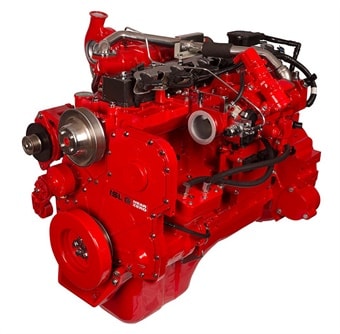
The Cummins Westport Inc. (CWI) ISL G Near Zero (NZ) offers transit authorities an alternative product that is certified to optional near-zero emissions standards. The ISL G NZ is built off the current ISL G platform, but requires Closed Crankcase Ventilation (CCV) that prevents crankcase emissions, a larger maintenance-free Three-Way Catalyst (TWC), and a unique engine calibration. Together, these improvements will allow the ISL G NZ to certify to 0.02g/bhp-hr, or 90% below the current U.S. Environmental Protection Agency (EPA) NOx standards, and provide up to a 15% reduction in CO2 emissions. The ISL G NZ can power transit and shuttle buses weighing up to 66,000 lbs. GVW. The ISL G NZ is the natural choice when considering alternative energy vehicles in non-attainment areas.
In order to provide an unparalleled service and support experience for transit authorities, Cummins is currently piloting a new service program, called SmartSupport, where Cummins will proactively replace critical engine components to reduce unscheduled downtime for our end customers.
"The proactive replacement schedule is based on the predicted life of the component. With the future integration of Connected Diagnostics,™ Cummins will be further equipped to keep the transit authority fleets operating, and replace critical components when needed," said Kartik Ramanan, Cummins GM of Global Bus.
More Bus

New York MTA Plans Largest Bus Fleet Upgrade in More Than a Decade
The agency is seeking manufacturers for 650 new CNG buses to replace aging vehicles, improve reliability, and advance its broader fleet modernization strategy.
Read More →
Building a Flexible Path to Transit Electrification
John Hroncich discusses BAE Systems’ modular and scalable approach, lessons learned from decades of real-world operations, and how agencies can identify electrification strategies that fit their fleets.
Read More →
Bus Tech Talk: Keeping Transit Technicians Ahead of the Technology Curve
LA Metro’s Obed Mejia discusses technician training, evolving maintenance technology, fleet replacement, and strategies for getting the most out of today’s transit fleets.
Read More →
Biz Briefs: RIPTA Unveils New Frontrunners, Clevland RTA Adds New Siemens, and More
In METRO's latest installment, we take a look at recent news from Siemens, Prevost, Dodge, and more partnerships making headlines across the transportation sector.
Read More →
People Movement: Holly Arnold Joins Transdev and More
In this edition, we also cover recent appointments and announcements at Pace, CamTran, MCI, and more, showcasing the individuals helping to shape the future of transportation.
Read More →
The High Cost of Transit Buses: Industry Leaders Look to Procurement Reform
Transit leaders and policymakers examine how standardized bus designs, streamlined procurement, and predictable funding could help agencies stretch budgets and deliver better service.
Read More →
The Business Voice Behind Public Transportation
As chair of APTA’s Business Members Board of Governors, Ray Melleady explains how more than 850 business members are partnering with transit agencies to advance funding, innovation, and industry-wide collaboration.
Read More →
From Surviving to Thriving: Building Stronger Transportation Organizations
Bus Business Consultants founder Brian Dickson shares lessons on leadership, organizational health, and creating options for long-term success in a changing transportation industry.
Read More →
Finding the ‘Happy Medium’: Optimizing Maintenance Without Sacrificing Reliability
The key to maintenance optimization isn’t doing less work—it’s doing the right work at the right time on the right assets.
Read More →
LA Metro, City of West Hollywood, and Partners Advance Smarter Bus Lane Enforcement
The award-winning partnership combines AI-powered detection with human oversight to improve bus reliability, accessibility, and enforcement efficiency.
Read More →