



Denver's RTD Boosts Rail Fare Inspections by More Than 500%
Throughout 2025, officers are conducting between 300,000 and 400,000 fare checks a month on the rail system, the agency reported.

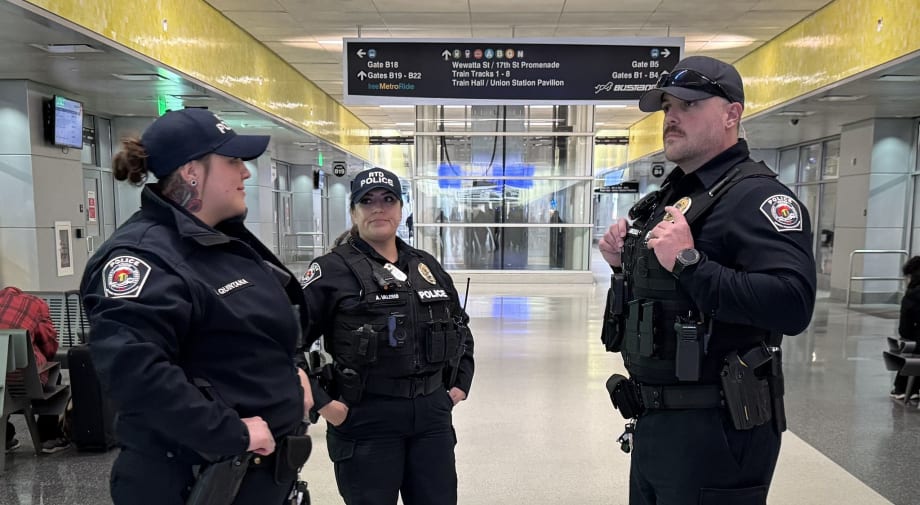
The four-step security plan requires maintaining a high visibility presence, supported by RTD initiating 24/7 patrolling across the district in May 2024, with department growth to 120 officers anticipated by year's end.
Photo: Denver RTD
Denver’s Regional Transportation District (RTD) increased its fare checks by over 500% since May 2024 to ensure individuals on light rail and commuter rail trains have paid fare to board.
With approximately 100 officers in the Transit Police Department (RTD-PD), the department’s growth has afforded increased patrolling across RTD’s stops and stations, including on the agency’s vehicles.
Throughout 2025, officers are conducting between 300,000 and 400,000 fare checks a month on the rail system, the agency reported.
Focusing on Fare Revenue
About 5% of RTD’s budget is comprised of fare revenue from customers.
Transit Police officers underwent fare enforcement training in October 2024, and the officers — along with contracted Allied security officers — are equipped with handheld scanners to conduct fare enforcement.
An in-depth review led to RTD-PD’s four-step security plan initiated in August 2024, which ramped up fare enforcement to support customers and RTD employees. The agency found that 6% of customers did not purchase a fare.
Another benefit of the fare checks is the ability to interact with those using RTD services directly.
“Checking people's fare puts us in contact with customers, accomplishing three of our four policing objectives,” said Steve Martingano, chief of police and emergency management at RTD.
RTD’s Larger Security Plan
The four-step security plan requires maintaining a high visibility presence, supported by RTD initiating 24/7 patrolling across the district in May 2024, with department growth to 120 officers anticipated by year's end. For comparison, the Transit Police Department had 19 officers in 2022.
As part of increased patrolling, officers are also getting out of their cars to survey stations and board RTD vehicles.
When observing behavior that does not support a Welcoming Transit Environment, officers proactively educate customers to Respect the Ride by treating other customers with respect — another aspect of the Transit Police’s security planning, the agency explained.
Martingano noted the fourth step in RTD-PD’s security plan is to utilize technology.
“Using real-time security video, officers can look at any camera in our 2,345-square-mile service area,” he said. “These steps have led to a huge reduction in criminal conduct, including drug-related activity, thus allowing ridership to grow.”
Officers can access video feeds from their laptops in addition to RTD video, investigators conducting real-time video surveillance of stops and stations.
In addition, beginning in 2023, the RTD-PD established live look-in cameras with the ability to hear and view activity on a vehicle for use in emergencies across its bus fleet. The agency’s commuter rail is already equipped with the live look-in technology, and the retrofitting of light rail vehicles with the technology is in progress.
Seeing Results
With the combined tactics, including fare checks, security-related calls into the RTD-PD are down by about 33%, with reports of illicit drug use down anywhere between 50% to 70% a month for 2025 compared with the same months during 2024, the RTD said.
The department also periodically conducts fare sweeps, which are a coordinated enforcement effort over a day to ensure compliance with fare policies.
The sweeps entail collaboration among Transit Police officers, security teams, rail and bus operations, video investigation units, police communications, and support from neighboring law enforcement agencies that assist by providing additional officers. RTD-PD works with other agencies to inform them about RTD operations and understand how Transit Police officers are deployed throughout the system.
Fare checks can occur at any time, and failure to present a valid fare could result in a hefty fine, including court costs.
More Security and Safety

Transit Agencies Highlight Safety Gains at National Summit
Leaders from 15 major transit systems shared crime-reduction results and safety initiatives while discussing the role of continued federal support.
Read More →
DART Launches Major Security, Fare Enforcement Initiative
The 90-day demonstration will deploy coordinated security teams at five light rail stations while testing controlled access and gathering data to guide future investments.
Read More →
RTD Launches NextRide App to Consolidate Trip Planning, Fares, Security Reporting
The app expands on RTD’s existing NextRide web application and allows customers to view real-time vehicle locations and service alerts, purchase and store digital fares, and access customer support.
Read More →
TAPTCO Updates OSHA Compliance Training for Transit Maintenance Operations
The revamped program addresses 26 OSHA standards for maintenance facilities, with TAPTCO pointing to training, documentation, and everyday shop hazards as continuing challenges for transit operations.
Read More →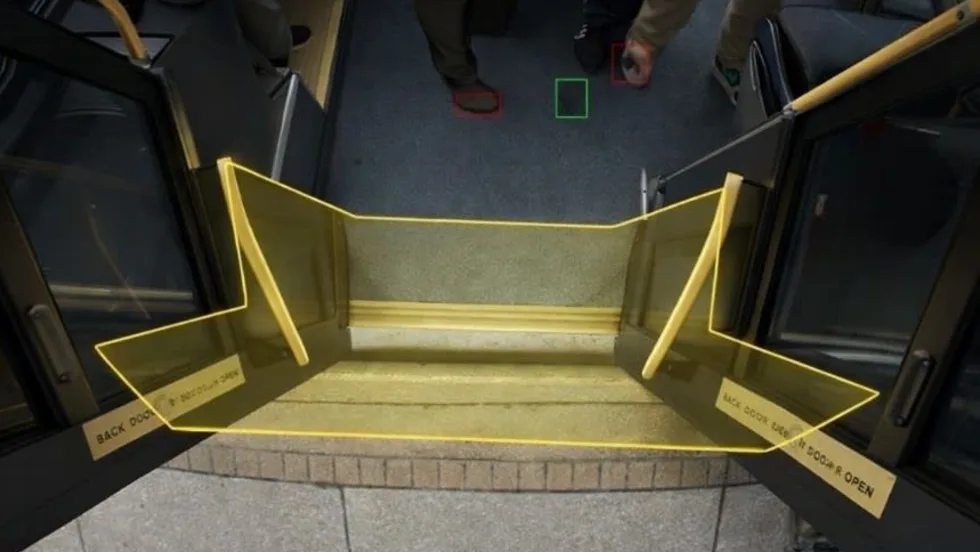
How VaporVision Adds Value to Transit Door Systems
Wabtec engineers explain how the system improves doorway detection, strengthens diagnostics and gives transit agencies and OEMs greater operating flexibility.
Read More →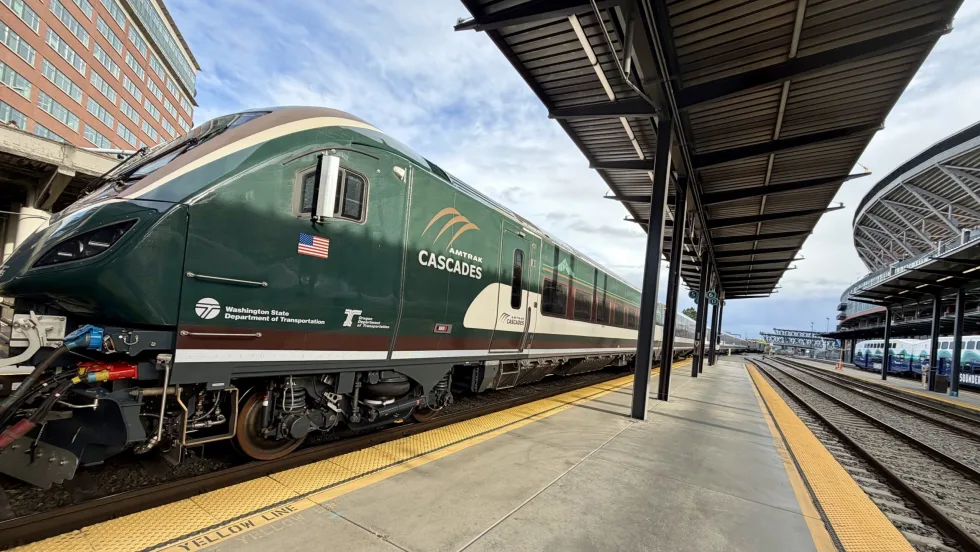
FRA Announces $5.3B in Rail Investments, Including $2B for Amtrak
Funding will support grade-crossing improvements, infrastructure upgrades, and new Amtrak equipment in 23 states.
Read More →
Chicago, Maryland Expand Non-Law-Enforcement Safety, Rider Support
The CTA and MTA are launching new programs aimed at de-escalation, crisis response, rider assistance, and greater transparency.
Read More →
LA Metro, City of West Hollywood, and Partners Advance Smarter Bus Lane Enforcement
The award-winning partnership combines AI-powered detection with human oversight to improve bus reliability, accessibility, and enforcement efficiency.
Read More →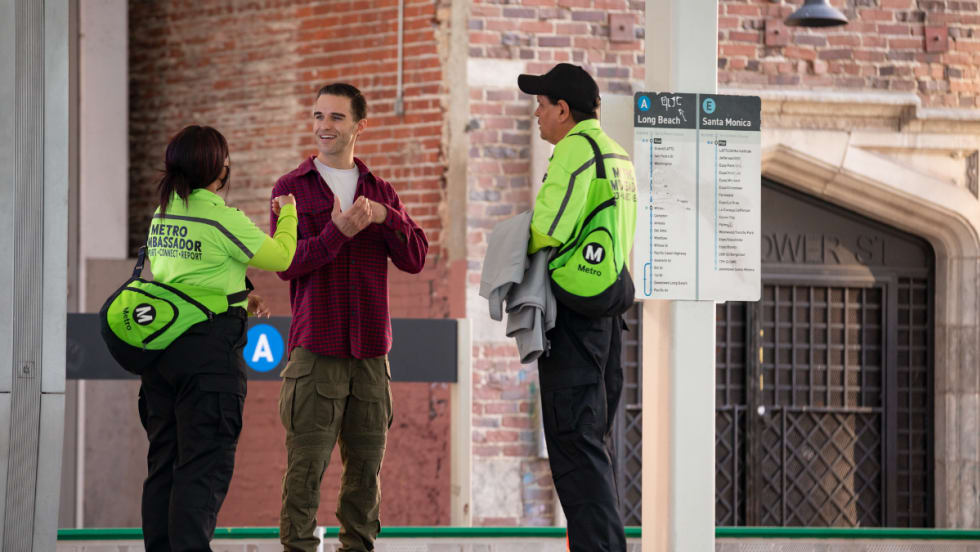
LA Metro Reports 57% Decline in Homelessness on Transit System Since 2024
The agency's latest homelessness count offers new data on how care-based services and cross-sector partnerships can complement traditional transit security strategies.
Read More →
FTA Launches 'Transit Moves America' Dashboard to Highlight Agency Safety and Performance
The online dashboard transforms National Transit Database information into a public-facing resource that allows users to compare transit agencies on key operational and safety metrics.
Read More →