



Driver’s actions led to Metro-North grade crossing collision, NTSB finds
The SUV driver died, along with five passengers on the train, in the Feb. 3, 2015, accident. The rail passengers were killed when 343 feet of the third rail, which powers the train, penetrated the floor of the first train car and struck passengers.

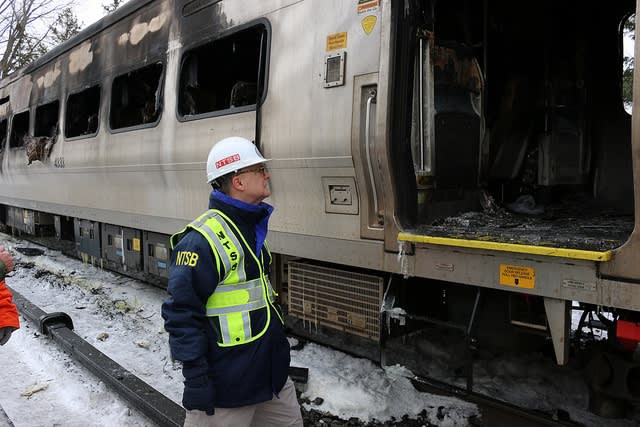
The investigation found that Metro-North’s third rail system was not constructed to fail in a controlled manner or break away when subjected to overloaded conditions such as those involved in this accident.
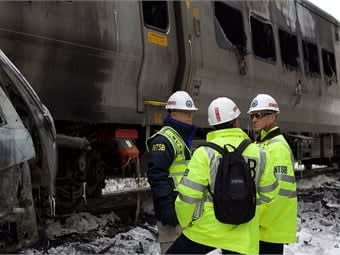
The NTSB’s investigation found the driver of the SUV moved her vehicle into the path of Metro-North commuter train 659.
Photos courtesy NTSB
An SUV driver’s actions are the probable cause of a deadly 2015 collision between the SUV and a Metro-North commuter train at a grade crossing in Valhalla, N.Y., the National Transportation Safety Board found.
The SUV driver died, along with five passengers on the train, in the Feb. 3, 2015, accident. The rail passengers were killed when 343 feet of the third rail, which powers the train, penetrated the floor of the first train car and struck passengers.
The NTSB’s investigation found the driver of the SUV moved her vehicle into the path of Metro-North commuter train 659. Investigators found traffic at the Commerce Street grade crossing was congested when the driver entered the boundary of the grade crossing and stopped. The grade crossing warning system activated properly and a gate came down, striking the rear of her Mercedes-Benz ML350. Witnesses said the driver exited the vehicle and examined where the gate hit her SUV. She then got back into the driver’s seat and moved onto the railroad tracks and into the path of the oncoming train.
The train hit the vehicle at 51 miles per hour, pushing the SUV 665 feet down the track, while detaching the third rail. The introduction of sparks, flaming debris and fuel into the lead railcar started a fire.
As a result of the investigation the NTSB recommended local officials assess the safety of at-grade crossings, such as the Commerce Street crossing. The NTSB also recommended commuter railroads, like Metro North, that use third-rail power systems, at or near grade crossings, should assess their safety.
“Sadly, all of the NTSB’s work in railroad and highway safety to date did not prevent this tragic accident,’’ said Acting Chairman Robert L. Sumwalt. “But the recommendations we issued could help to avoid future tragedies. When people see railroad tracks, even at grade crossings, they need to think train, and maintain — or improve — their situational awareness. We recommended risk assessments by companies and agencies, and corrective actions as warranted by the assessment results. Any railroad passenger has the right to expect that everything possible is being done to assure their safety.”
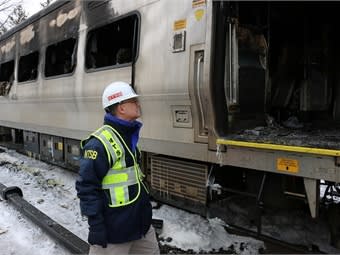
The investigation found that Metro-North’s third rail system was not constructed to fail in a controlled manner or break away when subjected to overloaded conditions such as those involved in this accident.
The investigation found that Metro-North’s third rail system was not constructed to fail in a controlled manner or break away when subjected to overloaded conditions such as those involved in this accident. Also, the use of Metro-North’s current third rail system may increase the severity of railcar damage and serious injuries at grade crossing accidents.
The investigation ruled out the use of personal electronic devices or drugs and alcohol by both the SUV driver and the train engineer. Traffic signals, the performance of the train engineer, and weather and track conditions were also ruled out as issues in this crash. There was no evidence to suggest the SUV driver unintentionally drove the vehicle forward due to the unconventional design of the SUVs transmission interface.
A link to the findings, probable cause, and recommendations are available here.
More Security and Safety

Transit Agencies Highlight Safety Gains at National Summit
Leaders from 15 major transit systems shared crime-reduction results and safety initiatives while discussing the role of continued federal support.
Read More →
DART Launches Major Security, Fare Enforcement Initiative
The 90-day demonstration will deploy coordinated security teams at five light rail stations while testing controlled access and gathering data to guide future investments.
Read More →
RTD Launches NextRide App to Consolidate Trip Planning, Fares, Security Reporting
The app expands on RTD’s existing NextRide web application and allows customers to view real-time vehicle locations and service alerts, purchase and store digital fares, and access customer support.
Read More →

TAPTCO Updates OSHA Compliance Training for Transit Maintenance Operations
The revamped program addresses 26 OSHA standards for maintenance facilities, with TAPTCO pointing to training, documentation, and everyday shop hazards as continuing challenges for transit operations.
Read More →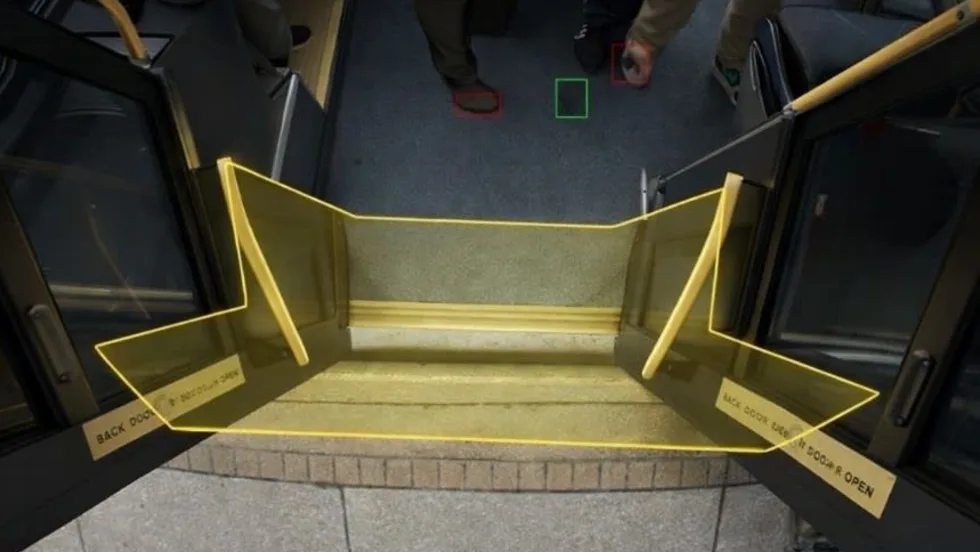
How VaporVision Adds Value to Transit Door Systems
Wabtec engineers explain how the system improves doorway detection, strengthens diagnostics and gives transit agencies and OEMs greater operating flexibility.
Read More →
FRA Announces $5.3B in Rail Investments, Including $2B for Amtrak
Funding will support grade-crossing improvements, infrastructure upgrades, and new Amtrak equipment in 23 states.
Read More →
Chicago, Maryland Expand Non-Law-Enforcement Safety, Rider Support
The CTA and MTA are launching new programs aimed at de-escalation, crisis response, rider assistance, and greater transparency.
Read More →
LA Metro, City of West Hollywood, and Partners Advance Smarter Bus Lane Enforcement
The award-winning partnership combines AI-powered detection with human oversight to improve bus reliability, accessibility, and enforcement efficiency.
Read More →
LA Metro Reports 57% Decline in Homelessness on Transit System Since 2024
The agency's latest homelessness count offers new data on how care-based services and cross-sector partnerships can complement traditional transit security strategies.
Read More →
FTA Launches 'Transit Moves America' Dashboard to Highlight Agency Safety and Performance
The online dashboard transforms National Transit Database information into a public-facing resource that allows users to compare transit agencies on key operational and safety metrics.
Read More →