



Electric driverless shuttle to service Singapore campus
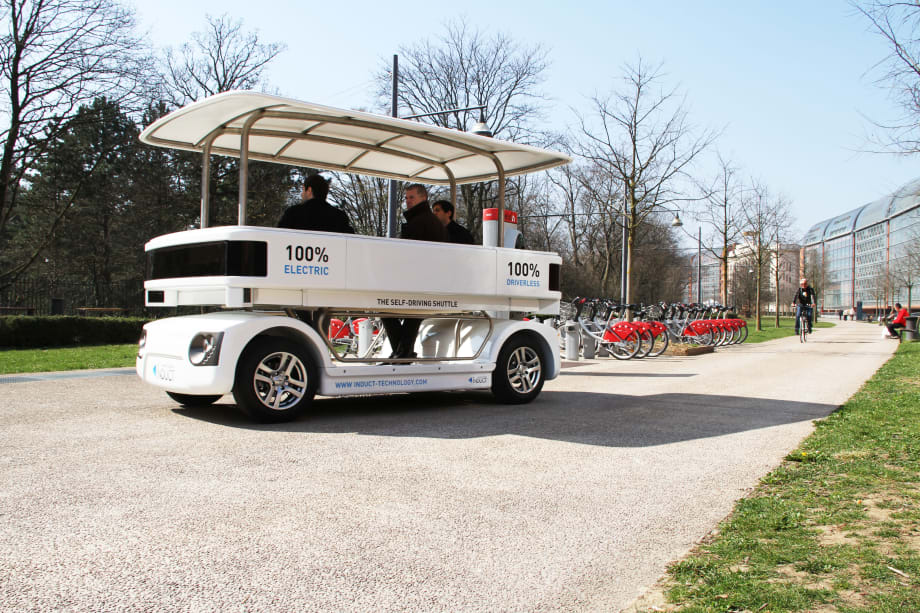
The robotic driverless electric vehicle, Navia, developed by Induct, can carry up to eight passengers and was designed to complement conventional transport by taking care of the “last mile."

Courtesy Induct
Courtesy Induct
Singapore’s first electric driverless shuttle transportation system
will soon see passengers shuttling between the campuses of a local university and business park.
In a partnership between Nanyang Technological University (NTU) and JTC Corp. and Induct Technologies, manufacturer of the Navia autonomous electric shuttle, the new vehicle is expected to ply the 1.2-mile route providing an environmentally-friendly alternative mode of transportation.
RELATED:Electric driverless shuttle takes spin in Luxembourg (video)
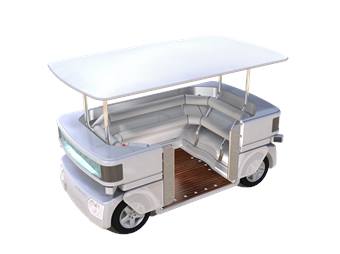
Navia is a robotic driverless electric vehicle, which can carry up to eight passengers. The innovative vehicle has been designed to complement conventional transport (public or private) by taking care of the “last mile,” as well as the first.
Traveling on its own at a maximum speed of 12.5 mph, the shuttle carries people independently and in complete safety, thanks to its onboard lasers and sensors that enable it to avoid obstacles in its path, or to stop if it detects a pedestrian, according to company officials.
When users get on board the shuttle they find a touchscreen offering the various stops the shuttle goes to. They select their destination on the screen, and the shuttle automatically sets off for it. Once there, the doors open to let passengers get off and on.
Being electric, the Navia is silent; it recharges itself unaided at a docking station and needs no special infrastructure such as rails, so it can work on any kind of site.
The two-year collaboration will see the Energy Research Institute at NTU test and optimise Induct’s electric shuttle NAVIA and enable it to intermingle safely with traffic in Singapore. The Institute and Induct will also work to improve and enhance electric vehicle battery reliability and charging speeds.
More New Mobility
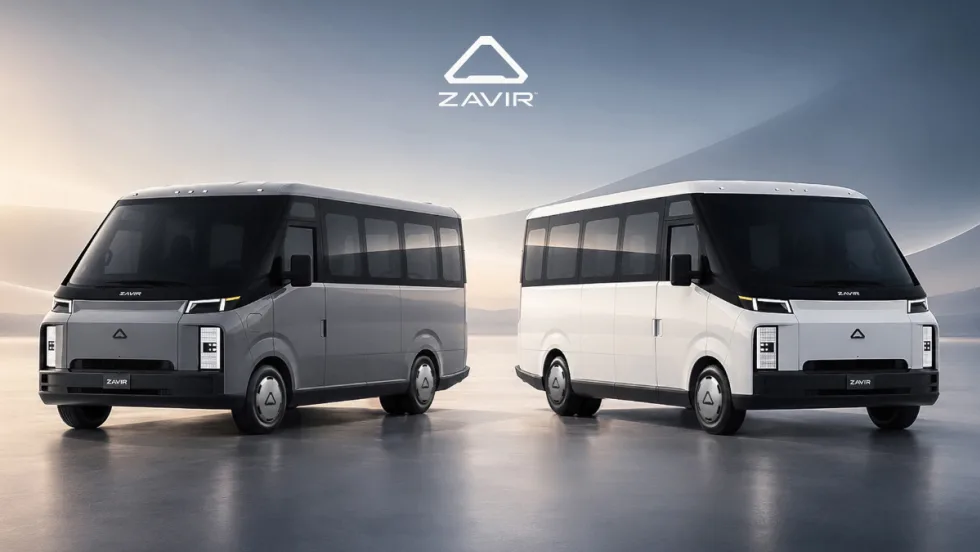
ENC Unveils ZAVIR Medium-Duty Electric Shuttle at APTA EXPO
The new ZAVIR brand targets shuttle and paratransit operations with battery-electric and range-extended electric vehicle options.
Read More →
Public Transit Conference Returning to GFX in 2027, Call for Papers Now Open
The Call for Papers is now open, allowing transit agency professionals and industry experts to help shape the PTC educational program by submitting session ideas for consideration.
Read More →
Everett Transit, Community Transit Outline Consolidation Agreement
The proposed agreement calls for a 50% increase in bus service in Everett, a new microtransit zone, continued paratransit service, and the transfer of Everett Transit operations to Community Transit.
Read More →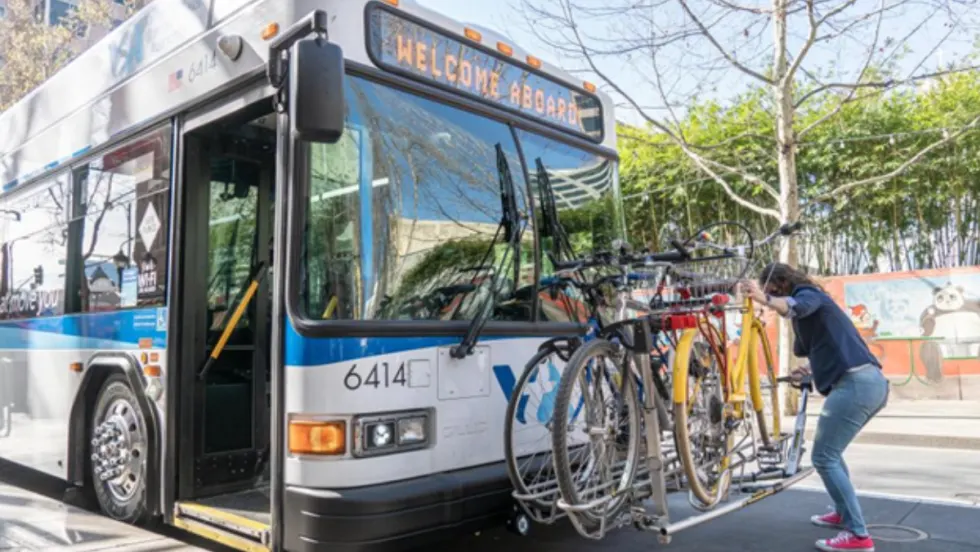
What Multimodal Data Can Tell Transit Agencies About Rider Demand
See how bike-on-bus data is giving transit agencies new insight into rider demand, capacity constraints, and gaps in first- and last-mile connections.
Read More →
From Hardware to Digital Partner: Luminator Charts Its Next Chapter
CEO Magnus Friberg discusses Luminator’s shift toward becoming a digital partner, the growing importance of software and interoperability, and how AI can help agencies improve operations and passenger experience.
Read More →
Biz Briefs: Alstom Lands Canadian Contract, LYT to Supply California TSP, and More
In METRO's latest installment, we take a look at recent news from Complete Coach Works, Beep, FlixBus, and more partnerships making headlines across the transportation sector.
Read More →
CharterUP’s Armir Harris on Technology, AI, and the Future of Group Mobility
In a recent episode of METROspectives, CharterUP Founder/CEO Armir Harris discussed the company’s evolution from an online charter bus marketplace into a technology platform supporting public- and private-sector mobility and much more.
Read More →
Jacksonville’s NAVI Project Charts a New Course for Autonomous Public Transportation
Through its NAVI program, JTA is showing how autonomous vehicles, intelligent infrastructure, and coordinated operations can work together to deliver everyday public transportation.
Read More →
Biz Briefs: Luminator Marks Milestone and More
From manufacturers and suppliers to transit agencies and motorcoach operators, these updates offer a snapshot of the projects, partnerships and business moves driving the industry forward.
Read More →
New Tricks for Old Bureaucracies: Joshua Schank on Making Transit Innovation Stick
Former LA Metro Chief Innovation Officer Joshua Schank discusses why good ideas aren't enough, how transit agencies can overcome resistance to change, and why today's challenges demand more innovation.
Read More →