



Electrify America, Sacramento partner for zero-emission projects
Projects include carsharing services, ZEV bus and shuttle routes, and electric vehicle charging systems throughout the region.

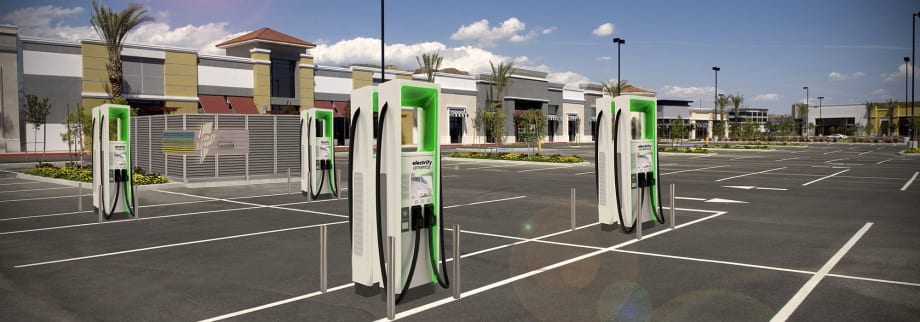
Electrify America will install more than 10 ultra-fast EV charging stations in the Sacramento region, which will be available to the public. Photo: Electrify America
Electrify America will install more than 10 ultra-fast EV charging stations in the Sacramento region, which will be available to the public. Photo: Electrify America
Electrify America and the City of Sacramento announced new projects that will increase access to zero-emissions vehicles (ZEV) in the Sacramento region, expand ZEV technology use, and prepare the city for future electric vehicle adoption.
The projects, which include two new carsharing services, new ZEV bus and shuttle routes and state-of-the-art electric vehicle charging systems throughout the region — are part of Electrify America’s Green City Initiative, which was announced by the company and city officials in 2017. Electrify America is a wholly-owned subsidiary of Volkswagen Group of America.
Projects include:
CARSHARING – Electrify America is investing between $15 and $18 million for the launch of two ZEV car share services within the City of Sacramento, which complement each other with different service areas while providing the same easy access:
GIG Car Share – Free Float Car Sharing: GIG Car Share, which is powered by AAA Northern California, Nevada, and Utah, will offer free float car share service in Sacramento. This service allows users to pick up and drop off a vehicle at any legal public parking spot, including metered locations, within a 13 sq. mile “Home Zone.” Perfect for a first-mile-last-mile connection, the user either pays for rental time or distance traveled, whichever is less expensive. With the GIG app, users can locate the nearest car to reserve it for up to 30 minutes in advance or to initiate a spur of
the moment trip. GIG Car Share will initially launch with 260 vehicles. These cars will be easy to recognize with a roof-mounted bike rack, giving users the option of combining two different modes of transportation, bike and car, for daily commutes or weekend adventures. More than 70% of the census tracts in GIG’s proposed car sharing Home Zone are low-income or disadvantaged communities. This service will be available in Q1 2019.
Envoy – Round Trip Car Sharing: Electrify America is also investing in a program with Envoy Technologies, a community-based EV car-share service based at apartment buildings as an amenity. Vehicles can be reserved, picked up and returned to the same location. The Envoy fleet will feature 142 vehicles spread in pairs across 71 locations. Each car will have a dedicated Level 2 EV charger. With 75% of the fleet expected to serve low-income and disadvantaged communities, Envoy provides equitable transportation for drivers running personal errands, as well those looking to participate in the gig economy and generate income that is 30% higher than the minimum wage. These cars will be available for rental by residents as a paid service at competitive rates. Initial properties will begin offering service by the end of summer 2018 with more locations coming on board every month.
ZEV BUS/SHUTTLE SERVICES – Electrify America is investing between $11 and $14 million in a ZEV bus service and an on-demand micro-shuttle service. To support powering the fleets, Electrify America will also install charging stations with ultra-fast chargers to power each service.
Electric Bus Service – UC Davis to Sacramento: Electrify America will enhance bus service between UC Davis and Sacramento with 12 new electric buses that will run from the main campus to the UC Davis Health campus in Sacramento. The shuttle will be co-run by Sacramento Regional Transit (SacRT) and the Yolo County Transportation District. Plans include increasing route frequency and providing four bus stops, including UC Davis, West Sacramento and two stops in Sacramento, downtown and at the UC Davis Health campus, which will also will be the eventual home of the planned Aggie Square tech complex. The bus service is expected to add more than 400,000 bus rides in the first year of operation. The enhanced route will start in 12 to 18 months once the electric bus manufacturer begins deliveries.
On-Demand Electric Shuttle Service- Franklin Region: Electrify America has provided the funding for this service which will be operated by Sacramento Regional Transit. SacRT is planning an initial launch in July 2018 as a new, on-demand micro-transit shuttle service. Funding from Electrify America will allow SacRT to transition the three-shuttle fleet to ZEV shuttle buses, once the shuttle manufacturer begins deliveries. The service is expected to provide about 26,000 rides in its first year. Consumers will be able to access it through an app-based ride hailing system, an online reservation or by phone. This service provides additional mobility for residents and visitors to this area, which has been without a bus line since 2008.
EV CHARGING INFRASTRUCTURE – With an investment of $14 million to $16 million, Electrify America will install more than 10 ultra-fast EV charging stations in the Sacramento region, which will be available to the public. The charging stations will have a range of power from 50 kilowatts (kW), which is most commonly used in today’s electric vehicles, to 150 and 350kW. This future-proof charging technology will meet the needs of all electric vehicles available today and the advanced EVs expected as early as 2020. The Electrify America ultra-fast charging technology can deliver energy for up to 20 miles of range per minute, or seven times faster than today’s 50kW DC chargers. This investment includes chargers for the bus and shuttle services, plus the Level 2 chargers for the car share program.
The specific details on each of these ZEV initiatives — carsharing, bus service, micro-shuttles, and charging infrastructure — will be announced closer to the launch of each service, with a roll-out of initial services anticipated in late 2018.
Sacramento was chosen as Electrify America’s Green City in 2017 after a detailed and comprehensive evaluation process, which looked at city size, commuting patterns, and potential to impact disadvantaged and low-income communities.
The goals of Electrify America’s Green City Initiative are to:
Positively impact ZEV awareness.
Provide ZEV access to underserved, low-income and disadvantaged communities.
Increase use of ZEV technology to maximize ZEV miles traveled while reducing greenhouse gas emissions.
Test the economic viability of ZEV access initiatives.
Electrify America’s Green City Initiative aims to provide access to ZEVs to those who do not own ZEVs, or cannot afford to own ZEVs, and therefore, represent a key underserved population.
Overall, Electrify America is investing $800 million in California over 10 years to support the increased use of ZEV technology with more ZEV infrastructure and education.
More Technology

From Hardware to Digital Partner: Luminator Charts Its Next Chapter
CEO Magnus Friberg discusses Luminator’s shift toward becoming a digital partner, the growing importance of software and interoperability, and how AI can help agencies improve operations and passenger experience.
Read More →
Beyond the Checklist: A Structured Approach to Transit Maintenance
Reliability-Centered Maintenance helps transit agencies move beyond routine checklists to focus limited resources on the assets and failures that have the greatest impact on safety, reliability, and service.
Read More →
NJ TRANSIT Advances Bus Technology Upgrades Across Statewide Fleet
More than 1,500 buses now feature upgraded technology designed to improve arrival predictions and provide free Wi-Fi, with deployment expected to reach nearly 2,000 buses by the end of 2026.
Read More →

Building a Flexible Path to Transit Electrification
John Hroncich discusses BAE Systems’ modular and scalable approach, lessons learned from decades of real-world operations, and how agencies can identify electrification strategies that fit their fleets.
Read More →
Biz Briefs: Alstom Lands Canadian Contract, LYT to Supply California TSP, and More
In METRO's latest installment, we take a look at recent news from Complete Coach Works, Beep, FlixBus, and more partnerships making headlines across the transportation sector.
Read More →
From Legacy Silos to Conversational Intelligence
What if transit leaders could ask any operational question and get a trusted answer in seconds? Conversational AI is transforming how agencies use their data.
Read More →
USDOT Announces Rail Vehicle Replacement Grants, Chattanooga AV Shuttle Funding
More than $191 million in federal funding will help three transit agencies replace aging rail vehicles and support a new autonomous shuttle service in Chattanooga.
Read More →
Bus Tech Talk: Keeping Transit Technicians Ahead of the Technology Curve
LA Metro’s Obed Mejia discusses technician training, evolving maintenance technology, fleet replacement, and strategies for getting the most out of today’s transit fleets.
Read More →
Biz Briefs: RIPTA Unveils New Frontrunners, Clevland RTA Adds New Siemens, and More
In METRO's latest installment, we take a look at recent news from Siemens, Prevost, Dodge, and more partnerships making headlines across the transportation sector.
Read More →
Why Simulating Pedestrian Movement Has Become Essential for Modern Rail Stations
Pedestrian microsimulation is helping rail planners identify bottlenecks, test station designs, and prepare complex transit hubs for growing passenger volumes.
Read More →