



Experts predict dire outcome from transportation funding proposal
APTA President/CEO Michael Melaniphy, Gary Thomas, president/CEO of Dallas Area Rapid Transit, Patrick Scully, COO of Daimler Buses, North America and others discussed the negative financial impacts the proposal would have on America’s public transportation systems.

In a panel discussion hosted by the American Public Transportation Association (APTA), transportation experts offered insights regarding the House Ways and Means Committee’s transportation funding proposal that is currently under consideration in Congress.
Following the discussion, APTA also released a research report outlining the negative financial impacts this proposal would have on America’s public transportation systems, as well as the communities and individuals that rely on public transportation. Titled House Proposal Erodes Credit Ratings, Ties Hands of American Communities, this report is available on APTA’s website: http://www.apta.com/resources/reportsandpublications/Documents/APTA-HR7-Report-Feb-2012.pdf
Opposing the shift in funding, APTA President and CEO Michael Melaniphy said, “This proposal seeks to undo nearly 30 years of overwhelming bipartisan support for dedicated federal investment in public transportation. It would erode the nation’s multimodal transportation system that provides both jobs and access to jobs for scores of Americans. HR 3864 proposes to replace a reliable, ongoing funding source for public transportation investment with a one-time appropriation. This would leave public transportation without any federal funding source beyond 2016, truncating transit’s ability to maintain and grow safe, reliable and equitable mobility options for millions of Americans.”
The House Ways and Means Committee proposal would divert the portion of the motor fuels tax revenues that has been dedicated to public transportation since 1983 under President Reagan and deposit those funds into the Highway Account to support highway investment. The proposal would put public transportation in a new “Alternative Transportation Account” and would only fund the federal transit program in fiscal years 2013 through 2016. The proposal does not provide for public transit investment beyond 2016.
APTA’s report, House Proposal Erodes Credit Ratings, Ties Hands of American Communities, notes that federal funding is essential for attracting reliable state and local funding. Removing dedicated funds from public transportation will discourage state and local governments from contributing. Federal support focuses on capital projects thus encouraging local and state support. Without the federal support local and state governments will see a shift in federal priorities and put their money towards projects in other areas where they can leverage available federal funding in the long-term. These actions will leave nationwide public transit service reduced.
William D. Ankner, PhD, an expert in transportation financing and former Secretary of the Department of Transportation and Development of Louisiana, described in detail how the proposal would increase uncertainty and impact the ability of public transportation agencies to secure bonded funding for long-term projects. He noted that without a consistent funding source, public transit funding will be placed in opposition to other, unrelated domestic spending priorities and will become the subject of annual political decisions.
“Agencies around the nation could experience higher costs associated with routine bond issuances necessary to operate a transit system,” said Dr. Ankner. “These cost increases will lead to deferred maintenance, fewer transit extensions and higher fares, threatening to derail the public transportation program.”
Gary Thomas, the president and CEO of the Dallas Area Rapid Transit (DART) and APTA chair, noted that not only is the level of funding the Ways and Means Committee proposes insufficient but it would subject public transit funding to an uncertain annual appropriations process. “This change will make it nearly impossible for DART, as well as other public transit systems across the country to have the ability to plan for the future,” said Thomas.
Janet Kavinoky, the executive director of transportation and infrastructure at the U.S. Chamber of Commerce, expressed disappointment that the Committee eliminated the main dedicated funding source for public transit. “Across the board, one of businesses’ greatest demands for transportation investment is public transportation,” said Kavinoky. “It is about getting people to work in an efficient manner. Those businesses that are driving the economic success in local communities understand that investment in public transit is an integral part of creating successful transit oriented development.”
Patrick Scully, chief commercial officer of Daimler Buses, North America expressed his strong opposition to the provision. “We are stunned by this proposal because we are seeing increased demand for riders on our buses. At the same time, this creates uncertainty for the manufacturer by not providing any funding for public transit beyond 2016.”
The coalition of transportation leaders hopes that Congress considers how these proposed funding provisions will impact the millions of Americans who rely on public transit systems daily. As public transportation ridership continues to increase, now is not the time for the federal government to end its role as a dependable partner in creating American jobs.
More Paratransit
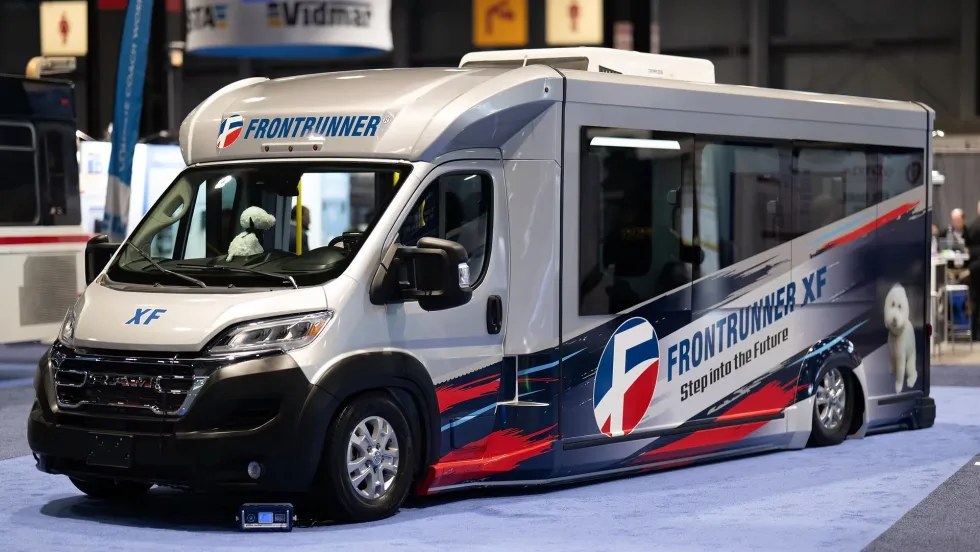
Frontrunner Bus Group Introduces XF Low-Floor Bus with Enhanced Accessibility
The new mid-sized bus features a full flat-floor design, eight-inch curbside step-in height, and zero-entry rear ramp to improve passenger access and operational flexibility.
Read More →
Scenes from APTA TRANSform & EXPO 2026
Transit leaders, manufacturers, and industry professionals gathered in Chicago to explore new technologies, share ideas, and discuss the future of public transportation.
Read More →
Indian River Transit’s Community-Focused Approach Earns National Recognition
Named APTA’s 2026 Outstanding Public Transportation System in its size category, Florida’s Indian River County transit system continues to grow ridership through fare-free service and a focus on evolving community needs.
Read More →
Everett Transit, Community Transit Outline Consolidation Agreement
The proposed agreement calls for a 50% increase in bus service in Everett, a new microtransit zone, continued paratransit service, and the transfer of Everett Transit operations to Community Transit.
Read More →
Driving Smarter Paratransit
John Hanlon shares how AlphaRoute is leveraging AI-powered technology to help paratransit providers optimize operations, support frontline staff, and enhance the rider experience.
Read More →
People Movement: Dan Dipert Coaches Adds Third-Generation Leader, Keolis Names New Valley Metro VP/GM, and More
In this edition, we also cover recent appointments and announcements at the Wabtec, SilverRide, HNTB, and more, showcasing the individuals helping to shape the future of transportation.
Read More →
Biz Briefs: RIPTA Unveils New Frontrunners, Clevland RTA Adds New Siemens, and More
In METRO's latest installment, we take a look at recent news from Siemens, Prevost, Dodge, and more partnerships making headlines across the transportation sector.
Read More →
King County Metro Makes ADA Paratransit Easier to Navigate
METRO's Innovative Solutions Award winner replaces complex service-area descriptions with an accessible, interactive map that puts paratransit information directly in customers’ hands.
Read More →
Jacksonville’s NAVI Project Charts a New Course for Autonomous Public Transportation
Through its NAVI program, JTA is showing how autonomous vehicles, intelligent infrastructure, and coordinated operations can work together to deliver everyday public transportation.
Read More →
Driving Smarter Paratransit
John Hanlon shares how AlphaRoute is leveraging AI-powered technology to help paratransit providers optimize operations, support frontline staff, and enhance the rider experience.
Read More →