



Following derailment, Metro North to resume full service Wednesday
About 100 workers are on the job, which has been ongoing around the clock since Saturday night when the NTSB completed its initial investigation of the scene and allowed Metro-North to begin removing the two, eight-car trains.

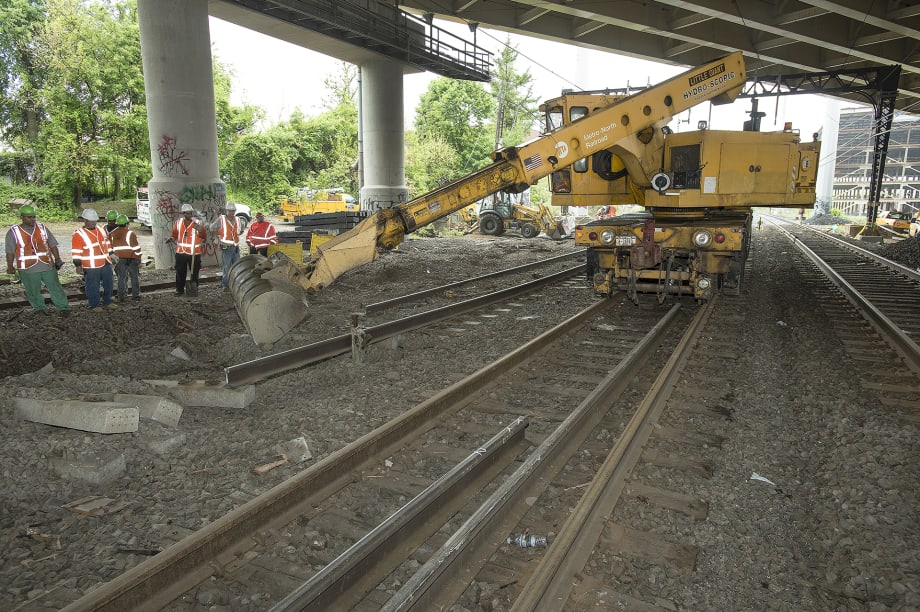
About 100 workers are on the job, which has been ongoing around the clock since Saturday night when the National Transportation Safety Board completed its initial investigation of the scene.

Reconstruction of track infrastructure damaged in a derailment last Friday has progressed to such a degree that Metro-North plans to resume regular train service on the New Haven Line in time for the peak morning service on Wednesday.
At approximately 6:10 p.m. Friday, a Metro-North train (the 4:41 p.m. departure from Grand Central, due to New Haven at 6:32 p.m.) traveling to New Haven with an estimated 300 passengers derailed in the vicinity of the I-95 overpass in Bridgeport, Conn.
A passenger train traveling in the opposite direction carrying an estimated 400 passengers on the adjacent track (the 5:30 p.m. departure from New Haven-State Street, due Grand Central at 7:18 p.m.) then struck the derailed train.
About 100 workers are on the job, which has been ongoing around the clock since Saturday night when the National Transportation Safety Board completed its initial investigation of the scene and allowed Metro-North to begin removing the two, eight-car trains.

“We are confident that the reconstruction work, inspection and testing will be completed in time for a normal rush hour on Wednesday,” said Metro-North President Howard Permut. “We are grateful for the tireless work of all departments and employees engaged in this huge task.”
The shuttle train operation from New Haven to Bridgeport, with a bus connection to Stamford, where customers can board a train for New York, continued on Tuesday.

The bus operation went according to plan on Monday with 120 buses on hand and no crowding reported.
"The local municipalities offered tremendous support, with signs, special lanes, satellite parking and police assistance and Metro-North is grateful for this very high level of cooperation, which ensured the operation’s success,” said Susan Doering, Metro-North’s VP, customer service and stations.
About 750 people rode the shuttle trains and boarded buses at Bridgeport to Stamford, just 20% of the 4,000 people who ordinarily board trains at New Haven, Milford and Stratford during the morning peak period. However, overall morning peak period ridership on the entire New Haven Line was down just 20%, which means, many people drove to other stations to catch a train. And a 6% increase in ridership was counted on the Harlem Line.
In Bridgeport, work to rebuild two sections of track totaling 2,000 feet continues at a brisk pace. The track itself, including the stone, ties, rail and fasteners, is the first order of business and that job is complete on one of the two sections. Next comes restringing the overhead catenary wire and appropriate connections to the substations.
The signal system is the final component followed by vigorous inspection and a period of operating test trains over the rail. This critical work will continue overnight.
More Rail
FRA Announces $5.3B in Rail Investments, Including $2B for Amtrak
Funding will support grade-crossing improvements, infrastructure upgrades, and new Amtrak equipment in 23 states.
Read More →
Finding the ‘Happy Medium’: Optimizing Maintenance Without Sacrificing Reliability
The key to maintenance optimization isn’t doing less work—it’s doing the right work at the right time on the right assets.
Read More →
OKC Streetcar Makes Zero-Fare Service Permanent
Ridership increased an average of 71% compared with the same period a year earlier during the fare-free pilot.
Read More →
DART Customer Satisfaction Reaches Six-Year High
Overall satisfaction rose to 74.9%, while the agency’s Net Promoter Score reached a record 33.7.
Read More →
How DART's GoPass Is Redefining Regional Mobility
Serving 14 transit agencies, GoPass simplifies multimodal travel by allowing riders to plan, pay for, and manage an entire trip through one app.
Read More →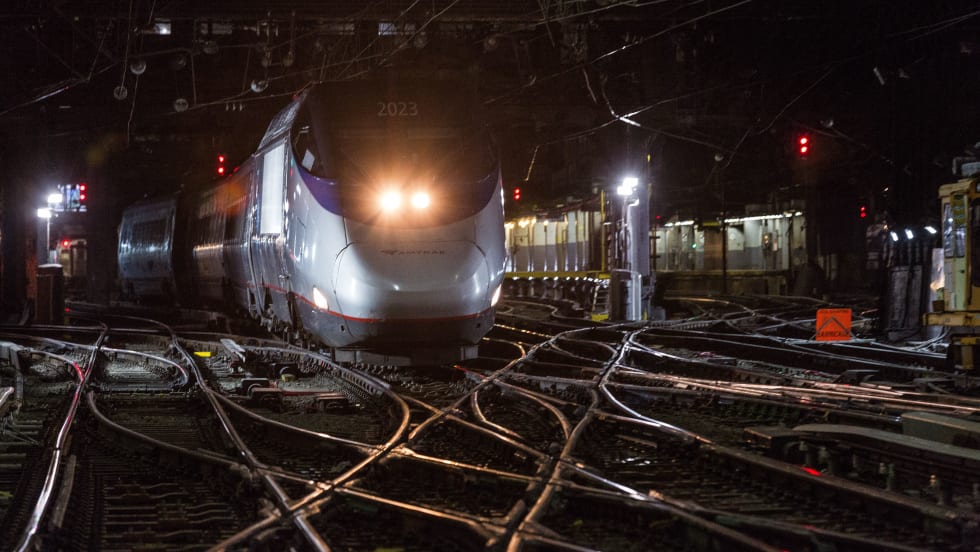
Amtrak Board Advances Plan to Restructure Organization, Seeks Public Input
The proposal, developed by Amtrak management and approved by the board for further consideration, is intended to modernize the organization's structure while improving accountability, operational efficiency, and customer service.
Read More →
Biz Briefs: STV teams with Amtrak, Motorcoach Operators Boost Fleet and Land Contracts, and More
From manufacturers and suppliers to transit agencies and motorcoach operators, these updates offer a snapshot of the projects, partnerships and business moves driving the industry forward.
Read More →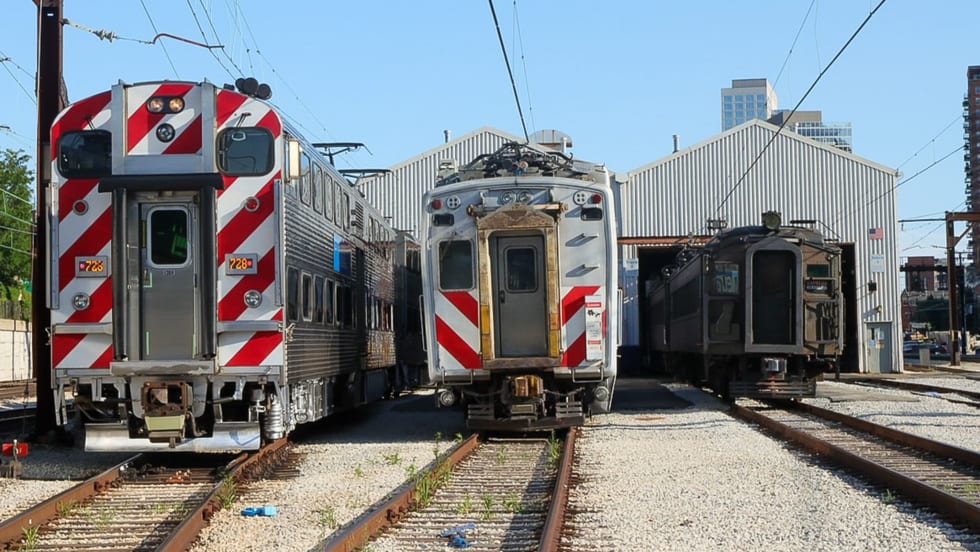
Metra Celebrates 100 Years of Electric Rail, Looks to the Future
The event was also a celebration of recent reforms to public transportation in the Chicago area, changes that could be as transformative in the future as the major civic achievement a century ago, said officials.
Read More →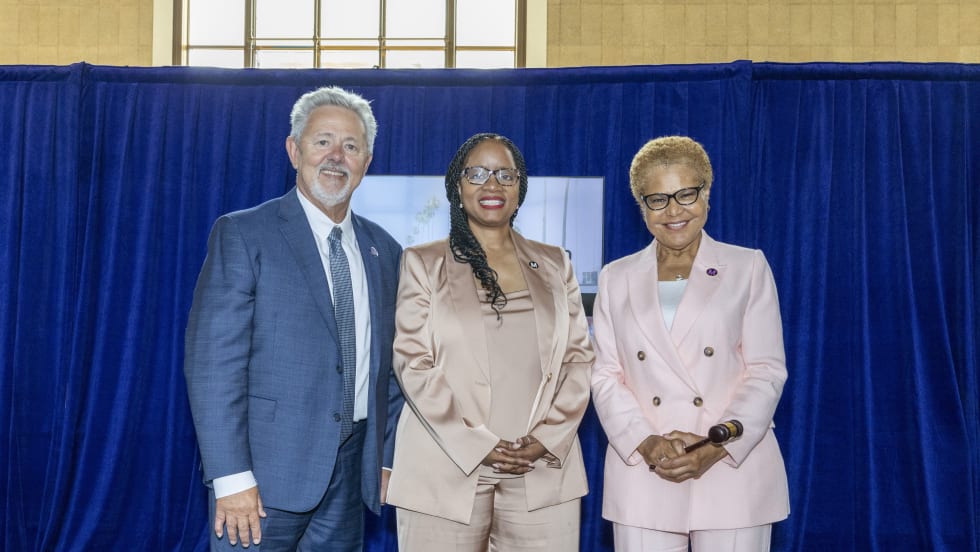
LA Metro Marks Banner Year, Sets Ambitious Goals for New Fiscal Year
Incoming LA Metro Board Chair and Los Angeles Mayor Karen Bass joined outgoing Board Chair Fernando Dutra and LA Metro CEO Stephanie Wiggins to review accomplishments from fiscal year 2026, which included the opening of new rail extensions, advancement of major transit projects, expanded safety programs, and new rider amenities.
Read More →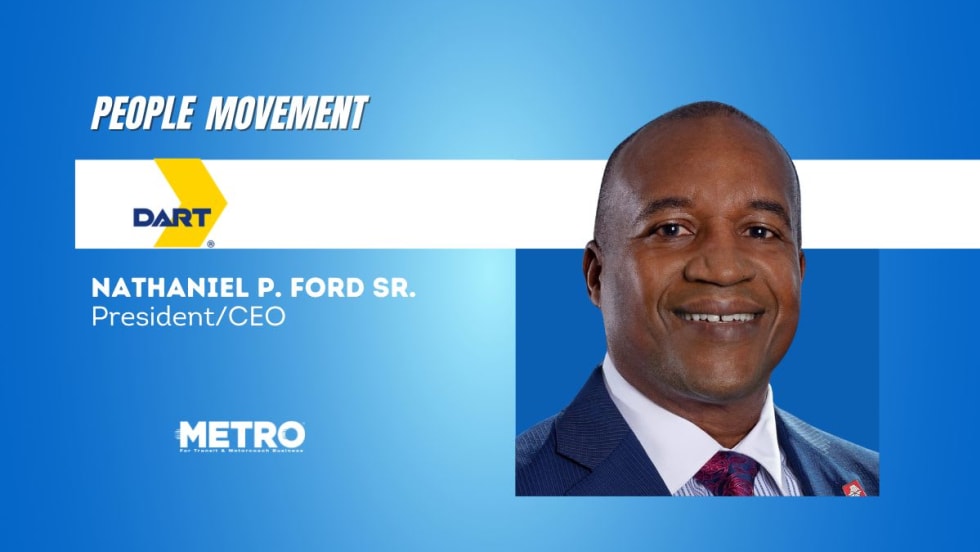
DART Taps Nathaniel P. Ford Sr. as Next President/CEO
Since 2012, Ford has served as the CEO of the Jacksonville Transportation Authority
Read More →