




RELATED: Ford talks mobility plans with shuttle, bike-share service
Ford launches on-demand NEMT service pilot
GoRide enables health systems to easily schedule and book transportation for their patients, ensuring they safely arrive to their medical appointments on time and then get back to the comfort of their own homes or residence facilities.
April 19, 2018
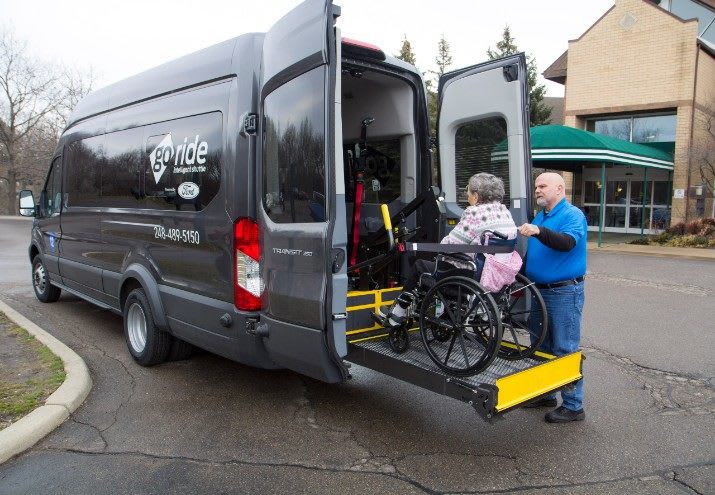
GoRide’s non-emergency medical transportation offers true on-demand service, including for those in wheelchairs and other special needs, plus the ability to pre-book transport up to 30 days in advance.
Ford
3 min to read
GoRide’s non-emergency medical transportation offers true on-demand service, including for those in wheelchairs and other special needs, plus the ability to pre-book transport up to 30 days in advance.
Ford
Looking to raise the bar for patients who need help making it to their medical appointments, Ford is launching its new GoRide non-emergency medical transportation service in Southeast Michigan, covering more than 200 facilities within the Beaumont Health network.
With GoRide, health systems such as Beaumont can easily schedule and book transportation for their patients, ensuring they safely arrive to their medical appointments on time and then get back to the comfort of their own homes or residence facilities. The program features properly outfitted Ford Transit vans that can comfortably accommodate a variety of patients, including the elderly, those in wheelchairs and others with mobility challenges. GoRide also serves patients who simply lack easy access to transportation.
Every year in the U.S. missed appointments and scheduling inefficiencies cost the healthcare industry $150 billion, according to a report by SCI Solutions. Proper non-emergency medical transportation such as Ford GoRide can encourage preventative healthcare, get patients home from discharges faster, reduce re-admission rates and the need for emergency services, and prevent missed medical appointments.
“There’s no excuse for the fact that so many people have trouble simply making it to their medical appointments,” said Marion Harris, VP, Ford Mobility Business Group. “By merging our expertise in vehicles, technology and human-centered design, we’ve created a high-touch, patient-focused service that truly understands and is tailored to patients and their needs. Our service is focused on multiple social determinants of health, and delivers the quality of care and on-time certainty that medical facilities need in order to increase throughput and reduce wait times.”
GoRide’s non-emergency medical transportation offers true on-demand service, including for those in wheelchairs and other special needs, plus the ability to pre-book transport up to 30 days in advance. It not only removes transportation barriers for patients, but also provides certainty for medical staff: In its pilot phase, GoRide delivered a 92% on-time patient pick-up and delivery rate, with average wait times of only 10 to 30 minutes for on-demand wheelchair transport. In addition, GoRide’s service focuses on systems-level benefits to hospitals and payers, using data analytics to help stakeholders better deliver on their goals in population health management.
GoRide drivers go through a full training regimen regarding the proper way to care for and transport patients requiring non-emergency medical support. They can assist patients to and from their doorstep at private residences, entering and exiting the vehicle, and making their way to and from appointments. GoRide drivers are also trained to support skilled nursing facilities in need of bedside-to-bedside services.
When the GoRide pilot with Beaumont Health began in late 2017, there were five Transit Wagon vans properly outfitted to provide patient transportation. GoRide currently has 15 Transit vehicles at its disposal, with plans to add another 10 by mid-year and up to 60 vans by the end of the year.
The GoRide fleet features flexible seats that can be flipped up to accommodate two wheelchair positions. Some of the vehicles feature bus doors or running boards to ease entry, as well as grab handles to help patients with stability while entering. Much of the fleet employs a wider wheelchair lift that can accommodate non-standard-size wheelchairs — making it feasible for assisting bariatric patients whose prior transportation options were limited to stretcher.
More New Mobility
What Multimodal Data Can Tell Transit Agencies About Rider Demand
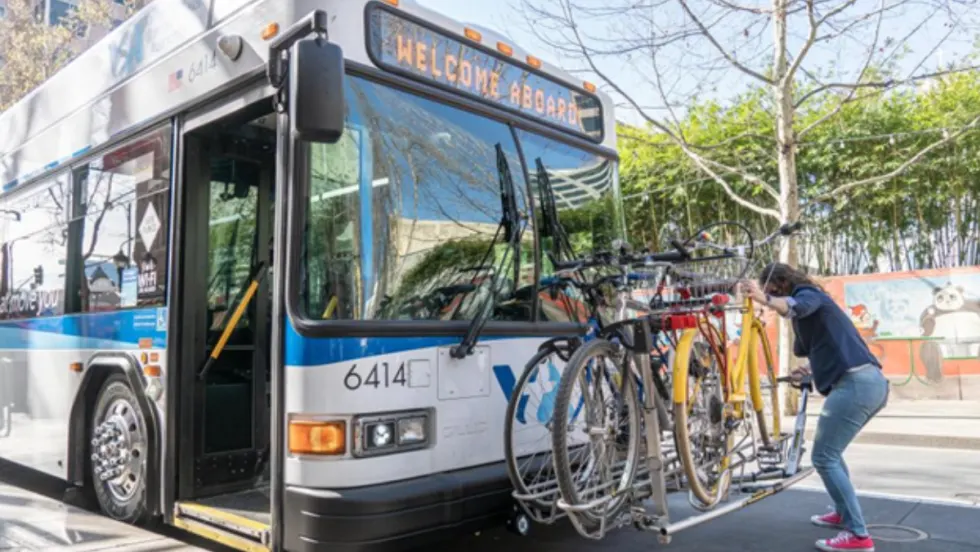
See how bike-on-bus data is giving transit agencies new insight into rider demand, capacity constraints, and gaps in first- and last-mile connections.
Read More →
From Hardware to Digital Partner: Luminator Charts Its Next Chapter
CEO Magnus Friberg discusses Luminator’s shift toward becoming a digital partner, the growing importance of software and interoperability, and how AI can help agencies improve operations and passenger experience.
Read More →
Biz Briefs: Alstom Lands Canadian Contract, LYT to Supply California TSP, and More
In METRO's latest installment, we take a look at recent news from Complete Coach Works, Beep, FlixBus, and more partnerships making headlines across the transportation sector.
Read More →
CharterUP’s Armir Harris on Technology, AI, and the Future of Group Mobility
In a recent episode of METROspectives, CharterUP Founder/CEO Armir Harris discussed the company’s evolution from an online charter bus marketplace into a technology platform supporting public- and private-sector mobility and much more.
Read More →
Jacksonville’s NAVI Project Charts a New Course for Autonomous Public Transportation
Through its NAVI program, JTA is showing how autonomous vehicles, intelligent infrastructure, and coordinated operations can work together to deliver everyday public transportation.
Read More →
Biz Briefs: Luminator Marks Milestone and More
From manufacturers and suppliers to transit agencies and motorcoach operators, these updates offer a snapshot of the projects, partnerships and business moves driving the industry forward.
Read More →
New Tricks for Old Bureaucracies: Joshua Schank on Making Transit Innovation Stick
Former LA Metro Chief Innovation Officer Joshua Schank discusses why good ideas aren't enough, how transit agencies can overcome resistance to change, and why today's challenges demand more innovation.
Read More →
How DART's GoPass Is Redefining Regional Mobility
Serving 14 transit agencies, GoPass simplifies multimodal travel by allowing riders to plan, pay for, and manage an entire trip through one app.
Read More →
Biz Briefs: OCTA Taps Clean Energy for Hydrogen Station, Stadler to Supply Via Rail Vehicles, and More
From manufacturers and suppliers to transit agencies and motorcoach operators, these updates offer a snapshot of the projects, partnerships and business moves driving the industry forward.
Read More →CharterUP Expands Into New Mobility and Autonomous Transportation
Vice President of New Mobility Stephen Joos discusses how CharterUP is leveraging its nationwide transportation network, technology platform, and autonomous vehicle partnerships to expand into workforce mobility, campus shuttles, and transit solutions.
Read More →