



FRA issues Emergency Order to Metro-North following crash
In response, the Metro-North signal crews have installed new protections at the Spuyten Duyvil curve, which will warn train engineers of the approaching speed reduction and automatically apply the train's emergency brakes if speed is not lowered to the 30 mph maximum in the curve.

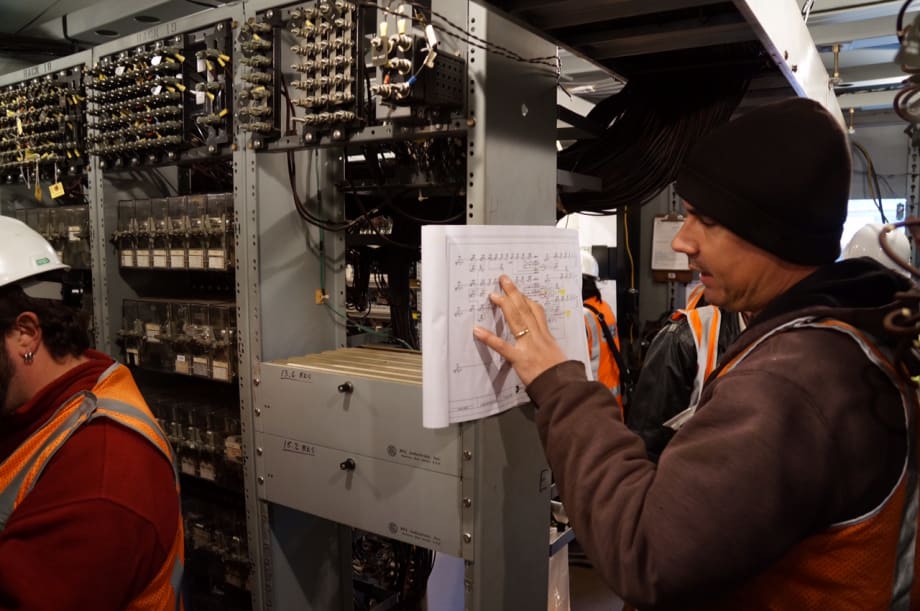
Metro-North Signal Department workers consult circuit diagrams, make signal changes and test the system at Spuyten Duyvil. Photo: Metropolitan Transportation Authority / J. P. Chan.
Metro-North Signal Department workers consult circuit diagrams, make signal changes and test the system at Spuyten Duyvil. Photo: Metropolitan Transportation Authority / J. P. Chan.
The Federal Railroad Administration (FRA) issued an Emergency Order (EO 29) to the New York Metropolitan Transportation Authority’s (MTA) Metro-North Railroad to take specific, immediate steps to ensure its train crews do not exceed speed limitations.
The EO requires Metro-North to modify its existing signal system to ensure speed limits are obeyed and to provide two qualified railroad employees to operate trains where major speed restrictions are in place until the signal system is updated.
EO 29 requires Metro-North to provide the FRA with a list of main track locations where there is a reduction of more than 20 mph in the maximum authorized passenger train speed by Dec. 10, 2013. Further, Metro-North is ordered to identify appropriate modifications to its existing automatic train control system or other signal systems to enable adequate advance warning of and adherence to such speed restrictions.
The modifications will help prevent another over-the-speed-limit event if a locomotive engineer fails to take actions to appropriately slow or stop a passenger train.
In the meantime, Metro-North is ordered to operate trains with two qualified train crew members in the controlling locomotive cab or passenger car control compartment at the locations where speed limits change by 20 mph or more until the signal work at these locations is complete. Additionally, the railroad must submit to the FRA for approval an Action Plan that ensures the safety of its operations for passengers and employees by December 31. The plan must contain target dates and milestones for implementing necessary signal system modifications.
The EO is a mandatory directive to the railroad, and failure to comply with its requirements will result in enforcement actions against the railroad or individuals who violate it.
In response, the MTA announced that Metro-North signal crews have installed new protections at the Spuyten Duyvil curve, the site of last week's fatal derailment, which will warn train engineers of the approaching speed reduction and automatically apply the train's emergency brakes if speed is not lowered to the 30 mph maximum in the curve.
The signal improvement at Spuyten Duyvil was done simultaneously and in coordination with work to restore track, power and signal systems there after the derailment. Those protections were set to begin operating on all trains by Monday morning.
“Metro-North is taking important steps to improve safety for its customers and employees, and I expect the railroad will continue searching for ways to improve its operations and fully restore its commuters' confidence,” said MTA Chairman and CEO Thomas F. Prendergast.
By Tuesday morning, all Metro-North trains will enhance communication between train engineers and conductors to ensure trains are operated at safe speeds at four other critical curves as well as at five movable bridges. Conductors will stand with engineers at each train's control cab through the critical curves to verbally confirm that speed limits are adhered to. Where the train layout prohibits the conductor from reaching the engineer in a locomotive, they will communicate by radio. They will also communicate by radio at the five movable bridges.
Metro-North engineers are developing new signal protections to automatically enforce speed restrictions at the other four critical curves by March and at the five movable bridges by September. The four critical curves are at Yonkers on the Hudson Line, White Plains on the Harlem Line, and Port Chester and Bridgeport on the New Haven Line. All five movable bridges are on the New Haven Line.
Metro-North has also surveyed its tracks and will reduce the maximum authorized speed at 26 locations to eliminate all locations where the speed limit drops by more than 20 mph. Signs will be posted along the right-of-way to alert engineers of reductions in maximum authorized speed at the four curves by December 16.
In addition, Metro-North has committed to enhance its monitoring of compliance with speed restrictions. This monitoring is accomplished by reviewing the event data recorders from randomly selected trains, by sending supervisors to ride trains and observe speeds and by operating radar gun enforcement at locations throughout the Metro-North network.
Two-thirds of Metro-North's operating fleet is equipped with alerter devices in the engineer's position to ensure engineers remain attentive, and the remaining one-third is equipped with dead man's controls. Within the next year, all equipment without alerters will be either retrofitted to include them or replaced with new equipment that includes alerters.
At the FRA's direction, Metro-North has also committed to implementing a confidential close call reporting system, a measure which will allow employees to anonymously report safety concerns without fear of reprisal in order to identify potential problems before they can cause an accident or injury.
More Rail
LA Metro September Ridership Climbs 3.9%, Led by Rail Growth
The agency recorded more than 27.2 million boardings, with rail ridership increasing 12.4% year over year and the D Line posting the largest gains.
Read More →
First Full MetroLink Rail Expansion Completed in 20 Years with $192M Airport Project
The project links two St. Louis-area airports by light rail while adding roadway and bike trail connections to improve regional access and mobility.
Read More →
Utilimarc Launches SmartReplace to Optimize Fleet Replacement Decisions
AI-powered SmartReplace helps fleets prioritize vehicle replacements, model budget scenarios, and build more defensible long-term strategies.
Read More →
Scenes from APTA TRANSform & EXPO 2026
Transit leaders, manufacturers, and industry professionals gathered in Chicago to explore new technologies, share ideas, and discuss the future of public transportation.
Read More →
USDOT Awards $416 Million for Florida Rail Crossing Safety Upgrades, New Brightline Station
The projects aim to reduce risks for motorists and pedestrians at rail crossings while expanding passenger rail access along Florida’s Space Coast.
Read More →
OCTA Declares Emergency to Protect Rail Corridor From Coastal Erosion
The California agency is accelerating shoreline protection and plans to place approximately 690,000 cubic yards of sand along the San Clemente coast to protect a key passenger and freight rail link.
Read More →
More Than a Summer Job: Building the Next Generation of Transit Talent
The Delaware River Port Authority and PATCO have transformed their internship program into a hands-on professional development experience that introduces students to the breadth of transportation careers — and creates a pipeline for future employees.
Read More →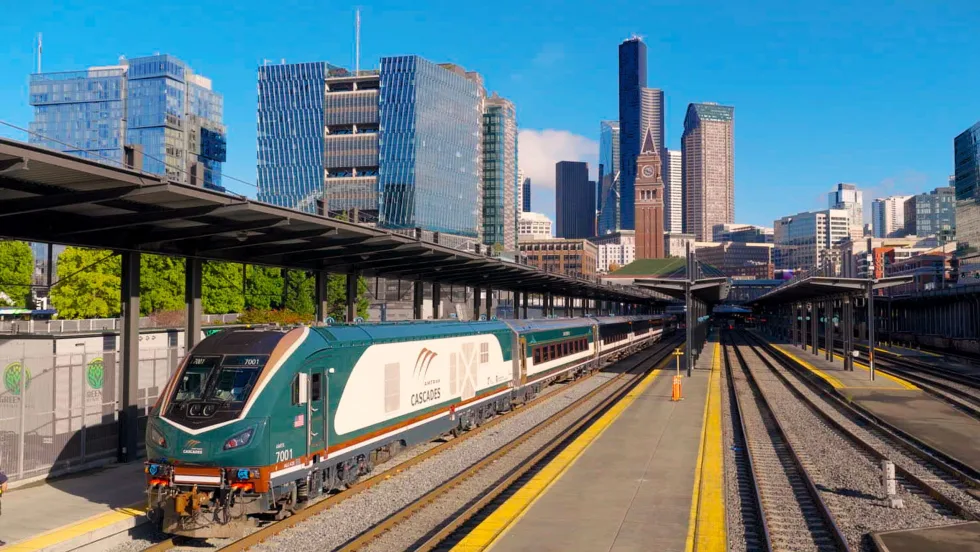
Airo Trains Make Their Amtrak Cascades Debut in the Pacific Northwest
Effective immediately, two cutting-edge Airo trainsets will join the Amtrak Cascades route, operating four daily trips between Vancouver, B.C., Seattle, Portland, and Eugene, Oregon, marking the first introduction of Airo trains into passenger service anywhere in the country.
Read More →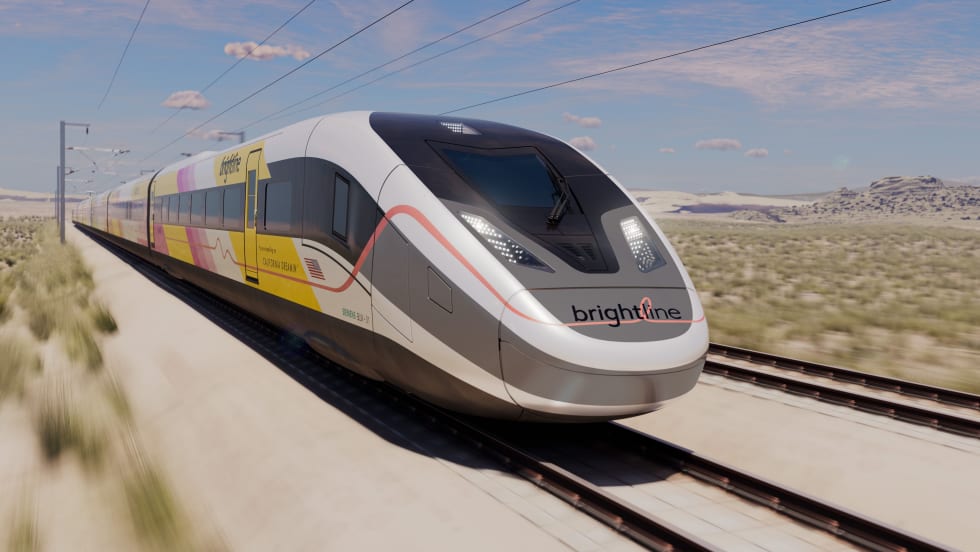
Florida's Brightline Announces Financial Restructuring
Brightline Florida says train operations will continue as normal as certain parent entities enter Chapter 11 and financial stakeholders provide $490 million in new long-term capital.
Read More →
ENC Lands MATA Contract and More in Biz Briefs
In this edition of Biz Briefs, we spotlight the latest developments shaping the future of mobility.
Read More →