



France's SNCF orders 19 Bombardier EMU commuter trains
The order, entirely financed by Ile-de-France's transport authority Syndicat des transports d'Ile-de-France (STIF), is valued at approximately $141 million.

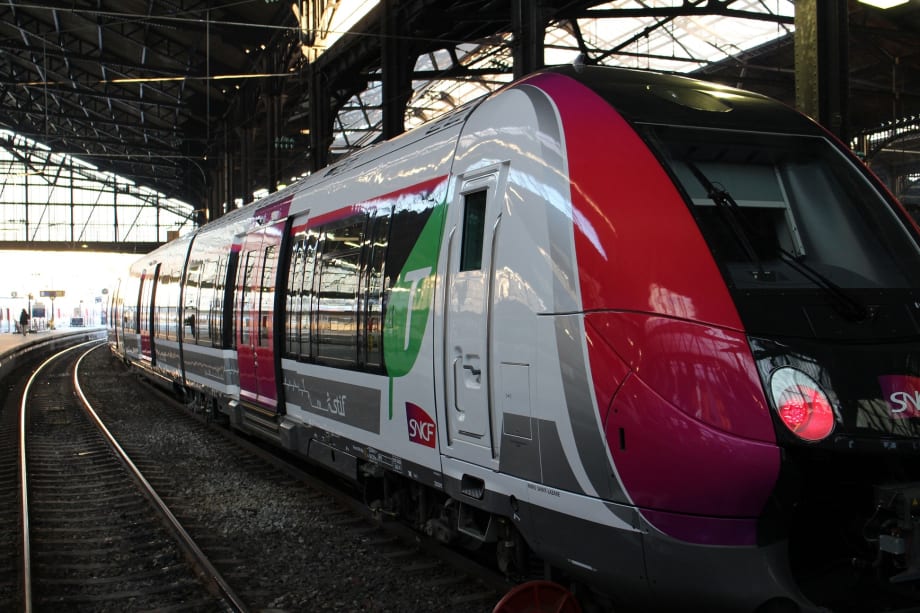
France's SNCF has exercised an option for 19 additional Bombardier Francilien Electric Multiple Unit (EMU) commuter trains.
France's SNCF has exercised an option for 19 additional Bombardier Francilien Electric Multiple Unit (EMU) commuter trains.
Bombardier Transportation announced France's state-owned railway company, Societe nationale des chemins de fer francais, (SNCF) has exercised an option for 19 additional Francilien Electric Multiple Unit (EMU) commuter trains. The order, entirely financed by Ile-de-France's transport authority Syndicat des transports d'Ile-de-France (STIF), is valued at approximately $141 million.
RELATED:Bombardier to supply people mover system to Chicago's O'Hare airport
The original firm order for 172 trains was part of a contract signed in 2006 for up to 372 trains. The first call off option order for 22 trains came in 2014 and this second call off order for 19 units brings the total number of Francilien trains ordered by SNCF to 213, leaving the potential for an additional 159 trains. The additional trains will contribute to STIF's overall fleet modernization and be rolled out on the SNCF Transilien line L on the Versailles Rive Droite branch.
Jean Berge, President, Bombardier Transportation France, said, "Due to the high passenger demand placed on the SNCF Transilien network, our clients require not only improved reliability and performance, but also a comfortable train that is able to increase capacity. These trains meet and exceed those needs, making the Francilien the best performing train in the Ile-de-France fleet."
According to SNCF, nine out of 10 Line H passengers are satisfied with the service, as a result of the improvement of transportation conditions, punctuality, on-board information and comfort. Line H, which operates with a full Francilien fleet, scores the Transilien SNCF network's highest punctuality rate of 95%. See STIF January 2015 punctuality report.
Scheduled for delivery between the end of 2016 and mid-2017, the trains have room for up to 1,000 people, feature large seats, open gangways and wide doors to facilitate passenger flow. They will also include proven technology like Bombaradier FLEXX Compact bogies and Bombardier MITRAC Train Control and Management System (TCMS) to provide a smooth and comfortable ride. At present, 155 Bombardier Francilien trains operate out of the Gare du Nord, Gare de L'Est, and Gare Saint-Lazare stations in Paris, France.
More Rail

New York MTA Advances Final Contract for Second Avenue Subway Expansion
Contract Four is the largest in the Second Avenue Subway Phase 2 project and includes construction of station infrastructure, tracks, and signals for the subway expansion, MTA officials said. Work on Contract Four will begin in 2027.
Read More →
San Diego MTS Breaks Monthly Trolley Ridership Record
Agency officials said July’s ridership indicates MTS’s continued recovery from the pandemic.
Read More →
Report Examines NJ TRANSIT Reliability, Funding Challenges
The Garden State Initiative analysis examines the roles of Amtrak infrastructure, fleet management, and agency operations while recommending a more performance-based approach to improving reliability.
Read More →
Stadler, CapMetro Sign Long-Term Rail Fleet Support Agreement
Beginning in 2027, Stadler will provide on-site technical expertise, spare parts support, training, and obsolescence management to help extend the reliability and longevity of CapMetro’s GTW fleet.
Read More →
Biz Briefs: Alstom Lands Canadian Contract, LYT to Supply California TSP, and More
In METRO's latest installment, we take a look at recent news from Complete Coach Works, Beep, FlixBus, and more partnerships making headlines across the transportation sector.
Read More →
CATS Gold Line Marks 5 Years of Service, 2.8M Passenger Trips
With a six-mile expansion planned, the Charlotte streetcar is positioned to connect more neighborhoods and major transit hubs across the region.
Read More →
Why Simulating Pedestrian Movement Has Become Essential for Modern Rail Stations
Pedestrian microsimulation is helping rail planners identify bottlenecks, test station designs, and prepare complex transit hubs for growing passenger volumes.
Read More →
Amtrak Begins Major Construction at New York’s Sunnyside Yard
The new maintenance facility will support Amtrak’s Airo trainsets while improving maintenance efficiency and turnaround times in New York.
Read More →
Chicago Leaders Unveil Plans for O’Hare Airport Express Train
The privately developed project would offer a 15-minute trip between downtown and O’Hare’s Terminal 2, with trains operating every 15 minutes on a dedicated track. The service would use battery-electric trains and three existing freight rail rights-of-way.
Read More →
OCTA Maps Out 30-Year Strategy to Protect Coastal Rail Corridor
The draft feasibility report identifies strategies to protect the coastal rail line for decades as the agency continues near-term stabilization and sand placement efforts.
Read More →