



GMs discuss impact of first-, last-mile solutions
We asked top transit officials which mobility option (microtransit, autonomous vehicles or bike-share) do you feel could have the most impact at your agency?

Ballard

Bravo
Alice N. Bravo, P.E., Director
Department of Transportation and Public Works, Miami-Dade County
In different capacities, all of these play an important role in providing mobility options. Our department is working with transportation partners to develop current and future connectivity to each of these modes. For example, next year, we plan to launch our first on-demand demonstration projects that will provide greater flexibility and access to premium transit service and close the first-and-last-mile gap. We’ve also partnered with Ford Motor Company for the future integration of autonomous-vehicle technology, and are working with the company Ride On to provide bike-sharing services from transit stations and other locations.

Ferbrache
Jason Ferbrache, Director/Administrator
EMBARK
While we’re excited about the potential benefits of autonomous vehicles and microtransit, especially in outlying and rural areas, bike-share has the most impact for our agency. It’s an existing service we provide that works hand-in-hand with our buses, streetcar, and ferry service to provide a way for people to get around town and make connections without a car. Ridership for our Spokies bike-share program grew by 44% over the last three years. We are continually pursuing partnership and grant opportunities to continue growing the program and adding new bikes and stations to grow the network of available bikes around the Greater Oklahoma City area. Additionally, Oklahoma City residents recently approved a new General Obligation Bond and penny sales tax known as Better Streets, Safer City initiative resulting in $24 million for sidewalks, $12 million for trails, and $12 million for bicycle infrastructure. This means that commuting or riding recreationally by bike will be easier and safer than it’s ever been.

Clarke
Randy Clarke, President/CEO
Capital Metro
Autonomous vehicles are clearly the future of transit. When looking to implement new services, the main factor needs to be ‘What provides the biggest improvement for the least disruption?’ Autonomous vehicles operating in dedicated right-of-way can offer that. They’ll serve rapid transit routes, neighborhood circulator routes that connect to primary fixed-route services, and as the vehicles operating that mainline transit as well.

Butler
Carrie Butler, GM
Lextran
Autonomous, and connected, vehicles are likely to have the most impact at our agency long term. This technology has the potential to demonstrably change how we deliver service. As connected, autonomous vehicles gain market share in the private automobile sector, there will be continued impacts in how, when, and where people use transit. The other shared modes — bike, microtransit, scooter-share — will play a supporting role and will grow where conducive pedestrian and biking infrastructure is established.

Parker
Jeffrey A. Parker, GM/CEO
MARTA
Autonomous vehicles will have the most impact on MARTA. These vehicles will have significant safety features that will make all public roads safer for buses, mobility vans, and other forms of public transportation. These vehicles would also provide valuable first- and last-mile connectivity to riders in heavily congested corridors. MARTA sees all modes of transportation as partners in transit with a shared goal of connecting people and communities.

Estrada
Jerry Estrada, GM
Santa Barbara MTD
The Santa Barbara community continues to be supportive of local public transit, and our changing population demographics really set the stage for microtransit to have a positive impact if it is properly integrated. MTD’s fixed-route service is well-utilized by local residents, but there are neighborhoods that are adjacent to our prime transportation corridor that offer opportunities to increase ridership and decrease automotive trips, while enhancing transportation options for residents.

Ford Sr.
Nathaniel P. Ford Sr., CEO
Jacksonville Transportation Authority
Autonomous vehicles (AV) will play a critical role in the future of the JTA. In January 2017, we unveiled a vision for the future of Jacksonville’s elevated automated people mover that seeks to modernize and expand it by converting the system to an autonomous transit network. The scalable program will use automation to lower costs and improve service, enabling smart corridors to facilitate shared-mobility services and smart city initiatives. It is just the beginning of an autonomous-and-connected-vehicle network.
Ballard
Paul J Ballard, President/CEO
Trinity Metro
Several years ago, we started a bike-sharing program that is now a robust part of the Fort Worth landscape. We are currently exploring mobility-on-demand options for first-mile, last-mile services to increase the level of convenience for passengers using public transit for work. We believe this addition could significantly impact our ridership numbers. Autonomous vehicles could come into play in the distant future, but I would hate for riders to lose the benefit of our customer-focused operators.
More New Mobility

Everett Transit, Community Transit Outline Consolidation Agreement
The proposed agreement calls for a 50% increase in bus service in Everett, a new microtransit zone, continued paratransit service, and the transfer of Everett Transit operations to Community Transit.
Read More →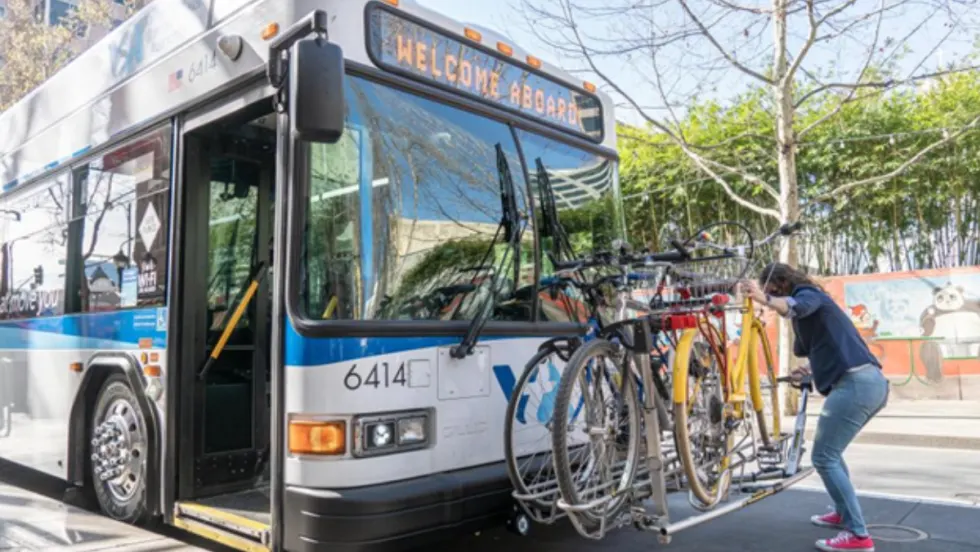
What Multimodal Data Can Tell Transit Agencies About Rider Demand
See how bike-on-bus data is giving transit agencies new insight into rider demand, capacity constraints, and gaps in first- and last-mile connections.
Read More →
From Hardware to Digital Partner: Luminator Charts Its Next Chapter
CEO Magnus Friberg discusses Luminator’s shift toward becoming a digital partner, the growing importance of software and interoperability, and how AI can help agencies improve operations and passenger experience.
Read More →
Biz Briefs: Alstom Lands Canadian Contract, LYT to Supply California TSP, and More
In METRO's latest installment, we take a look at recent news from Complete Coach Works, Beep, FlixBus, and more partnerships making headlines across the transportation sector.
Read More →
CharterUP’s Armir Harris on Technology, AI, and the Future of Group Mobility
In a recent episode of METROspectives, CharterUP Founder/CEO Armir Harris discussed the company’s evolution from an online charter bus marketplace into a technology platform supporting public- and private-sector mobility and much more.
Read More →
Jacksonville’s NAVI Project Charts a New Course for Autonomous Public Transportation
Through its NAVI program, JTA is showing how autonomous vehicles, intelligent infrastructure, and coordinated operations can work together to deliver everyday public transportation.
Read More →
Biz Briefs: Luminator Marks Milestone and More
From manufacturers and suppliers to transit agencies and motorcoach operators, these updates offer a snapshot of the projects, partnerships and business moves driving the industry forward.
Read More →
New Tricks for Old Bureaucracies: Joshua Schank on Making Transit Innovation Stick
Former LA Metro Chief Innovation Officer Joshua Schank discusses why good ideas aren't enough, how transit agencies can overcome resistance to change, and why today's challenges demand more innovation.
Read More →
How DART's GoPass Is Redefining Regional Mobility
Serving 14 transit agencies, GoPass simplifies multimodal travel by allowing riders to plan, pay for, and manage an entire trip through one app.
Read More →
Biz Briefs: OCTA Taps Clean Energy for Hydrogen Station, Stadler to Supply Via Rail Vehicles, and More
From manufacturers and suppliers to transit agencies and motorcoach operators, these updates offer a snapshot of the projects, partnerships and business moves driving the industry forward.
Read More →