



GRTC announces first nationally-certified travel trainer
During GRTC’s pilot Travel Training Program, Kelsey Calder completed substantial course work and passed her final practicum in June 2018.


(Left to Right) Kristi McLaughlin, ESPAC Consultant, Owner McLaughlin & McLaughlin LLC; Kelsey Calder, GRTC Travel Training Instructor; David Green GRTC CEO; and Roberta Yegidis, Center for Urban Transportation Research at an event honoring Calder's acheivement.
GRTC
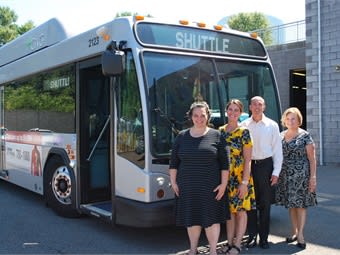
(Left to Right) Kristi McLaughlin, ESPAC Consultant, Owner McLaughlin & McLaughlin LLC; Kelsey Calder, GRTC Travel Training Instructor; David Green GRTC CEO; and Roberta Yegidis, Center for Urban Transportation Research at an event honoring Calder's acheivement.
GRTC
Richmond Va.-based GRTC’s Travel Trainer Kelsey Calder is now the first-ever nationally certified Travel Training Instructor. Calder successfully completed the Travel Training Certification program, becoming the first Travel Training Instructor to be awarded this prestigious certificate by Easterseals. GRTC’s Travel Training Program is funded by a Federal 5310 grant.
Calder was already a licensed teacher prior to joining GRTC in 2016, holding a Master’s in Teaching from James Madison University with a concentration in Special Education. During GRTC’s pilot Travel Training Program, Calder completed substantial course work and passed her final practicum in June 2018. The Travel Training Certification program operates through the Center for Urban Transportation Research at the University of South Florida.
“This certification solidifies that Greater Richmond does need a Travel Trainer. I am the only one in Central Virginia in this unique job,” Calder explains. “My number one tip for riders is to grab a friend and ride together. If you’re unsure, it’s a lot easier to try something new with someone you feel comfortable. Simply getting on to ride round-trip lets you experience and know not only where the bus goes, but also that you can get back to where you started.”
GRTC is currently in the third year of its Travel Training Program; this service is open to all GRTC customers who desire assistance learning how to ride. Refugees to America located in Greater Richmond are increasingly benefitting from Travel Training. The primary goal, however, remains to provide current CARE customers the opportunity to learn skills that will enable them to follow a regular GRTC bus route.
Travel Training Instructors create individualized travel plans that aim to meet the customer’s transit goals and show them how to use fixed-route transportation to increase transit options and decrease dependence on paratransit services. Participants in the program have one-on-one and/or group travel training with a Travel Training Instructor. Travel training is free and any participant is still able to use the CARE service. As always, all CARE customers may ride local fixed route bus service for free.
Easterseals’ Travel Training Certification program teaches instructors essential, practically-relevant skills, including: performing a successful trainee assessment, customized trip planning, environmental barrier examination, task analysis, training strategies, street crossing skills, boarding/alighting processes, and compliance with the Americans with Disabilities Act.
More New Mobility

From Hardware to Digital Partner: Luminator Charts Its Next Chapter
CEO Magnus Friberg discusses Luminator’s shift toward becoming a digital partner, the growing importance of software and interoperability, and how AI can help agencies improve operations and passenger experience.
Read More →
Biz Briefs: Alstom Lands Canadian Contract, LYT to Supply California TSP, and More
In METRO's latest installment, we take a look at recent news from Complete Coach Works, Beep, FlixBus, and more partnerships making headlines across the transportation sector.
Read More →
CharterUP’s Armir Harris on Technology, AI, and the Future of Group Mobility
In a recent episode of METROspectives, CharterUP Founder/CEO Armir Harris discussed the company’s evolution from an online charter bus marketplace into a technology platform supporting public- and private-sector mobility and much more.
Read More →
Jacksonville’s NAVI Project Charts a New Course for Autonomous Public Transportation
Through its NAVI program, JTA is showing how autonomous vehicles, intelligent infrastructure, and coordinated operations can work together to deliver everyday public transportation.
Read More →
Biz Briefs: Luminator Marks Milestone and More
From manufacturers and suppliers to transit agencies and motorcoach operators, these updates offer a snapshot of the projects, partnerships and business moves driving the industry forward.
Read More →
New Tricks for Old Bureaucracies: Joshua Schank on Making Transit Innovation Stick
Former LA Metro Chief Innovation Officer Joshua Schank discusses why good ideas aren't enough, how transit agencies can overcome resistance to change, and why today's challenges demand more innovation.
Read More →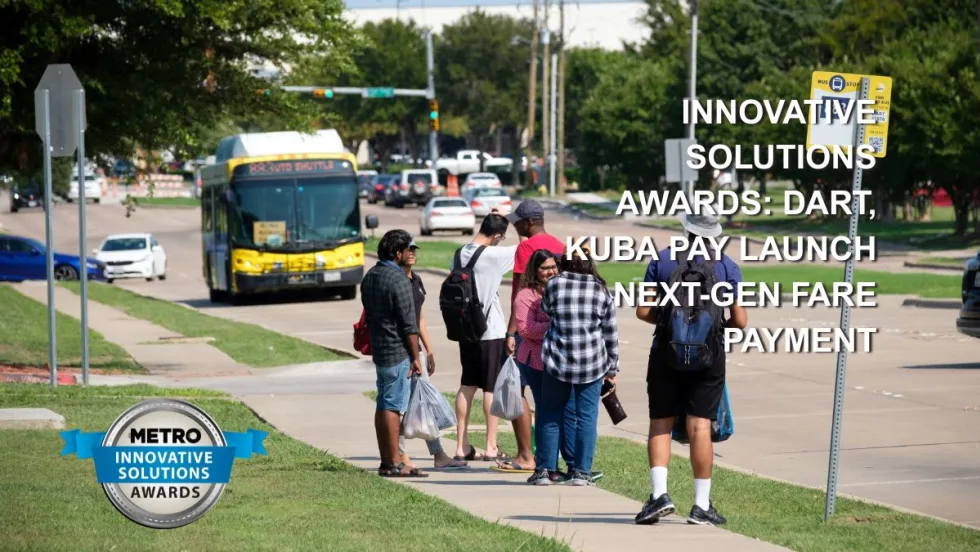
How DART's GoPass Is Redefining Regional Mobility
Serving 14 transit agencies, GoPass simplifies multimodal travel by allowing riders to plan, pay for, and manage an entire trip through one app.
Read More →
Biz Briefs: OCTA Taps Clean Energy for Hydrogen Station, Stadler to Supply Via Rail Vehicles, and More
From manufacturers and suppliers to transit agencies and motorcoach operators, these updates offer a snapshot of the projects, partnerships and business moves driving the industry forward.
Read More →CharterUP Expands Into New Mobility and Autonomous Transportation
Vice President of New Mobility Stephen Joos discusses how CharterUP is leveraging its nationwide transportation network, technology platform, and autonomous vehicle partnerships to expand into workforce mobility, campus shuttles, and transit solutions.
Read More →
METRO Magazine Announces 2026 Innovative Solutions Awards Winners
Projects Recognized for Advancing Mobility Through Technology, Accessibility, Workforce Innovation, and Operational Excellence
Read More →