



HART Focuses on the Future with High-Tech Initiatives, Ridership Strategies
Earlier this year, the transit agency, May Mobility, and the City of Tampa showcased autonomous vehicle technology on Downtown Tampa city streets.

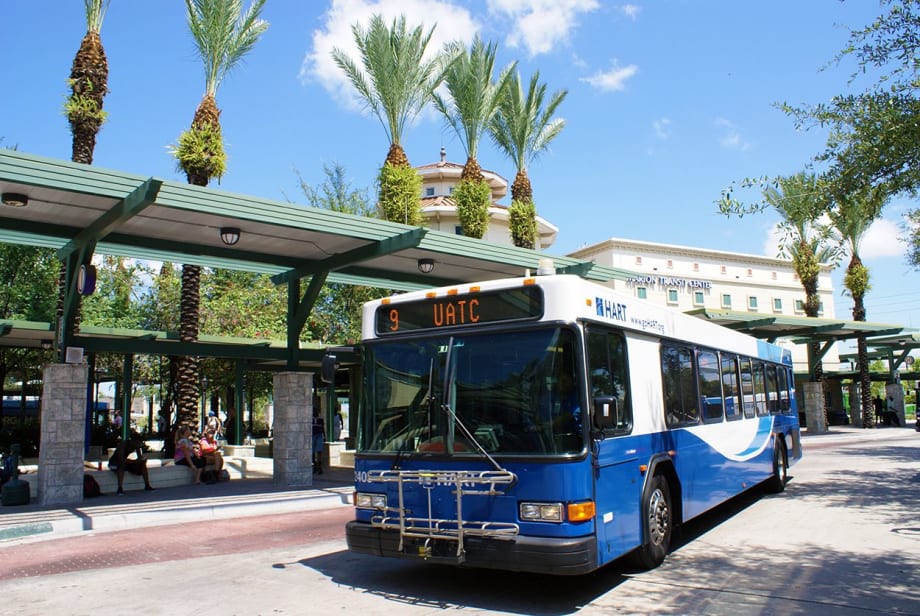
Like other agencies in the nation, HART has been implementing a mix of strategies and tactics that will effectively work together in the long term to boost ridership.
HART
Like other agencies in the nation, HART has been implementing a mix of strategies and tactics that will effectively work together in the long term to boost ridership.
HART
The Hillsborough Area Regional Transit Authority, host of the 2018 APTA Bus & Paratransit Conference, is delving into many high-tech initiatives to improve service. Earlier this year, the transit agency, May Mobility, and the City of Tampa showcased autonomous vehicle technology on Downtown Tampa city streets. The driverless electric vehicle fleet traversed city streets and the Marion Transit Way corridor with passengers to demonstrate the technology in a real-world scenario. This roadway is the same area HART anticipates the deployment and future use of autonomous vehicles in the downtown business district.
Additionally, HART is nearing two years since it launched HyperLINK, a fully accessible first mile/last mile solution. The app-based, on-demand service operates within a three-mile radius of designated bus stops in selected zones.
Streamlining fare payment
HART’s most recent innovative initiative is its new regional e-fare and smart-card system, Flamingo Fares, which the agency is currently Beta testing with HART and Pinellas Suncoast Transit Authority riders. The system is expected to officially launch to the public in September. “These cards and the app will hold pay-as-you-go value to make travel even more effortless than before,” said HART Interim CEO Jeff Seward.
Customers will be able to ride transit on one fare, reload and manage their accounts online, and save money with fare-capping. Fare-capping allows customers to pay only for the trips they take. If an individual purchases a single ride, the system still caps the price paid in a given period. So, if a single fare costs $2 and a daily pass costs $4, a customer can ride three or more rides in a day and still only pay $4. Weekly or monthly spending on fares would be capped in the same way. Customers will then be able to simply tap their smart card or scan their mobile ticketing smartphone app as they board to pay their fare.
Rethinking ridership
Like other agencies in the nation, HART has been implementing a mix of strategies and tactics that will effectively work together in the long term to boost ridership, explained Seward.
“These initiatives include the following but are not limited to, increasing frequency on bus routes, extending specific routes, developing a new and innovative electronic fare system, Flamingo Fares (mobile ticketing app and smartcard system), and real-time transit info app (OneBusAway Tampa),” Seward said.
Additionally, HART is building partnerships with other transit agencies and community stakeholders to improve public transit, both locally and nationally. HART is working on enhancing its transit network system — bus, van, streetcar, ride-share, upcoming autonomous vehicle, and additional options — by building upon the system redesign implemented through its network review, Mission MAX, in October 2017.
“HART firmly believes that by executing this blueprint we will convince people of the vast benefits the system provides every day,” explained Seward. “By creating a robust network of mobility options, these modes of transportation will help reduce car dependency and ensure the increased use of HART services, which will continue to function as the backbone of an integrated multimodal transportation system in Hillsborough County.”
More New Mobility

From Hardware to Digital Partner: Luminator Charts Its Next Chapter
CEO Magnus Friberg discusses Luminator’s shift toward becoming a digital partner, the growing importance of software and interoperability, and how AI can help agencies improve operations and passenger experience.
Read More →
Biz Briefs: Alstom Lands Canadian Contract, LYT to Supply California TSP, and More
In METRO's latest installment, we take a look at recent news from Complete Coach Works, Beep, FlixBus, and more partnerships making headlines across the transportation sector.
Read More →
CharterUP’s Armir Harris on Technology, AI, and the Future of Group Mobility
In a recent episode of METROspectives, CharterUP Founder/CEO Armir Harris discussed the company’s evolution from an online charter bus marketplace into a technology platform supporting public- and private-sector mobility and much more.
Read More →
Jacksonville’s NAVI Project Charts a New Course for Autonomous Public Transportation
Through its NAVI program, JTA is showing how autonomous vehicles, intelligent infrastructure, and coordinated operations can work together to deliver everyday public transportation.
Read More →
Biz Briefs: Luminator Marks Milestone and More
From manufacturers and suppliers to transit agencies and motorcoach operators, these updates offer a snapshot of the projects, partnerships and business moves driving the industry forward.
Read More →
New Tricks for Old Bureaucracies: Joshua Schank on Making Transit Innovation Stick
Former LA Metro Chief Innovation Officer Joshua Schank discusses why good ideas aren't enough, how transit agencies can overcome resistance to change, and why today's challenges demand more innovation.
Read More →
How DART's GoPass Is Redefining Regional Mobility
Serving 14 transit agencies, GoPass simplifies multimodal travel by allowing riders to plan, pay for, and manage an entire trip through one app.
Read More →
Biz Briefs: OCTA Taps Clean Energy for Hydrogen Station, Stadler to Supply Via Rail Vehicles, and More
From manufacturers and suppliers to transit agencies and motorcoach operators, these updates offer a snapshot of the projects, partnerships and business moves driving the industry forward.
Read More →CharterUP Expands Into New Mobility and Autonomous Transportation
Vice President of New Mobility Stephen Joos discusses how CharterUP is leveraging its nationwide transportation network, technology platform, and autonomous vehicle partnerships to expand into workforce mobility, campus shuttles, and transit solutions.
Read More →
METRO Magazine Announces 2026 Innovative Solutions Awards Winners
Projects Recognized for Advancing Mobility Through Technology, Accessibility, Workforce Innovation, and Operational Excellence
Read More →