




RELATED: [Photos] Tour DART's LEED Platinum-certified Central Station
Hillary Clinton tours DART's Platinum-certified Central Station
Des Moines Area Regional Transit Authority's facility achieved this certification through sustainable site development, water savings, energy efficiency, materials selection and indoor environmental quality.
July 30, 2015
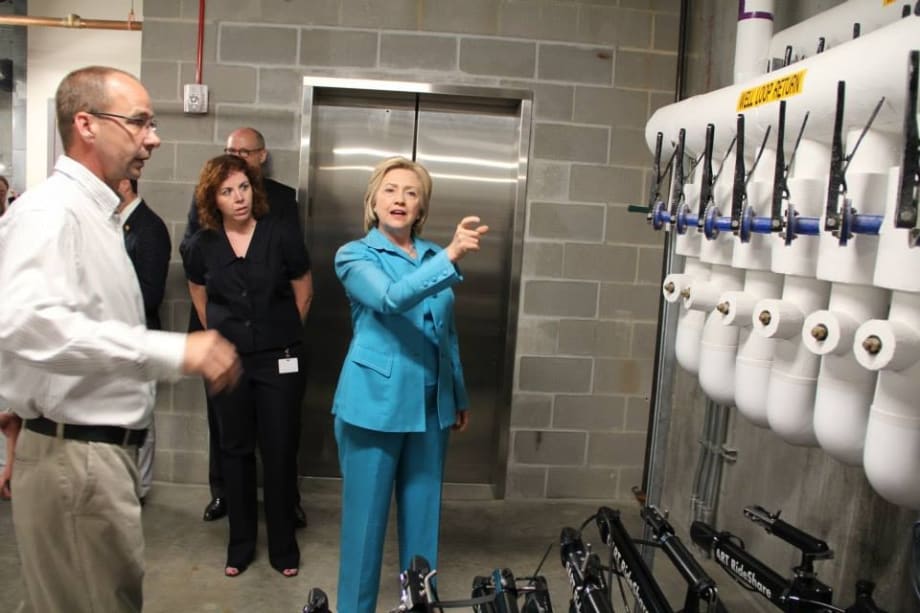
Former Secretary of State Hillary Clinton (shown R to L) with DART General Manager Elizabeth Presutti and Building Supervisor Keith Welch on the tour of Central Station. Photo: DART
2 min to read
Former Secretary of State Hillary Clinton (shown R to L) with DART General Manager Elizabeth Presutti and Building Supervisor Keith Welch on the tour of Central Station. Photo: DART
Former Secretary of State Hillary Clinton toured Des Moines Area Regional Transit Authority's (DART) Central Station on Monday, July 27, 2015. DART General Manager Elizabeth Presutti led the tour, which highlighted the building’s environmentally sustainable construction and operations.
“It was very exciting. It`s definitely an opportunity to showcase DART and all of the great things we’ve been doing particularly with the construction of DART Central Station and all the environmental sustainability components of the building,” said Presutti as reported by WHOTV.
Central Station has been certified LEED Platinum, the highest certification of the LEED (Leadership in Energy and Environmental Design) Rating System of the U.S. Green Building Council.
The building achieved this certification through sustainable site development, water savings, energy efficiency, materials selection and indoor environmental quality.
DART Central Station has been certified LEED Platinum, the highest certification of the LEED (Leadership in Energy and Environmental Design) Rating System of the U.S. Green Building Council. DART Central Station achieved this certification through sustainable site development, water savings, energy efficiency, materials selection and indoor environmental quality.
Highlights include:
24% of construction materials were recycled;
28% of the materials were manufactured regionally;
70 geothermal wells help with heating and cooling;
86,498 kilowatt hours of energy have been generated since opening by rooftop photovoltaic panels, a savings of 515,840 pounds of carbon dioxide;
2.8 million gallons of rainwater have been captured, cleaned and reused in place of potable water since opening for tasks such as washing bus platforms — nearly 50% of total water used.
The station, which opened in November 2012, features many amenities including climate-controlled waiting areas, covered loading platforms, a bicycle storage room and a local coffee purveyor, Java Joe’s CoffeeHouse.
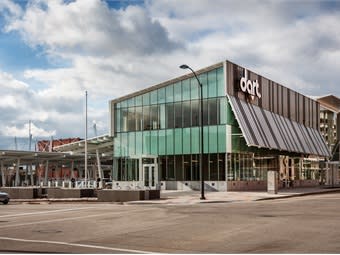
Photo: DART
DART Central Station is the work of many people and firms. Substance Architecture led the design team and The Weitz Co. led the construction team, with contributions from numerous local companies.
More Technology
Caltrain’s Electrification Drives a New Era of Ridership Growth
The railroad’s shift to electric service has brought more frequent trains, stronger customer satisfaction, and increased ridership, earning it APTA’s Outstanding Public Transportation System award.
Read More →
Video Surveillance in Public Transit: What Riders Really Think
As video surveillance gains public acceptance, new research from Axis Communications reveals what transit riders expect from agencies when it comes to safety, privacy, and AI.
Read More →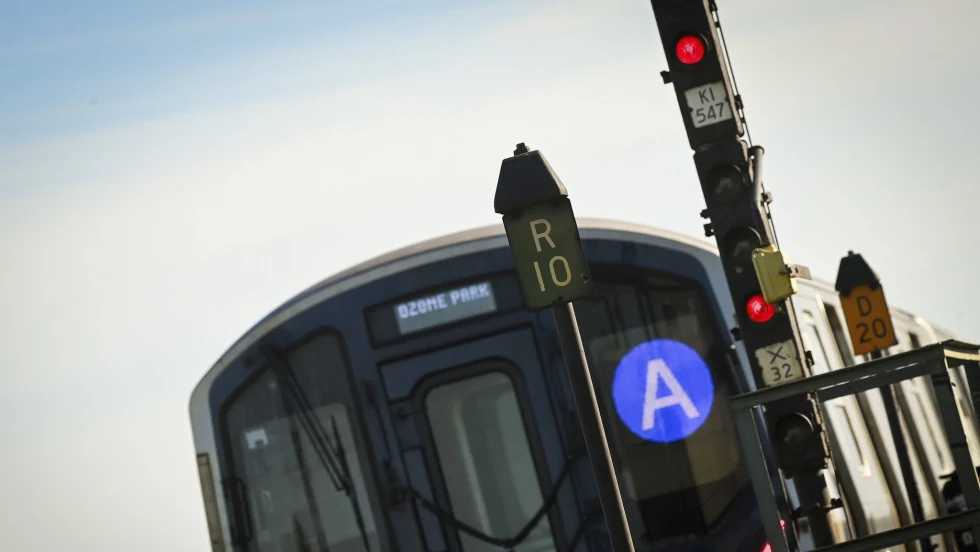
New York MTA Launches Historic $1.9B Signal, Track Modernization Project
Funded in part by congestion pricing revenue, the project will replace nearly century-old signals along the A and C lines in Brooklyn and Queens.
Read More →
Biz Briefs: New Electric Offering from Alexander Dennis/Volvo, Transdev in Boston, and More
In METRO's latest installment, we also take a look at recent news from STV, WSP, Prevost, and more partnerships making headlines across the transportation sector.
Read More →
Roman Cornell on ABC Companies’ Evolution and the Future of Passenger Transportation
The company’s CEO discusses carrying forward a third-generation family legacy, ABC’s continued evolution in passenger transportation, support for increasingly complex fleets, and how technology and continued investment could help operators improve uptime.
Read More →
ETA CEO John Maglio on Transit Technology, Innovation, and Building Agency Trust
ETA founder and CEO John Maglio explores the evolution of transit technology, the importance of reliable systems, and how stronger partnerships can help agencies improve operations and the passenger experience.
Read More →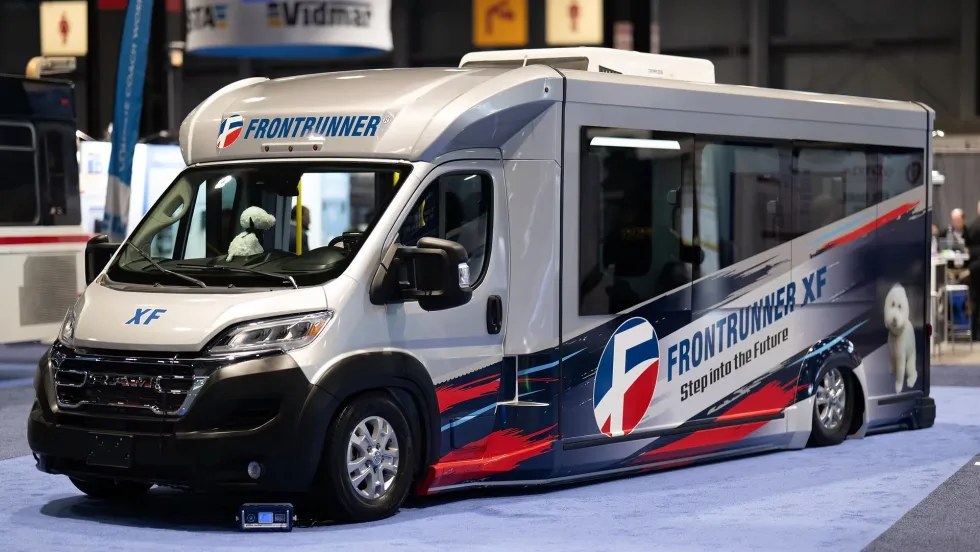
Frontrunner Bus Group Introduces XF Low-Floor Bus with Enhanced Accessibility
The new mid-sized bus features a full flat-floor design, eight-inch curbside step-in height, and zero-entry rear ramp to improve passenger access and operational flexibility.
Read More →
Building a Flexible Path to Transit Electrification with BAE's John Hroncich
John Hroncich discusses BAE Systems’ modular and scalable approach, lessons learned from decades of real-world operations, and how agencies can identify electrification strategies that fit their fleets.
Read More →
Scenes from APTA TRANSform & EXPO 2026
Transit leaders, manufacturers, and industry professionals gathered in Chicago to explore new technologies, share ideas, and discuss the future of public transportation.
Read More →
Biz Briefs: New Flyer Secures Additional 100-Bus Order from WMATA and More
In METRO's latest installment, we also take a look at recent news from Masabi, MCI, Samsara, and more partnerships making headlines across the transportation sector.
Read More →