



House Passes $715B INVEST in America Act
The bill includes $343 billion to improve and repair roads, bridges, and transportation safety; $109 billion for transit; and $95 billion for passenger and freight rail.
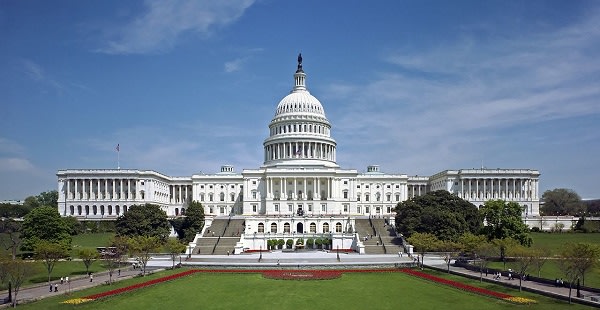
Public Domain
The U.S. House of Representatives passed the five-year, $715-billion INVEST In America Act on Thursday with a vote of 221-201.
The bill, which includes $343 billion to improve and repair roads, bridges, and transportation safety; $109 billion for transit; and $95 billion for passenger and freight rail, “lays the groundwork for President [Joe] Biden’s vision on infrastructure and will create good-paying jobs, restore America’s competitiveness in the global economy, and tackle the climate crisis head on by rebuilding and reimagining infrastructure in the U.S.,” according to Peter DeFazio (D-OR), the lead sponsor of the INVEST Act and chair of the House Transportation and Infrastructure Committee.
Several associations across the surface transportation industry have expressed support for the bill’s passage.
APTA President and CEO Paul Skoutelas released the following statement:
“H.R. 3684 makes critical investments to surface transportation infrastructure, including $109 billion for public transportation and $100 billion for commuter rail, Amtrak, and other high-performance rail. It puts us on the path to increase access to opportunities for all Americans and build more equitable communities. The INVEST in America Act also addresses the environmental and sustainability challenges facing our communities, nation, and the world. H.R. 3684 also reflects key pillars of APTA’s Surface Transportation Authorization Recommendations, addressing the $105 billion state-of-good-repair backlog, and providing the necessary investment to meet growing demand by funding all projects in the Capital Investment Grant pipeline.
The passage of the INVEST in America Act is a vital and necessary step to provide the transformational investment in infrastructure the country so desperately needs. We look forward to continuing to work with Congress and the Biden Administration to achieve the shared goal of meeting the growing and evolving mobility demands of our cities and communities. The time to act is now.”
AASHTO Executive Director Jim Tymon released the following statement:
“AASHTO congratulates the House of Representatives on the passage of the five-year INVEST in America Act, which is a major step toward reauthorization of the federal surface transportation program. With infrastructure investment being the top national priority, AASHTO continues to call for a bipartisan bill that strengthens and builds upon formula-based funding to states, while maintaining the flexibility necessary to allow states to deliver national transportation priorities including equity; resiliency; carbon reduction; safety for all roadway users; improving project delivery; and, maintaining and improving their transportation assets. We also believe a robust five-year surface transportation reauthorization must be the centerpiece of any enacted infrastructure package — and look forward to assisting Congress and the Biden Administration to get across the finish line by September 30.”
Corinne Kisner, executive director of the National Association of City Transportation Officials, issued the following statement:
“The INVEST Act commits to changing the outcomes that our transportation system delivers. From fixing existing infrastructure to making smart investments in transit, safety, and climate, this bill is the strongest proposal yet. As the White House and Senate debate the dollar amounts in a potential infrastructure package, NACTO urges following the House’s policy-based approach. We applaud the careful work and leadership of Chairman DeFazio and Committee staff in passing this transformative bill and will continue to champion it throughout the legislative process.”
More Management

LIT Marks 10-Year Milestone at Annual Summit
Hosted by the COTA from September 10 to 13, the Summit carried the theme “Celebrating 10 Years of Excellence, Leadership, and Impact,” with every part of the program honoring the people, agencies, and partners who built LIT over its first decade.
Read More →
People Movement: Dan Dipert Coaches Adds Third-Generation Leader, Keolis Names New Valley Metro VP/GM, and More
In this edition, we also cover recent appointments and announcements at the Wabtec, SilverRide, HNTB, and more, showcasing the individuals helping to shape the future of transportation.
Read More →
METRO Opens Submissions for 2026 Motorcoach Awards
Nominations are now being accepted for METRO Magazine’s Operator of the Year and Innovative Operator of the Year awards.
Read More →

New York MTA Advances Final Contract for Second Avenue Subway Expansion
Contract Four is the largest in the Second Avenue Subway Phase 2 project and includes construction of station infrastructure, tracks, and signals for the subway expansion, MTA officials said. Work on Contract Four will begin in 2027.
Read More →
Transit Agencies Highlight Safety Gains at National Summit
Leaders from 15 major transit systems shared crime-reduction results and safety initiatives while discussing the role of continued federal support.
Read More →
NITA Names New Leadership, Expands Reduced-Fare Program at First Board Meeting
The new regional transit authority appointed its first board chair and interim executive director while extending reduced fares across CTA, Metra, and Pace for eligible riders.
Read More →
Beyond the Checklist: A Structured Approach to Transit Maintenance
Reliability-Centered Maintenance helps transit agencies move beyond routine checklists to focus limited resources on the assets and failures that have the greatest impact on safety, reliability, and service.
Read More →
APTA 2026 Nominating Committee Selects Leadership Slate, Names Chair and Vice Chair Nominees
Leadership changes will help shape the association’s priorities and its representation of the transportation industry during the 2026–2027 term.
Read More →
DART Launches Major Security, Fare Enforcement Initiative
The 90-day demonstration will deploy coordinated security teams at five light rail stations while testing controlled access and gathering data to guide future investments.
Read More →
Advancing Fare Collection Through Technology and Innovation
Learn about delivering 1300 gates at 91 stations while managing fare evasion. Explore the large scale deployment, solution customization and real-world results that affect the region. Prepare for deployment in your region now.
Read More →