




Read More: TransLink Expands Wi-Fi Availability
How TransLink is Preparing for Winter Weather
Among the winter readiness measures, Coast Mountain Bus Company (CMBC) will be testing the winter performance of a newly available bus tire.
November 10, 2023
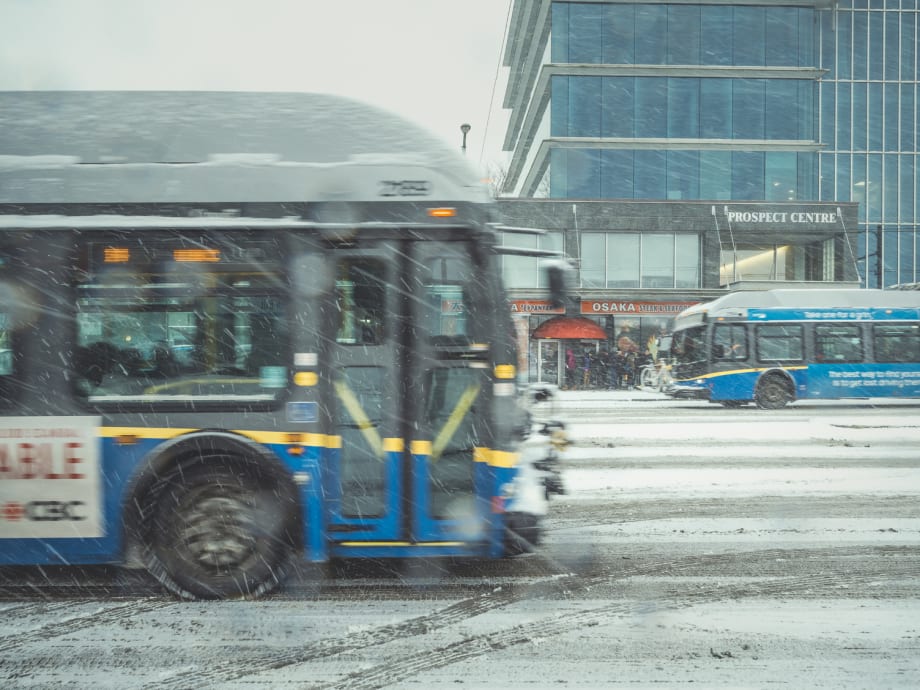
Actions to keep buses moving include coordinating with municipalities on snow-clearing if priority routes are impacted.
Photo: TransLink
3 min to read
TransLink announced how it is preparing transit services for the winter season as temperatures begin to get colder throughout Metro Vancouver.
Among the winter readiness measures, Coast Mountain Bus Company (CMBC) will be testing the winter performance of a newly available bus tire.
Tire trialCMBC is trialing new winter-rated tires featuring a different tread pattern, on one-third of the fleet – which is approximately 500 buses.
The tires currently used on CMBC’s fleet are winter-rated tires which are replaced proactively to keep the tread in good condition. They carry the Three-Peak Mountain Snowflake rating, the highest winter rating available for bus tires.
The tires being tested are new to the market and carry the same Three-Peak Mountain Snowflake winter rating.
Braking, fuel economy, and wear on tire tread over time will be compared. The testing results will help inform future decisions about CMBC tires.
Winter Preparation Tactics
Whenever freezing temperatures are in the forecast, additional staff are called in and TransLink initiates a series of actions to help keep customers moving.
Actions to keep buses moving include:
Coordinating with municipalities on snow-clearing if priority routes are impacted
Spreading anti-icing solution on trolley wires with de-icing trucks
Using brass cutters on some trolley buses to cut through ice on trolley wires
Installing tire socks on buses on portions of routes with heavy snowfall and implementing snow shuttles for snow routes, depending on the weather
Replacing articulated buses with 40-foot conventional buses on some routes, as they are more agile in slippery areas
Salting and sanding bus exchange walking surfaces
“We are committed to doing everything we can to keep our customers moving,” said Coast Mountain Bus Company President/GM Michael McDaniel. “CMBC is committed to always looking at new policies, technology, and equipment to ensure we have the best possible service on the road. I look forward to trialing new tires to determine whether they provide extra benefits during the winter season.”
Plans for SkyTrain
Actions to keep SkyTrain moving include:
Using a de-icing train to keep the power rail free from ice buildup
Running trains overnight to stop snow from building up in the guideway
Coupling Millennium Line trains into four-car configurations to increase capacity
Positioning SkyTrain attendants at the front of each Expo and Millennium Line train to improve reliability on the system by limiting emergency braking triggered by heavy snowfall
Using teams on SkyTrain platforms to prevent ice build-up on the doors
Salting/sanding entrances and walkways for SkyTrain and West Coast Express stations
“Our SkyTrain team is dedicated to providing the best possible service during severe winter storms,” said British Columbia Rapid Transit Company President/GM Sany Zein. “Our SkyTrain system is exposed to the elements, which presents challenges to keep service moving during inclement weather. The commitment by our whole team to keep customers moving and informed is exemplary, and we are prepared to do everything we can to maintain safe service this winter.”
More Security and Safety

Transit Agencies Highlight Safety Gains at National Summit
Leaders from 15 major transit systems shared crime-reduction results and safety initiatives while discussing the role of continued federal support.
Read More →
DART Launches Major Security, Fare Enforcement Initiative
The 90-day demonstration will deploy coordinated security teams at five light rail stations while testing controlled access and gathering data to guide future investments.
Read More →
RTD Launches NextRide App to Consolidate Trip Planning, Fares, Security Reporting
The app expands on RTD’s existing NextRide web application and allows customers to view real-time vehicle locations and service alerts, purchase and store digital fares, and access customer support.
Read More →

TAPTCO Updates OSHA Compliance Training for Transit Maintenance Operations
The revamped program addresses 26 OSHA standards for maintenance facilities, with TAPTCO pointing to training, documentation, and everyday shop hazards as continuing challenges for transit operations.
Read More →
Sponsored•August 18, 2026
How VaporVision Adds Value to Transit Door Systems
Wabtec engineers explain how the system improves doorway detection, strengthens diagnostics and gives transit agencies and OEMs greater operating flexibility.
Read More →
FRA Announces $5.3B in Rail Investments, Including $2B for Amtrak
Funding will support grade-crossing improvements, infrastructure upgrades, and new Amtrak equipment in 23 states.
Read More →
Chicago, Maryland Expand Non-Law-Enforcement Safety, Rider Support
The CTA and MTA are launching new programs aimed at de-escalation, crisis response, rider assistance, and greater transparency.
Read More →
LA Metro, City of West Hollywood, and Partners Advance Smarter Bus Lane Enforcement
The award-winning partnership combines AI-powered detection with human oversight to improve bus reliability, accessibility, and enforcement efficiency.
Read More →
LA Metro Reports 57% Decline in Homelessness on Transit System Since 2024
The agency's latest homelessness count offers new data on how care-based services and cross-sector partnerships can complement traditional transit security strategies.
Read More →
FTA Launches 'Transit Moves America' Dashboard to Highlight Agency Safety and Performance
The online dashboard transforms National Transit Database information into a public-facing resource that allows users to compare transit agencies on key operational and safety metrics.
Read More →