




FRA identifies crossings with most incidents over last decade
Ill. bill doubles fines for drivers who illegally cross railroad tracks
The legislation doubles the fines from $250 to $500 for a first offense and from $500 to $1,000 for a second or subsequent offense.
May 25, 2016

Jed
2 min to read

Jed
The Illinois House passed an amendment to the Illinois Vehicle Code that increases the penalties for drivers who try to cross railroad tracks after the signals are activated and gates are down. The bill will now move to Gov. Rauner’s desk for his signature.
The legislation doubles the fines from $250 to $500 for a first offense and from $500 to $1,000 for a second or subsequent offense.
Last year, Illinois ranked second in the nation in highway-rail fatalities, with nearly 25% of vehicle/train collisions occurring at crossings with active warning devices, including lights, gates and bells, according to Illinois Operation Lifesaver. If this legislation becomes law, Illinois will have some of the strictest penalties in the nation for these types of vehicular offenses.
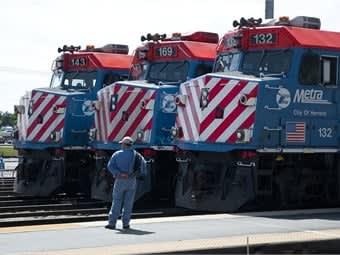
The legislation was initiated by Metra this spring as part of a larger initiative to help promote rail safety awareness and eliminate preventable injuries and deaths at highway-rail grade crossings. The House passed Senate Bill 2806 today with 113-0 vote. The bill was approved by the Senate on April 21.
“Our message is simple: when the gates are down, stay off the tracks or you will pay the price through these increased fines or worse,” said Metra’s Executive Director/CEO Don Orseno. “In addition to the potential and tragic loss of life, collisions that occur at our railroad crossings can impact thousands of Metra customers, who can be delayed for hours at a time, and can also delay motorists.”
Brian Moore
Illinois has the second-largest rail system of any state with more than 7,300 miles of railroad track and 10,363 public highway-rail crossings. In 2015, Illinois also had the third-highest number of rail crossing collisions (140, behind Texas and California), the second-highest number of rail crossing fatalities (24, behind California) and the third-highest number of rail crossing injuries (79, behind Texas and North Carolina), according to the Federal Railroad Administration. Two hundred and forty-four people died in highway-rail crashes nationwide in 2015. A pedestrian or vehicle-train collision occurs every three hours on average nationwide.
In March, Metra announced plans to conduct Operation Lifesaver Safety Blitzes at 45 train stations across its six-county service area in 2016 as part of its ongoing efforts to raise awareness of the importance of safe behavior around its trains and tracks.
More Rail

New York MTA Advances Final Contract for Second Avenue Subway Expansion
Contract Four is the largest in the Second Avenue Subway Phase 2 project and includes construction of station infrastructure, tracks, and signals for the subway expansion, MTA officials said. Work on Contract Four will begin in 2027.
Read More →
San Diego MTS Breaks Monthly Trolley Ridership Record
Agency officials said July’s ridership indicates MTS’s continued recovery from the pandemic.
Read More →
Report Examines NJ TRANSIT Reliability, Funding Challenges
The Garden State Initiative analysis examines the roles of Amtrak infrastructure, fleet management, and agency operations while recommending a more performance-based approach to improving reliability.
Read More →
Stadler, CapMetro Sign Long-Term Rail Fleet Support Agreement
Beginning in 2027, Stadler will provide on-site technical expertise, spare parts support, training, and obsolescence management to help extend the reliability and longevity of CapMetro’s GTW fleet.
Read More →
Biz Briefs: Alstom Lands Canadian Contract, LYT to Supply California TSP, and More
In METRO's latest installment, we take a look at recent news from Complete Coach Works, Beep, FlixBus, and more partnerships making headlines across the transportation sector.
Read More →
CATS Gold Line Marks 5 Years of Service, 2.8M Passenger Trips
With a six-mile expansion planned, the Charlotte streetcar is positioned to connect more neighborhoods and major transit hubs across the region.
Read More →
Why Simulating Pedestrian Movement Has Become Essential for Modern Rail Stations
Pedestrian microsimulation is helping rail planners identify bottlenecks, test station designs, and prepare complex transit hubs for growing passenger volumes.
Read More →
Amtrak Begins Major Construction at New York’s Sunnyside Yard
The new maintenance facility will support Amtrak’s Airo trainsets while improving maintenance efficiency and turnaround times in New York.
Read More →
Chicago Leaders Unveil Plans for O’Hare Airport Express Train
The privately developed project would offer a 15-minute trip between downtown and O’Hare’s Terminal 2, with trains operating every 15 minutes on a dedicated track. The service would use battery-electric trains and three existing freight rail rights-of-way.
Read More →
OCTA Maps Out 30-Year Strategy to Protect Coastal Rail Corridor
The draft feasibility report identifies strategies to protect the coastal rail line for decades as the agency continues near-term stabilization and sand placement efforts.
Read More →