



Illinois bus system creates safe haven for community
With the cooperation of local emergency response agencies and police departments, River Valley Metro has set up a program to help individuals in all types of situations, whether it is a child that is being bullied, frightened, mentally or physically abused or just locked out of their home.

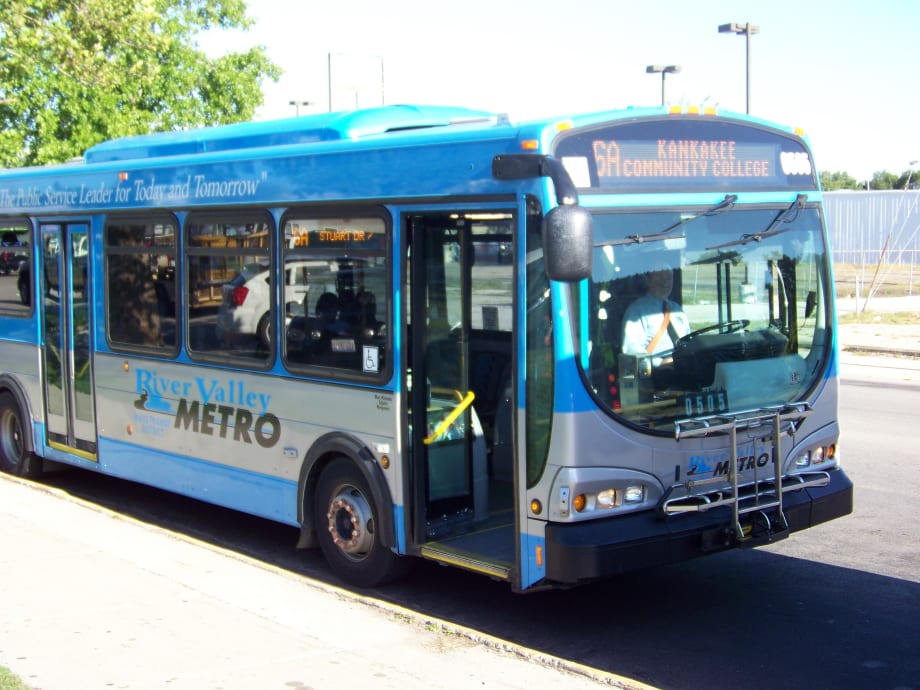
Photo courtesy River Valley Metro.
Photo courtesy River Valley Metro.
Bourbonnais, Ill.-based River Valley Metro (Metro) launched a new program, Safe Spot, allowing anyone in need of help to board a bus and ask for assistance.
With the cooperation of local emergency response agencies and police departments, Metro has set up a program to help individuals in all types of situations. Whether it is a child that is being bullied, frightened, mentally or physically abused, or just locked out of their home.
The individual needing help just boards a Metro bus and advises the driver that he or she needs help or needs a safe spot. The driver will ask them to have a seat and continue on route. The Metro customer care supervisor will intercept the bus and remove the individual from the bus. The 911 Call Center will be notified and they will dispatch the appropriate personnel to assist the person in need. The supervisor will stay on scene until the appropriate personnel arrives.
“The program was initially developed to help children, but Metro determined that this is a program that is a benefit to people of all ages. There is no age limit when it comes to people in need of help,” Director of Operations, Michelle Brutlag said. “Kankakee County has many wonderful social service agencies to help individuals in need, but sometimes the gap between those in need and the agency is transportation. This program and River Valley Metro can help bridge that gap and get people the help they need.”
The Daily Journal, the local daily newspaper, has also come on board with this much-needed program. Each of their four locations is also a Safe Spot. So not only is each vehicle owned by Metro a mobile Safe Spot, newspaper's locations are stationary Safe Spots that individuals can go to for help.
“We felt it was not only important to have mobile Safe Spots that are traveling throughout all of the communities, but also a location that is static and easy to find. TheDaily Journal is a perfect partner for that aspect," said Brutlag.
This program would not be possible without important partnerships, according to Metro officials. The coordination with local police departments and 911 Call Centers is essential to making this program work, along with the Daily Journal providing the static locations. The Kankakee County Soldiers, semi-professional basketball team, and their commitment to the community and especially the children of Kankakee County helped Metro develop this program and help reach the youth through school assemblies targeting bullying and providing Metro a stage to talk about the Safe Spot program to many students.
More Bus

People Movement: Dan Dipert Coaches Adds Third-Generation Leader, Keolis Names New Valley Metro VP/GM, and More
In this edition, we also cover recent appointments and announcements at the Wabtec, SilverRide, HNTB, and more, showcasing the individuals helping to shape the future of transportation.
Read More →
New York MTA Plans Largest Bus Fleet Upgrade in More Than a Decade
The agency is seeking manufacturers for 650 new CNG buses to replace aging vehicles, improve reliability, and advance its broader fleet modernization strategy.
Read More →
Building a Flexible Path to Transit Electrification
John Hroncich discusses BAE Systems’ modular and scalable approach, lessons learned from decades of real-world operations, and how agencies can identify electrification strategies that fit their fleets.
Read More →
Bus Tech Talk: Keeping Transit Technicians Ahead of the Technology Curve
LA Metro’s Obed Mejia discusses technician training, evolving maintenance technology, fleet replacement, and strategies for getting the most out of today’s transit fleets.
Read More →
Biz Briefs: RIPTA Unveils New Frontrunners, Clevland RTA Adds New Siemens, and More
In METRO's latest installment, we take a look at recent news from Siemens, Prevost, Dodge, and more partnerships making headlines across the transportation sector.
Read More →
People Movement: Holly Arnold Joins Transdev and More
In this edition, we also cover recent appointments and announcements at Pace, CamTran, MCI, and more, showcasing the individuals helping to shape the future of transportation.
Read More →
The High Cost of Transit Buses: Industry Leaders Look to Procurement Reform
Transit leaders and policymakers examine how standardized bus designs, streamlined procurement, and predictable funding could help agencies stretch budgets and deliver better service.
Read More →
The Business Voice Behind Public Transportation
As chair of APTA’s Business Members Board of Governors, Ray Melleady explains how more than 850 business members are partnering with transit agencies to advance funding, innovation, and industry-wide collaboration.
Read More →
From Surviving to Thriving: Building Stronger Transportation Organizations
Bus Business Consultants founder Brian Dickson shares lessons on leadership, organizational health, and creating options for long-term success in a changing transportation industry.
Read More →
Finding the ‘Happy Medium’: Optimizing Maintenance Without Sacrificing Reliability
The key to maintenance optimization isn’t doing less work—it’s doing the right work at the right time on the right assets.
Read More →