



IndyGo Updates Fare Policy
The update will foster an equitable, reliable, and customer-centered fare payment experience.

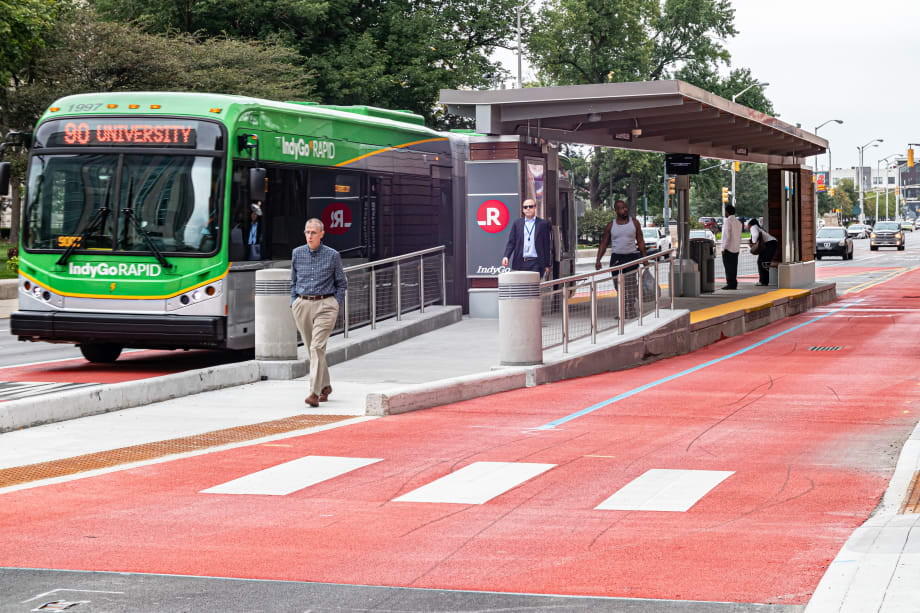
IndyGo’s decision to discontinue the sale of several paper passes supports its long-term goals of modernizing the system, improving efficiency, and ensuring all riders have access to flexible and affordable fare options.
Photo: IndyGo
The IndyGo board approved an update to its fare policy that will further modernize its fare collection system with a fare adjustment and the retirement of outdated fare products.
The update will foster an equitable, reliable, and customer-centered fare payment experience.
“A modern, accessible transit system is the backbone of a thriving city,” said IndyGo President/CEO Jennifer Pyrz. “Fare increases are never easy, but this step is about protecting the service our riders depend on. IndyGo remains committed to putting customers first and ensuring our system remains safe, reliable, and accessible for all who depend on it now and into the future."
IndyGo’s New Fare System
IndyGo’s new plan includes:
A base fare increase from $1.75 to $2.75 for fixed route service, effective January 1, 2026.
Daily fare capping using MyKey = $4.00 to $6.00
Weekly fare capping using MyKey = $15.75 to $24.75
Fare increases for riders of IndyGo Access, paratransit service, effective July 1, 2026.
ADA Area = $3.50 to $5.50
Premium Area = $7.00 to $11.00
Same Day = $10.00 to $15.00
Stopping the sale of 10-trip, 31-day, S-Passes, and Summer Youth Passes on July 1, 2026.
No longer accepting 7-day, 10-trip, 31-day, S-Passes, and Summer Youth Passes as of July 1, 2027.
IndyGo’s fares have remained the same since 2009, a testament to the agency’s efficiency and customer-first philosophy.
However, over the past 16 years, the costs of fuel, labor, and vehicle maintenance have increased significantly. As this financial gap continues to grow, a fair adjustment is necessary to maintain existing service levels, invest in essential maintenance and repairs, and support fair, competitive wages for frontline staff.
The fare structure will continue to include free two-hour transfers; daily and weekly fare capping through the MyKey fare payment system; half-price fares for seniors, youth, and individuals with disabilities; and free trips for veterans.
Stressing MyKey Usage, Implementation
IndyGo’s decision to discontinue the sale of several paper passes supports its long-term goals of modernizing the system, improving efficiency, and ensuring all riders have access to flexible and affordable fare options.
MyKey offers a more convenient, equitable payment option by allowing riders to pay as they go and eliminating the need for large upfront payments. MyKey additionally enables frequent riders to automatically earn their way to fare-free rides through fare capping, generally providing the same benefit as paper passes, but in a format that works with more modern fare equipment.
The agency will launch a comprehensive education campaign in advance of the January 1, 2026, effective date, with a special focus on reaching low-income riders, riders with limited English proficiency, seniors, youth, and riders with disabilities.
IndyGo will also host a series of on-bus educational conversations, pop-up stations, and virtual info sessions to ensure all riders understand the rate increase and how they can get the most value from MyKey.
“We're committed to making sure every rider understands what is changing and when,” said IndyGo Chief Public Affairs Officer Carrie Black. “Whether you’ve been riding IndyGo for years or you just took your first trip yesterday, we’re here to help you navigate these changes.”
More Management

METRO Opens Submissions for 2026 Motorcoach Awards
Nominations are now being accepted for METRO Magazine’s Operator of the Year and Innovative Operator of the Year awards.
Read More →
New York MTA Advances Final Contract for Second Avenue Subway Expansion
Contract Four is the largest in the Second Avenue Subway Phase 2 project and includes construction of station infrastructure, tracks, and signals for the subway expansion, MTA officials said. Work on Contract Four will begin in 2027.
Read More →
Transit Agencies Highlight Safety Gains at National Summit
Leaders from 15 major transit systems shared crime-reduction results and safety initiatives while discussing the role of continued federal support.
Read More →

NITA Names New Leadership, Expands Reduced-Fare Program at First Board Meeting
The new regional transit authority appointed its first board chair and interim executive director while extending reduced fares across CTA, Metra, and Pace for eligible riders.
Read More →
Beyond the Checklist: A Structured Approach to Transit Maintenance
Reliability-Centered Maintenance helps transit agencies move beyond routine checklists to focus limited resources on the assets and failures that have the greatest impact on safety, reliability, and service.
Read More →
APTA 2026 Nominating Committee Selects Leadership Slate, Names Chair and Vice Chair Nominees
Leadership changes will help shape the association’s priorities and its representation of the transportation industry during the 2026–2027 term.
Read More →
DART Launches Major Security, Fare Enforcement Initiative
The 90-day demonstration will deploy coordinated security teams at five light rail stations while testing controlled access and gathering data to guide future investments.
Read More →
Advancing Fare Collection Through Technology and Innovation
Learn about delivering 1300 gates at 91 stations while managing fare evasion. Explore the large scale deployment, solution customization and real-world results that affect the region. Prepare for deployment in your region now.
Read More →
Game Day in Motion: Moving Millions During the 2026 World Cup
Between packed transit stations and team motorcoaches, see how agencies and operators across North America tackled the transportation demands of the 2026 FIFA World Cup.
Read More →
Surface Transportation Extension Averts Shutdown, Leaves Transit Funding Gap
The stopgap keeps federal transportation programs moving, but missing advance funding could complicate the transit and rail projects agencies are planning next.
Read More →