




RELATED: School launches app for visually impaired bus riders
Innovation, clean fleets honored at BusCon 2017
METRO Magazine honored bus operations and their supplier partners for initiatives that helped them improve training, save money, run more efficiently, streamline operations, or improve safety, while PERC honored three operators for championing propane autogas.
September 14, 2017
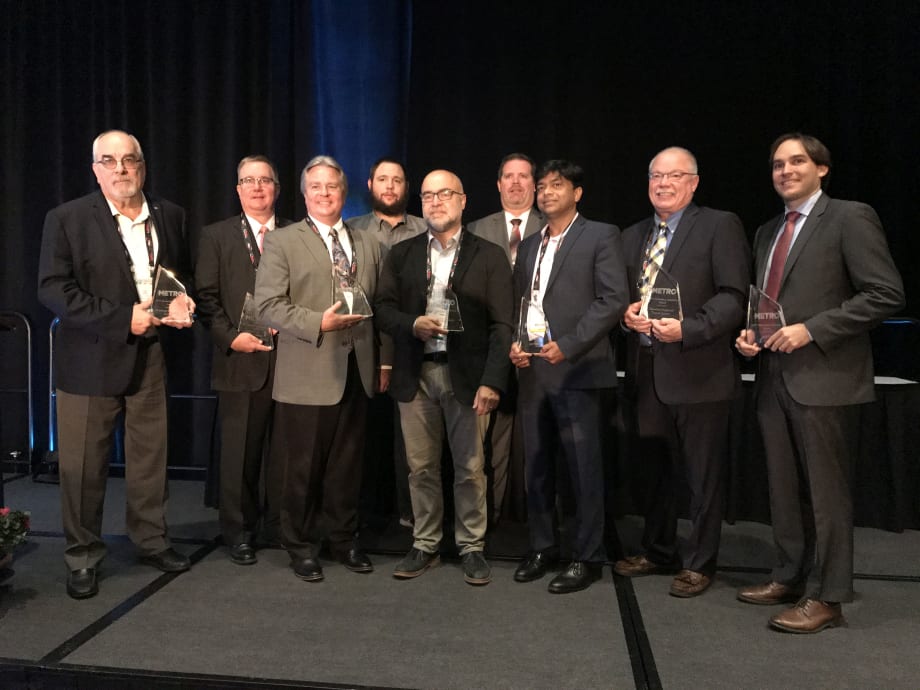
METRO's Innovative Solutions award winners included AVTA, MBTA, CDTA, NICE, Lake Erie Transit, and Siouxland Regional Transit System.
4 min to read
METRO's Innovative Solutions award winners included AVTA, MBTA, CDTA, NICE, Lake Erie Transit, and Siouxland Regional Transit System.
Innovators and clean fleets were honored at BusCon on Wednesday during METRO Magazine's third annual Innovative Solutions Awards, which took place in Indianapolis.
In all, METRO honored six bus operations and their supplier partners for implementing a new initiative that helped them improve training, save money, run more efficiently, streamline operations, or improve safety.
This year’s winners include:
Boston’sMassachusetts Bay Transportation Authority(MBTA) — The MBTA partnered with Uber and Lyft to alleviate the strain on its RIDE paratransit service, while also providing customers with better on-demand mobility. Since its inception, the program has delivered some impressive results, including a 70% reduction in cost per trip for the agency, as well as a 14% savings per trip for paratransit customers. Customers also benefitted from the ability to schedule and make trips on the same day, instead of having to schedule rides 24 hours in advance.
Sioux City, Iowa’s Siouxland Regional Transit System and Zello — Siouxland Transit teamed with Zello to convert from a two-way radio system to a push to talk application, which reduced the agency’s cost from $2600 per month to $360 per month for 50 buses and 60 drivers and dispatchers. The new system works as well or better than the old 800 megahertz radios and eliminates the cost of buying radios, installation, and maintenance. The application also runs in the background, so the driver can use their dispatch software without having to switch back and forth.
Albany, N.Y.’s Capital District Transportation Authority (CDTA) and Genfare — The CDTA Navigator Program includes the deployment of a state-of-the-art Genfare fare collection and point-of-sale system, serving as New York State’s first fully-integrated smart card payment and mobile ticketing solution for public transit. The Navigator Program utilizes many ITS technologies to offer customers the most economical fare choice and efficient payment available today including NFC, Smart Cards, Mobile Wi-Fi, and Mobile Application API’s, just to name a few. The agency also created its own bonus program based on various customer-focused criteria, such as a birthdays or anniversary date.
Lancaster, Calif.’s Antelope Valley Transit Authority (AVTA) and BYD — Continuing on its path to full electrification of its bus fleet, the AVTA received the first BYD 60-foot articulated all-electric bus this year as part of its aggressive “Green By 2018” campaign. AVTA’s groundbreaking bus electrification project is now the first of its kind in the world to incorporate three different types of electric vehicles — transit and articulated buses and over-the-road coaches — and high power wireless charging. This sophisticated project will demonstrate that a transit agency can fully electrify its fleet regardless of service route demands.
Garden City, N.Y.’s Nassau-Inter-County Express (NICE) and Sensible Innovations — NICE and Sensible Innovations teamed to introduce the AWARE mobile app, which helps visually-impaired bus riders navigate one of Nassau’s busiest stations, the Rosa Parks Hempstead Transit Center. Using Bluetooth electronic sensors, called “ibeacons,” installed throughout the Transit Center, mobile devices can provide blind and visually impaired bus riders with “audible signs” that will let them know their location and that of important landmarks, including bus bays for specific routes, ticket machines, exits, and restrooms.
Monroe, Mich.’s Lake Erie Transit and Engineered Machined Products (EMP) — Lake Erie Transit teamed to test EMP’s Mini-Hybrid Electric Fan System on its paratransit bus system. By removing the mechanical fan and replacing it with an array of fully controllable electric fans, along with an upgraded alternator, the Mini-Hybrid Electric Fan System removes the parasitic load of the existing mechanical system and provides better fuel economy and increased engine performance, equating to a both a financial and maintenance savings for the agency, as well as added comfort and reliability for the passengers. Both parties are looking ahead to further testing and final evaluation of the results with the potential to retrofit the entire fleet, and possibly, realize even greater efficiencies and savings.
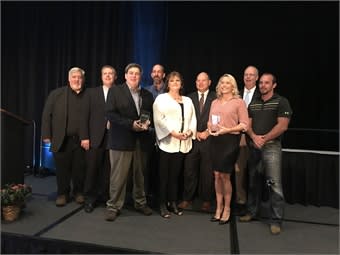
PERC's award winners this year included Macon County Transit, the City of La Porte, Ind., and First Tennessee Human Resource Agency.
In addition, the Propane Education & Research Council (PERC) honored three fleets for their use of propane autogas. The award recognizes public transportation fleets for their commitment to improving the environment and health of their communities by adopting the nation’s leading alternative fuel, propane autogas.
This year’s PERC award winners include:
Franklin, N.C.’sMacon County Transit
TheCity of La Porte, Ind.
Johnson City, Tenn.’s First Tennessee Human Resource Agency
More New Mobility

From Hardware to Digital Partner: Luminator Charts Its Next Chapter
CEO Magnus Friberg discusses Luminator’s shift toward becoming a digital partner, the growing importance of software and interoperability, and how AI can help agencies improve operations and passenger experience.
Read More →
Biz Briefs: Alstom Lands Canadian Contract, LYT to Supply California TSP, and More
In METRO's latest installment, we take a look at recent news from Complete Coach Works, Beep, FlixBus, and more partnerships making headlines across the transportation sector.
Read More →
CharterUP’s Armir Harris on Technology, AI, and the Future of Group Mobility
In a recent episode of METROspectives, CharterUP Founder/CEO Armir Harris discussed the company’s evolution from an online charter bus marketplace into a technology platform supporting public- and private-sector mobility and much more.
Read More →
Jacksonville’s NAVI Project Charts a New Course for Autonomous Public Transportation
Through its NAVI program, JTA is showing how autonomous vehicles, intelligent infrastructure, and coordinated operations can work together to deliver everyday public transportation.
Read More →
Biz Briefs: Luminator Marks Milestone and More
From manufacturers and suppliers to transit agencies and motorcoach operators, these updates offer a snapshot of the projects, partnerships and business moves driving the industry forward.
Read More →
New Tricks for Old Bureaucracies: Joshua Schank on Making Transit Innovation Stick
Former LA Metro Chief Innovation Officer Joshua Schank discusses why good ideas aren't enough, how transit agencies can overcome resistance to change, and why today's challenges demand more innovation.
Read More →
How DART's GoPass Is Redefining Regional Mobility
Serving 14 transit agencies, GoPass simplifies multimodal travel by allowing riders to plan, pay for, and manage an entire trip through one app.
Read More →
Biz Briefs: OCTA Taps Clean Energy for Hydrogen Station, Stadler to Supply Via Rail Vehicles, and More
From manufacturers and suppliers to transit agencies and motorcoach operators, these updates offer a snapshot of the projects, partnerships and business moves driving the industry forward.
Read More →CharterUP Expands Into New Mobility and Autonomous Transportation
Vice President of New Mobility Stephen Joos discusses how CharterUP is leveraging its nationwide transportation network, technology platform, and autonomous vehicle partnerships to expand into workforce mobility, campus shuttles, and transit solutions.
Read More →
METRO Magazine Announces 2026 Innovative Solutions Awards Winners
Projects Recognized for Advancing Mobility Through Technology, Accessibility, Workforce Innovation, and Operational Excellence
Read More →