



Innovative ads bring in revenue for Caltrain
Two types of outdoor advertising, train wraps and station saturation, have brought in approximately $100,000 this fiscal year.

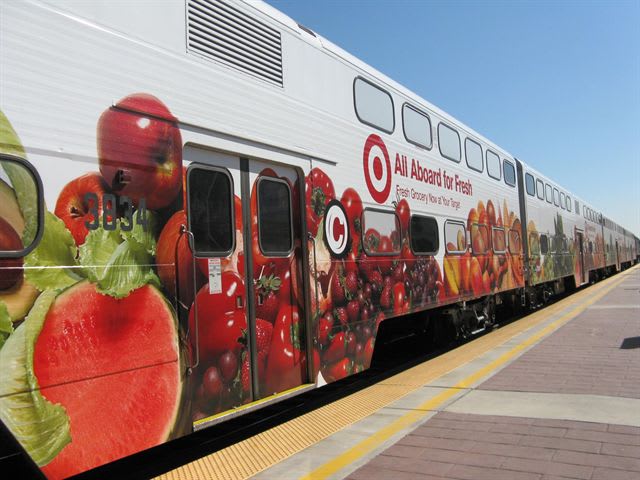
Think of train wraps as wallpaper — but for the entire exterior of a rail car. Businesses can choose to wrap just one train car or cover an entire five-car train. When Caltrain opened this venue in 2004, Target was the inaugural advertiser.
[IMAGE]Caltrain-rail-wrap-ads-6.jpg[/IMAGE]The traditional real estate market may not have fully recovered from the economic downturn, but California commuter rail service, Caltrain is having some success using a different type of real estate to generate much-needed revenue. Two innovative types of outdoor advertising, train wraps and station saturation, have brought in approximately $100,000 this fiscal year.
CBS Outdoor is Caltrain’s real estate broker. The national outdoor media company is soliciting businesses to literally plaster themselves to Caltrain.
[IMAGE]Caltrain-rail-wrap-2-6.jpg[/IMAGE]
Businesses can choose to wrap just one train car or cover an entire five-car train. When Caltrain opened this venue in 2004, Target was the inaugural advertiser. The concept was so successful that the retailer is currently using two complete Caltrain train sets to advertise the introduction of fresh produce at its stores.
Other train wraps have included San Francisco Giants, Stanford football, San Jose Sharks and radio station 93.3 RAZA. Soon to be rolling along the rails will be a train car wrapped by Web services company AOL.
With the train traveling through densely populated area between San Francisco and San Jose, hundreds of thousands of people have the opportunity to see the ads.
Station Saturation
Many businesses have opted to saturate the San Francisco train station with ads — overhead, on pillars and even under foot. This is a popular venue because of the thousands of passengers that pass through the station each day and more during special events.
The station at Fourth and King streets also is a highly visible location, which allows pedestrians and drivers passing by to glimpse the ads. Station saturation advertisers have included Jamba Juice, WebEx, JP Morgan Chase, and, most recently, the Hawaii Tourism Board.
[IMAGE]Caltrain-Hawaii-12-ads-6.jpg[/IMAGE]
While this unique program to generate revenue won’t wipe out Caltrain’s structural deficit, it definitely is helping the bottom line.
Caltrain, owned and operated by the Peninsula Corridor Joint Powers Board, operates between San Francisco and San Jose, with commute service to Gilroy. Average weekday ridership on the mix of 90 local, limited and express weekday trains is 42,000. Local, hourly service is provided on Saturdays and Sundays.
More Rail

ENC Lands MATA Contract and More in Biz Briefs
In this edition of Biz Briefs, we spotlight the latest developments shaping the future of mobility.
Read More →
Strada360’s Steve Lassey on Turning Transit Data Into Better Decisions
From breaking down data silos to preparing for AI, Strada360 CEO Steve Lassey discusses how transit agencies can use technology to improve operations, customer information, and long-term decision-making.
Read More →
SEPTA Details Accelerate Vision for Transit System
The plan outlines investments in trolley modernization, new Metro and Regional Rail vehicles, accessible stations, and more frequent bus and rail service.
Read More →
FTA Ends Direct Oversight of MBTA Safety Actions
The federal agency closed its remaining special directive to the Massachusetts Department of Public Utilities following a safety review that began in 2022.
Read More →
Amtrak, CN Reach Agreements to Strengthen Passenger Rail Service, Safety
The agreement resolves a more than decade-long proceeding before the Surface Transportation Board concerning the terms and conditions for Amtrak services, such as the City of New Orleans, Illini/Saluki, and Wolverine.
Read More →
New York MTA Advances Final Contract for Second Avenue Subway Expansion
Contract Four is the largest in the Second Avenue Subway Phase 2 project and includes construction of station infrastructure, tracks, and signals for the subway expansion, MTA officials said. Work on Contract Four will begin in 2027.
Read More →
San Diego MTS Breaks Monthly Trolley Ridership Record
Agency officials said July’s ridership indicates MTS’s continued recovery from the pandemic.
Read More →
Report Examines NJ TRANSIT Reliability, Funding Challenges
The Garden State Initiative analysis examines the roles of Amtrak infrastructure, fleet management, and agency operations while recommending a more performance-based approach to improving reliability.
Read More →
Stadler, CapMetro Sign Long-Term Rail Fleet Support Agreement
Beginning in 2027, Stadler will provide on-site technical expertise, spare parts support, training, and obsolescence management to help extend the reliability and longevity of CapMetro’s GTW fleet.
Read More →
Biz Briefs: Alstom Lands Canadian Contract, LYT to Supply California TSP, and More
In METRO's latest installment, we take a look at recent news from Complete Coach Works, Beep, FlixBus, and more partnerships making headlines across the transportation sector.
Read More →