



Jersey City's on-demand service growing rapidly
Via, which operates the service, has experienced steady daily growth and high demand since launch in Jersey City, with an increasing number of both new and repeat riders.

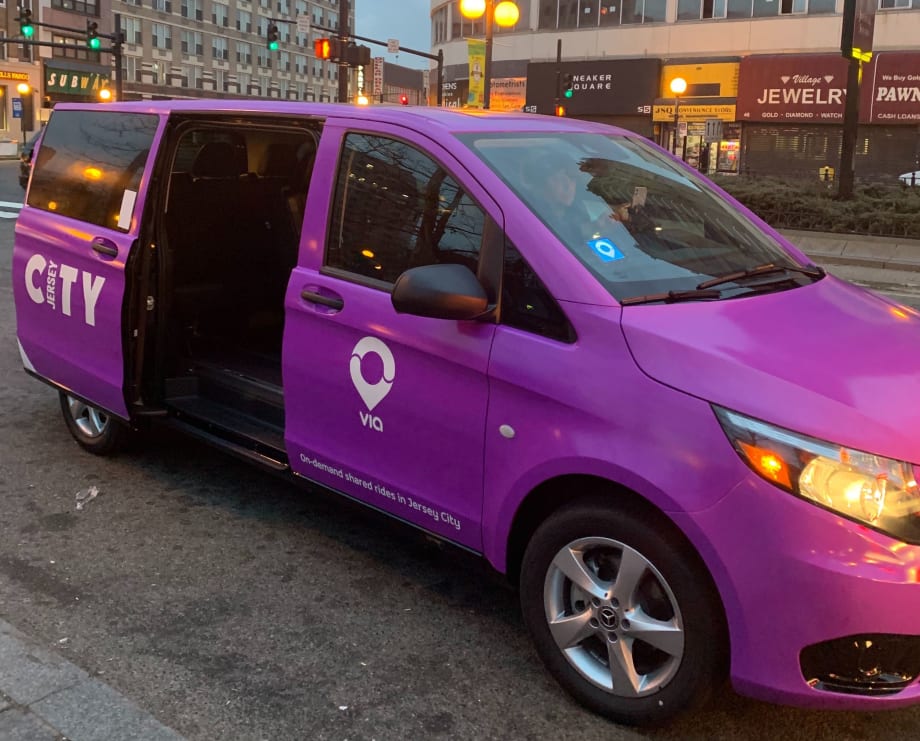
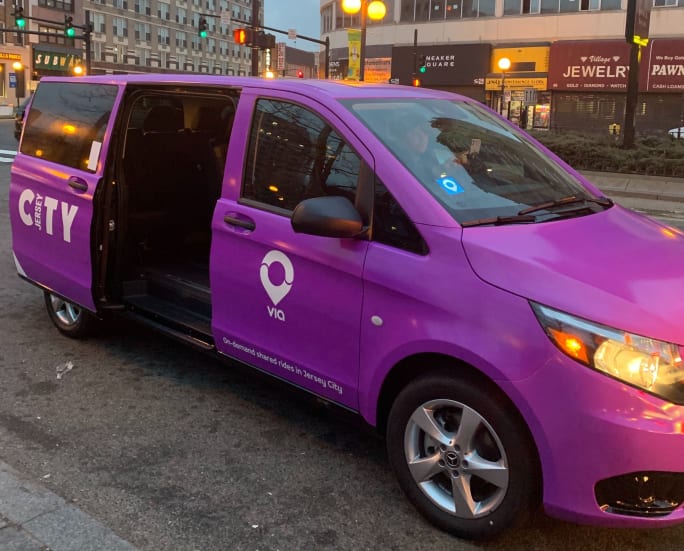
Via has experienced steady daily growth and high demand since launch in Jersey City, with an increasing number of both new and repeat riders. Via
Jersey City Mayor Steven M. Fulop and Via launched the first on-demand public bus service in New Jersey. In the first two weeks, the service has provided more than 5,000 rides, with top routes and rider feedback indicating that residents and visitors are using the service to fill the gaps in the existing public transit infrastructure for both commuting and leisure purposes, key goals of the service.
Via has experienced steady daily growth and high demand since launch in Jersey City, with an increasing number of both new and repeat riders. Ridership is strong during commuter hours, with more than 30% of trips to or from core transit hubs. Throughout the day, the service has a high volume of rides to major commercial destinations. Average wait times are less than 12 to 15 minutes.
The service was purpose-built to complement and extend Jersey City’s existing public transit infrastructure, while filling the gaps in areas that need it most. Transit hubs in Downtown Jersey City are vast, but the North and South regions of the city suffer from little access to public transit. The cost to expand traditional public transit infrastructure is significant and Mayor Fulop and his team identified Via’s technology as an innovative solution that Jersey City could proactively introduce to create mobility for residents while taking private vehicles off the roads.

The service was purpose-built to complement and extend Jersey City’s existing public transit infrastructure, while filling the gaps in areas that need it most.
Via
Using the Via mobile app, or a dedicated phone line for riders without access to a smartphone, residents, visitors, and commuters can book a shared ride. Via’s advanced technology matches multiple passengers headed in the same direction into one of 15 high-capacity vehicles, and directs passengers to a nearby corner, or “virtual bus stop” for pickup. Vehicles are routed in real-time, minimizing detours to reduce congestion and emissions, while providing a highly-efficient rider experience.
Rides to-or-from Downtown cost $2, and rides within the outer service zone start at $2, plus $.50 per mile. The service operates Monday through Friday from 6 a.m. to 10 p.m. Riders can request a wheelchair accessible vehicle.
The project operates in partnership with Avis Budget Group, who provides the vehicles, as well as turnkey fleet management services, including vehicle maintenance.
More New Mobility

From Hardware to Digital Partner: Luminator Charts Its Next Chapter
CEO Magnus Friberg discusses Luminator’s shift toward becoming a digital partner, the growing importance of software and interoperability, and how AI can help agencies improve operations and passenger experience.
Read More →
Biz Briefs: Alstom Lands Canadian Contract, LYT to Supply California TSP, and More
In METRO's latest installment, we take a look at recent news from Complete Coach Works, Beep, FlixBus, and more partnerships making headlines across the transportation sector.
Read More →
CharterUP’s Armir Harris on Technology, AI, and the Future of Group Mobility
In a recent episode of METROspectives, CharterUP Founder/CEO Armir Harris discussed the company’s evolution from an online charter bus marketplace into a technology platform supporting public- and private-sector mobility and much more.
Read More →
Jacksonville’s NAVI Project Charts a New Course for Autonomous Public Transportation
Through its NAVI program, JTA is showing how autonomous vehicles, intelligent infrastructure, and coordinated operations can work together to deliver everyday public transportation.
Read More →
Biz Briefs: Luminator Marks Milestone and More
From manufacturers and suppliers to transit agencies and motorcoach operators, these updates offer a snapshot of the projects, partnerships and business moves driving the industry forward.
Read More →
New Tricks for Old Bureaucracies: Joshua Schank on Making Transit Innovation Stick
Former LA Metro Chief Innovation Officer Joshua Schank discusses why good ideas aren't enough, how transit agencies can overcome resistance to change, and why today's challenges demand more innovation.
Read More →
How DART's GoPass Is Redefining Regional Mobility
Serving 14 transit agencies, GoPass simplifies multimodal travel by allowing riders to plan, pay for, and manage an entire trip through one app.
Read More →
Biz Briefs: OCTA Taps Clean Energy for Hydrogen Station, Stadler to Supply Via Rail Vehicles, and More
From manufacturers and suppliers to transit agencies and motorcoach operators, these updates offer a snapshot of the projects, partnerships and business moves driving the industry forward.
Read More →CharterUP Expands Into New Mobility and Autonomous Transportation
Vice President of New Mobility Stephen Joos discusses how CharterUP is leveraging its nationwide transportation network, technology platform, and autonomous vehicle partnerships to expand into workforce mobility, campus shuttles, and transit solutions.
Read More →
METRO Magazine Announces 2026 Innovative Solutions Awards Winners
Projects Recognized for Advancing Mobility Through Technology, Accessibility, Workforce Innovation, and Operational Excellence
Read More →