




Read More: LA Metro Enforces Bus Lane Ticketing
LA Metro Expands TAP-to-Exit Program
After a successful pilot, Metro plans to expand their TAP-to-Exit program to all end of line stations by the end of 2025, starting with Union Station.
February 18, 2025
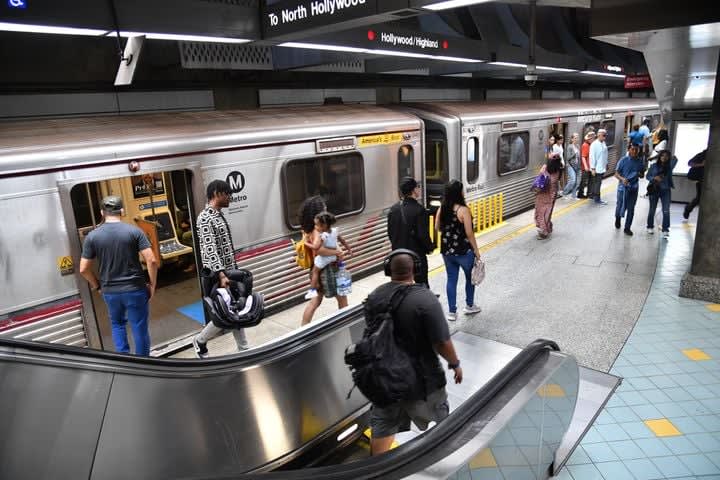
LA Metro is expanding their TAP-to-Exit program after a successful pilot recuperated $130,000 in fares.
Photo: LA Metro
3 min to read
The Los Angeles County Metropolitan Transportation Authority’s (Metro) TAP-to-Exit program is being expanded to all of its end-of-line stations. The latest station to receive the program is Union Station (B/D Lines), which recently saw the launch of the program.
Implementation at Union Station
Turnstiles at Union Station are now latched at both the entrances and exits of the rail lines, requiring riders to tap a TAP card or scan a valid Metrolink Fare to enter and exit the station.
Information about the expansion of the program began spreading earlier this month, via signage at Union Station and through distributed brochures. Metro Ambassadors and TAP Blue Shirts are on-site to assist passengers with loading their fares and Metro LIFE representatives can help enroll income-qualified riders in the LIFE program.
An education period is in place and will last through February 25. After this period ends security and law enforcement will begin issuing citations for those without valid fares.
The expansion of the TAP-to-Exit program is part of Metro’s ongoing public safety efforts. By controlling access to the system, Metro looks to help ensure that people are using the system for transportation needs.
More security officers and contracted law enforcement partners have been deployed since 2024 to increase the visibility of uniformed law enforcement on the system. Camera technology and lighting have also been upgraded to assist in these efforts.
A Successful Pilot
First launched at the North Hollywood B Line Station in May 2024, the TAP-to-Exit program has received positive feedback from Metro riders.
The pilot saw behavior changes along the 14 B-Line stations with reported crime and other issues dropping by more than 40 percent on the Transit Watch App. When North Hollywood riders were surveyed, 90% stated that the pilot made the station feel cleaner and 86 percent stated the pilot made them feel safer.
The program was expanded to the Santa Monica E Line Station in September 2024 and Transit Watch incidents dropped by 55% when TAP-to-Exit was paired with fare enforcement.
TAP-to-Exit is an effective, common fare compliance practice around the world and in major transit systems across the nation, including Bay Area Rapid Transit, Washington Metropolitan Area Transit Authority, and Metropolitan-Atlanta Regional Transit Authority.
Data from Metro’s three contracted law enforcement partners reveals that up to 94% of individuals arrested on the system for violent crime to not possess a valid fare. By expanding the TAP-to-Exit program, Metro aims to prevent unauthorized use and maintain a safe environment for everyone.
So far, TAP-to Exit has automatically corrected nearly 120,000 unpaid passenger exits, translating to over $130,000 in fares recuperated.
Keeping Transit Affordable
To make transit more affordable for riders, Metro has reduced-price transit passes, such as the student GoPass, and the LIFE program. The LIFE program provides free rides and reduced fares to low-income customers and is increasingly helping qualified riders.
Metro offers a fare capping program which allows Tap card riders to pay up to $5 a day or $18 over seven days. Once the limits are reached, they can ride free for the remainder of the day or seven-day period.
Metro’s Mobility Wallet Pilot Program provides in-need riders the freedom to choose the mode that best suits their needs by providing a debit card with $150 per month to spend on transportation. The card can be used with the bus, train, bike share, or Metro-Micro systems.
Currently, the TAP-to-Exit program is planned to be expanded to include all end-of-line stations by the end of 2025.
More Management

From Surviving to Thriving: Building Stronger Transportation Organizations
Bus Business Consultants founder Brian Dickson shares lessons on leadership, organizational health, and creating options for long-term success in a changing transportation industry.
Read More →
Everett Transit, Community Transit Outline Consolidation Agreement
The proposed agreement calls for a 50% increase in bus service in Everett, a new microtransit zone, continued paratransit service, and the transfer of Everett Transit operations to Community Transit.
Read More →
Strada360’s Steve Lassey on Turning Transit Data Into Better Decisions
From breaking down data silos to preparing for AI, Strada360 CEO Steve Lassey discusses how transit agencies can use technology to improve operations, customer information, and long-term decision-making.
Read More →
People Movement: Phil Washington Joins HNTB, Denver RTD Launches CEO Search, and More
In this edition, we also spotlight recent personnel moves at STV, the Eno Center for Transportation, and more, highlighting the people taking on new roles across the transportation industry.
Read More →
SEPTA Details Accelerate Vision for Transit System
The plan outlines investments in trolley modernization, new Metro and Regional Rail vehicles, accessible stations, and more frequent bus and rail service.
Read More →
FTA Ends Direct Oversight of MBTA Safety Actions
The federal agency closed its remaining special directive to the Massachusetts Department of Public Utilities following a safety review that began in 2022.
Read More →
Report: Transit Bus Manufacturing Supports 34,100 Jobs, $5.1B in GDP
The “Buses Mean Business” report examines the transit bus manufacturing industry’s economic footprint, supply chain, and rising demand for vehicle replacements.
Read More →
LIT Marks 10-Year Milestone at Annual Summit
Hosted by the COTA from September 10 to 13, the Summit carried the theme “Celebrating 10 Years of Excellence, Leadership, and Impact,” with every part of the program honoring the people, agencies, and partners who built LIT over its first decade.
Read More →
People Movement: Dan Dipert Coaches Adds Third-Generation Leader, Keolis Names New Valley Metro VP/GM, and More
In this edition, we also cover recent appointments and announcements at the Wabtec, SilverRide, HNTB, and more, showcasing the individuals helping to shape the future of transportation.
Read More →
METRO Opens Submissions for 2026 Motorcoach Awards
Nominations are now being accepted for METRO Magazine’s Operator of the Year and Innovative Operator of the Year awards.
Read More →