




More News: SacRT Teams with Hayden AI for Bus Stop Enforcement Program
LA Metro Equips Entire Bus Fleet with Protective Barriers
With 2017 buses retrofitted with fully enclosed protective barriers, LA Metro is the first U.S. transit agency to equip their entire fleet with the security measure.
January 2, 2025
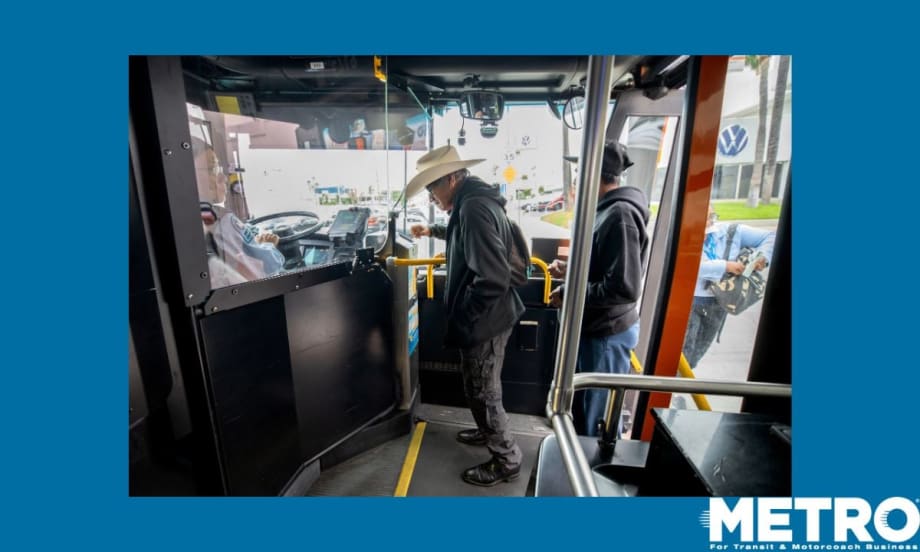
The new operator barriers on LA Metro's buses have already decreased the likelihood of assaults on operators by 58%.
Photo: LA Metro
2 min to read
The Los Angeles County Metropolitan Transit Authority’s (Metro) central maintenance facility and operating divisions completed retrofitting their entire active bus fleet with new barriers made of shatterproof tempered glass that fully encloses the driver.
The barrier was designed, prototyped, and fabricated in-house at LA Metro’s Central Maintenance Facility in downtown Los Angeles and the barriers were mostly installed by LA Metro staff at the operating divisions.
Metro Proactively Protecting Staff
Metro’s board approved an emergency procurement motion to allow for accelerated installation of the barriers. In eight months Metro has been able to retrofit all 2017 active buses in their fleet, making it the first transit agency in the nation to do so.
The barriers are constructed of steel and laminated, low-reflectivity shatter-resistant glass. Metro used about 55,000 square feet of this glass to retrofit the entire fleet.
Preventing Attacks
The bus barrier initiative was launched in response to an increase in attacks on bus operators. The barriers provide an extra layer of security for operators, protecting them from physical attacks and behaviors such as spitting.
The barriers are already showing positive results, with operators being 58% less likely to be assaulted on buses with them.
This it the latest step Metro has taken to enhance operator safety. They have also installed onboard cameras, DVR systems, and emergency buttons for operators, introduced de-escalation training for operators, implemented a “See Something, Say Something” marketing campaign to encourage riders to report issues, put up signage to remind passengers that assaults are punishable by law, and introduced dedicated bus riding security teams.
The Road for Metro
Metro’s bus system is the second busiest in the U.S. and has provided more than 222.7 million rides during the first 11 months of 2024.
In July 2022, Metro began to work on prototype barriers that provide additional protection for bus operators, the prototypes were installed on a limited number of buses in April 2023. Through an online survey, over 2,500 bus operators showed a preference for a barrier that would extend the protected area to the front windshield of the bus. However, bus operators noted a concern with reflections and glare observed in the prototypes.
Metro identified a Department of Transportation approved tempered glass material with a special coating that significantly reduces reflections to address the feedback.
More Bus

New York MTA Plans Largest Bus Fleet Upgrade in More Than a Decade
The agency is seeking manufacturers for 650 new CNG buses to replace aging vehicles, improve reliability, and advance its broader fleet modernization strategy.
Read More →
Building a Flexible Path to Transit Electrification
John Hroncich discusses BAE Systems’ modular and scalable approach, lessons learned from decades of real-world operations, and how agencies can identify electrification strategies that fit their fleets.
Read More →
Bus Tech Talk: Keeping Transit Technicians Ahead of the Technology Curve
LA Metro’s Obed Mejia discusses technician training, evolving maintenance technology, fleet replacement, and strategies for getting the most out of today’s transit fleets.
Read More →
Biz Briefs: RIPTA Unveils New Frontrunners, Clevland RTA Adds New Siemens, and More
In METRO's latest installment, we take a look at recent news from Siemens, Prevost, Dodge, and more partnerships making headlines across the transportation sector.
Read More →
People Movement: Holly Arnold Joins Transdev and More
In this edition, we also cover recent appointments and announcements at Pace, CamTran, MCI, and more, showcasing the individuals helping to shape the future of transportation.
Read More →
The High Cost of Transit Buses: Industry Leaders Look to Procurement Reform
Transit leaders and policymakers examine how standardized bus designs, streamlined procurement, and predictable funding could help agencies stretch budgets and deliver better service.
Read More →
The Business Voice Behind Public Transportation
As chair of APTA’s Business Members Board of Governors, Ray Melleady explains how more than 850 business members are partnering with transit agencies to advance funding, innovation, and industry-wide collaboration.
Read More →
From Surviving to Thriving: Building Stronger Transportation Organizations
Bus Business Consultants founder Brian Dickson shares lessons on leadership, organizational health, and creating options for long-term success in a changing transportation industry.
Read More →
Finding the ‘Happy Medium’: Optimizing Maintenance Without Sacrificing Reliability
The key to maintenance optimization isn’t doing less work—it’s doing the right work at the right time on the right assets.
Read More →
LA Metro, City of West Hollywood, and Partners Advance Smarter Bus Lane Enforcement
The award-winning partnership combines AI-powered detection with human oversight to improve bus reliability, accessibility, and enforcement efficiency.
Read More →