



LA Metro Sets D Line Subway Extension Launch Date
The 3.92-mile addition will soon take riders west beyond its current Wilshire and Western station in Koreatown, continuing under Wilshire Boulevard through neighborhoods and communities including Hancock Park, Windsor Square, the Fairfax District, and Carthay Circle into Beverly Hills.

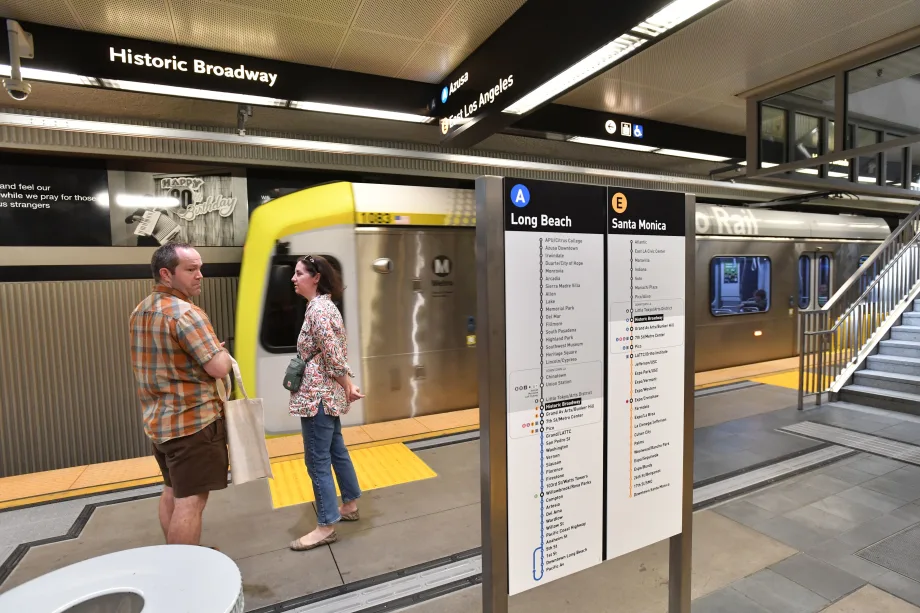
The D Line extension is one of the highest-priority transit projects in Metro’s portfolio and a historic milestone for Los Angeles public transportation.
LA Metro
LA Metro officials announced it will open Section 1 of the D Line Subway Extension Project on May 8.
The 3.92-mile addition will soon take riders west beyond its current Wilshire and Western station in Koreatown, continuing under Wilshire Boulevard through neighborhoods and communities including Hancock Park, Windsor Square, the Fairfax District, and Carthay Circle into Beverly Hills. The three new underground stations will be at Wilshire/La Brea, Wilshire/Fairfax, and Wilshire/La Cienega.
LA Metro’s D Line Extension
The D Line extension is one of the highest-priority transit projects in Metro’s portfolio and a historic milestone for Los Angeles public transportation. This is yet another one of the completed projects in Metro’s Twenty-Eight by ’28 initiative, and part of a comprehensive plan to enhance the region’s transit infrastructure in time for the 2028 Olympic and Paralympic Games.
With this opening, Metro customers will gain easy rail access to a wide array of historic locations, cultural institutions, shopping destinations, dining favorites, and more, said LA Metro officials.
Wilshire/La Brea is home to the western edge of Koreatown and Hancock Park, providing access to entertainment and cultural institutions, including the Korean Cultural Center, Marciano Art Foundation and Ebell Theater.
Wilshire/Fairfax is home to the Miracle Mile and “Museum Row” — a culturally diverse corridor that includes The Los Angeles County Museum of Art (LACMA), The Motion Picture Academy Museum, The Petersen Automotive Museum, Craft Contemporary, and the La Brea Tar Pits. It also is a conduit to two iconic shopping and entertainment destinations: The Original Farmers Market and The Grove.
Wilshire/La Cienega is the entry toBeverly Hills and “Restaurant Row,” which features upscale, diverse and iconic restaurants including the original Lawry’s The Prime Rib as well as the Beverly Center shopping destination.
These new stations will transform the way many riders can experience the Metro system, providing a seamless, single-seat ride from Union Station in Downtown Los Angeles to La Cienega in Beverly Hills is around 20 minutes with no transfers required.
What's to Come
All stations will provide multimodal access, including pedestrian lights, plaza level lighting cell phone service, and bicycle hubs.
“Angelenos and visitors alike will love the extended service from Downtown Los Angeles to Beverly Hills, delivering greater access to the iconic and culturally diverse communities, institutions and destinations that define the deep history along Wilshire Boulevard,” said Metro CEO Stephanie Wiggins. “The stations are filled with beautiful artwork making the journey to one’s destination an experience in itself. I can’t wait for everyone to enjoy and discover the vibrance of mid-Wilshire without the traffic.”
Section 1 of the D Line extension was funded primarily by Metro’s 2008 Measure R transportation sales taxes. Local sales tax funding also secured federal matching funds including $1.25 billion FFGA, $66.4 million of supplemental New Starts, and $749.3 million loan from TIFIA in May 2014.
More Rail
Amtrak, CN Reach Agreements to Strengthen Passenger Rail Service, Safety
The agreement resolves a more than decade-long proceeding before the Surface Transportation Board concerning the terms and conditions for Amtrak services, such as the City of New Orleans, Illini/Saluki, and Wolverine.
Read More →
New York MTA Advances Final Contract for Second Avenue Subway Expansion
Contract Four is the largest in the Second Avenue Subway Phase 2 project and includes construction of station infrastructure, tracks, and signals for the subway expansion, MTA officials said. Work on Contract Four will begin in 2027.
Read More →
San Diego MTS Breaks Monthly Trolley Ridership Record
Agency officials said July’s ridership indicates MTS’s continued recovery from the pandemic.
Read More →
Report Examines NJ TRANSIT Reliability, Funding Challenges
The Garden State Initiative analysis examines the roles of Amtrak infrastructure, fleet management, and agency operations while recommending a more performance-based approach to improving reliability.
Read More →
Stadler, CapMetro Sign Long-Term Rail Fleet Support Agreement
Beginning in 2027, Stadler will provide on-site technical expertise, spare parts support, training, and obsolescence management to help extend the reliability and longevity of CapMetro’s GTW fleet.
Read More →
Biz Briefs: Alstom Lands Canadian Contract, LYT to Supply California TSP, and More
In METRO's latest installment, we take a look at recent news from Complete Coach Works, Beep, FlixBus, and more partnerships making headlines across the transportation sector.
Read More →
CATS Gold Line Marks 5 Years of Service, 2.8M Passenger Trips
With a six-mile expansion planned, the Charlotte streetcar is positioned to connect more neighborhoods and major transit hubs across the region.
Read More →
Why Simulating Pedestrian Movement Has Become Essential for Modern Rail Stations
Pedestrian microsimulation is helping rail planners identify bottlenecks, test station designs, and prepare complex transit hubs for growing passenger volumes.
Read More →
Amtrak Begins Major Construction at New York’s Sunnyside Yard
The new maintenance facility will support Amtrak’s Airo trainsets while improving maintenance efficiency and turnaround times in New York.
Read More →
Chicago Leaders Unveil Plans for O’Hare Airport Express Train
The privately developed project would offer a 15-minute trip between downtown and O’Hare’s Terminal 2, with trains operating every 15 minutes on a dedicated track. The service would use battery-electric trains and three existing freight rail rights-of-way.
Read More →