



LA Metro Unveils LAX Transit Center, Advancing Vision for Olympic-Ready Transit Network
The opening represents the eighth completed project under Metro’s “Twenty-Eight by ’28” initiative — a strategic capital program aimed at modernizing transit infrastructure ahead of the 2028 Olympic and Paralympic Games.

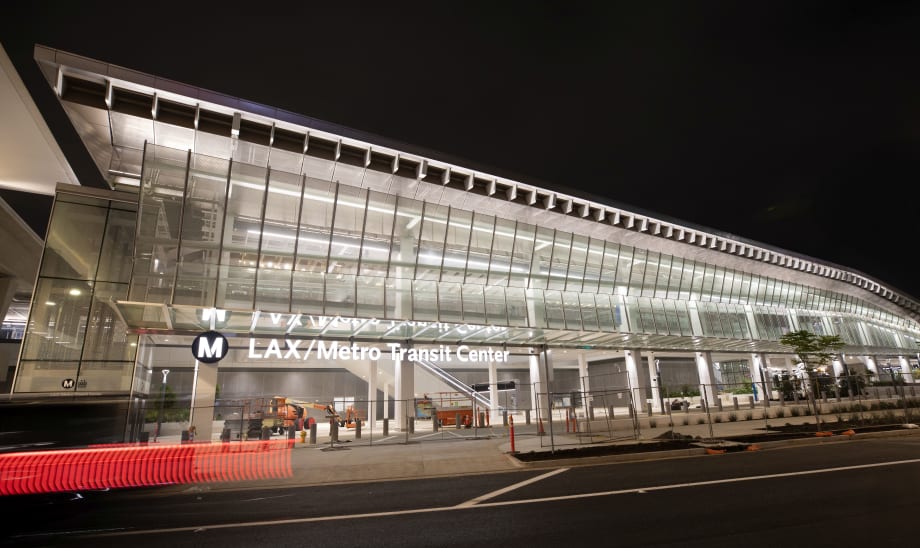
The LAX/Metro Transit Center Station features sweeping open-air canopies, intuitive wayfinding, and a design focused on passenger flow and accessibility.
Photo: LA Metro
The Los Angeles County Metropolitan Transportation Authority (Metro) officially opened the LAX/Metro Transit Center Station with a ribbon-cutting ceremony, marking a transformative step in the region’s efforts to expand sustainable, multimodal transit access to Los Angeles International Airport (LAX).
The opening not only fulfills a long-awaited promise to connect Angelenos directly to the airport by rail but also represents the eighth completed project under Metro’s “Twenty-Eight by ’28” initiative — a strategic capital program aimed at modernizing transit infrastructure ahead of the 2028 Olympic and Paralympic Games.
A New Gateway to LAX and Beyond
The state-of-the-art facility will connect Metro’s C and K light rail lines with six Metro bus lines, eight municipal bus operators, and the Los Angeles World Airports (LAWA) shuttle service.
Metro officials said that future connectivity will be enhanced with the planned opening of LAWA’s Automated People Mover (APM) in 2026, creating a seamless rail-to-terminal experience for millions of travelers, workers, and visitors.
Metro CEO Stephanie Wiggins emphasized the long-standing demand for direct rail service to the airport.
“For more than half a century, Angelenos have been dreaming about a rail connection to LAX airport — and that day has finally come,” she said. “Our LAX/Metro Transit Center Station not only enhances the travel experience for millions of visitors to Los Angeles but also serves as a key piece of our ongoing efforts to build a more sustainable and efficient transportation network for our city.”
Design, Accessibility, and Sustainability at the Forefront
The LAX/Metro Transit Center Station features sweeping open-air canopies, intuitive wayfinding, and a design focused on passenger flow and accessibility.
As Metro’s widest light rail platform, the station spans over 1,100 feet and includes amenities such as a dedicated bus plaza, secure bike facilities, and a customer service center. ADA-accessible design elements ensure inclusivity, with space for bicycles and strollers across all transit modes.
The agency said that with 24/7 security monitoring and infrastructure designed for climate resilience, the facility exemplifies Metro’s commitment to environmentally responsible transit development. Energy-efficient lighting and drought-tolerant landscaping reflect ongoing efforts to build green infrastructure across the region.
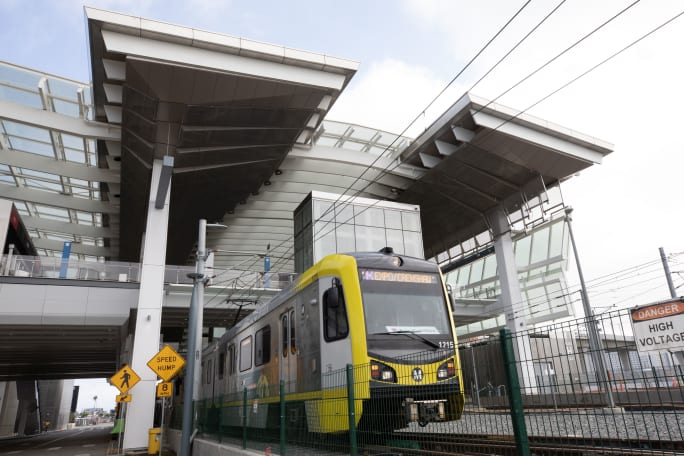
The state-of-the-art facility will connect Metro’s C and K light rail lines with six Metro bus lines, eight municipal bus operators, and the Los Angeles World Airports shuttle service.
Photo: LA Metro
Critical Connections for Workers and Events
The new station is expected to play a central role in the regional movement of athletes, spectators, and airport-area employees during upcoming international events, including FIFA World Cup 26, Super Bowl LXI, and the 2028 Games.
“The opening of the LAX/Metro Transit Center is a major step forward in how we prepare Los Angeles to welcome the world,” said LA Mayor Karen Bass. “This is about more than bringing people to and from the airport — it’s about building a more connected, reliable, and climate-conscious city for Angelenos and the millions who will visit in the years ahead.”
While the People Mover is set to open in 2026, LAWA will provide high-frequency shuttle service between the new transit center and LAX terminals in the interim, with service every 10 minutes aligned with Metro rail and bus schedules.
Once completed, the APM will offer six stops, including three inside the terminal area and others connecting to the economy parking and ConRAC facility directly adjacent to the transit center.
More Rail

New York MTA Advances Final Contract for Second Avenue Subway Expansion
Contract Four is the largest in the Second Avenue Subway Phase 2 project and includes construction of station infrastructure, tracks, and signals for the subway expansion, MTA officials said. Work on Contract Four will begin in 2027.
Read More →
San Diego MTS Breaks Monthly Trolley Ridership Record
Agency officials said July’s ridership indicates MTS’s continued recovery from the pandemic.
Read More →
Report Examines NJ TRANSIT Reliability, Funding Challenges
The Garden State Initiative analysis examines the roles of Amtrak infrastructure, fleet management, and agency operations while recommending a more performance-based approach to improving reliability.
Read More →
Stadler, CapMetro Sign Long-Term Rail Fleet Support Agreement
Beginning in 2027, Stadler will provide on-site technical expertise, spare parts support, training, and obsolescence management to help extend the reliability and longevity of CapMetro’s GTW fleet.
Read More →
Biz Briefs: Alstom Lands Canadian Contract, LYT to Supply California TSP, and More
In METRO's latest installment, we take a look at recent news from Complete Coach Works, Beep, FlixBus, and more partnerships making headlines across the transportation sector.
Read More →
CATS Gold Line Marks 5 Years of Service, 2.8M Passenger Trips
With a six-mile expansion planned, the Charlotte streetcar is positioned to connect more neighborhoods and major transit hubs across the region.
Read More →
Why Simulating Pedestrian Movement Has Become Essential for Modern Rail Stations
Pedestrian microsimulation is helping rail planners identify bottlenecks, test station designs, and prepare complex transit hubs for growing passenger volumes.
Read More →
Amtrak Begins Major Construction at New York’s Sunnyside Yard
The new maintenance facility will support Amtrak’s Airo trainsets while improving maintenance efficiency and turnaround times in New York.
Read More →
Chicago Leaders Unveil Plans for O’Hare Airport Express Train
The privately developed project would offer a 15-minute trip between downtown and O’Hare’s Terminal 2, with trains operating every 15 minutes on a dedicated track. The service would use battery-electric trains and three existing freight rail rights-of-way.
Read More →
OCTA Maps Out 30-Year Strategy to Protect Coastal Rail Corridor
The draft feasibility report identifies strategies to protect the coastal rail line for decades as the agency continues near-term stabilization and sand placement efforts.
Read More →