



LADOT announces a new digital playbook for mobility
All new modes of transport are aimed at tackling congestion, enabling economic development, driving racial and socioeconomic equality, and saving lives.


While LADOT has built significant capability and knowledge in many key areas, it requires specific expertise to collaborate with product companies to design, deploy, and actively manage its Mobility 2.0 system.
Alex Roman
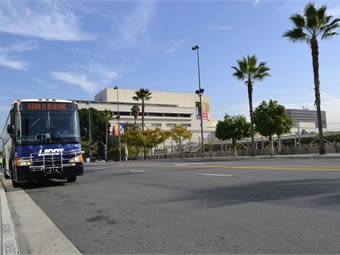
While LADOT has built significant capability and knowledge in many key areas, it requires specific expertise to collaborate with product companies to design, deploy, and actively manage its Mobility 2.0 system.
Alex Roman
The Los Angeles Department of Transportation (LADOT) announced the immediate availability of the Urban Mobility in a Digital Age Strategic Implementation Plan (SIP), and the appointment of Ellis & Associates, and its affiliated partners CityFi, CCgroup, and Lantern Consulting, as the LADOT product manager to reposition LADOT as an active partner in the arrival of autonomous vehicles and ongoing explosion of technology in transportation.
Los Angeles is in the midst of a mobility revolution that will continue its global reputation of how city transportation should evolve. Guided by the city’s Urban Mobility in a Digital Age strategy, plans are focused on unprecedented investment in new transportation choices and supporting technologies. This includes the development and deployment of actively managed electric, shared, and autonomous mobility options, including concepts such as dockless bike sharing and air taxis. All new modes of transport are aimed at tackling congestion, enabling economic development, driving racial and socioeconomic equality, and saving lives.
The Strategic Implementation Plan is a set of products and services that LADOT deems necessary to ensure that as autonomous fleets arrive in the sky and on the ground, they are first and foremost safe. Just as LADOT created one of the largest most sophisticated traffic management centers for the 1984 Summer Olympic Games, the Strategic Implementation Plan aims to set the city on a course to manage the streets of the future in 2028.
“Los Angeles is a center for innovation and invention that is defining the future of transportation,” said Mayor Eric Garcetti. “New technologies will enable us to build a transit network that serves each of our communities and strengthens our economy — and this plan will help steer our city toward greater mobility and prosperity for all Angelenos.”
"In the fast-changing transportation industry, it is absolutely vital for public agencies to keep user experience front-and-center. The technology may change, but our commitment to moving people safely, reliably, and equitably does not,” said Los Angeles Transportation Committee Chair and Councilmember Mike Bonin. “LADOT's work builds a solid foundation for inviting technology providers to come to Los Angeles and serve our communities with new mobility options."
The product manager is tasked with overseeing all of these efforts and identifying and creating new partnerships between LADOT and public, private, academic, and nonprofit organizations. While LADOT has built significant capability and knowledge in many key areas, it requires specific expertise to collaborate with product companies to design, deploy, and actively manage its Mobility 2.0 system. LADOT selected Ellis & Associates to fulfill this role due to its proven experience in product design, system design, product engineering, and its understanding of connected and autonomous vehicles as well as the wider ecosystem.
"The publication of the SIP, the release of the Mobility Data Specification, and the appointment of Ellis & Associates and its partners sends a very clear message to global technology companies that the city is thinking about the future in a boldly different way,” said LADOT GM Seleta Reynolds. “LADOT has led the world in identifying and implementing innovative technologies, services, and approaches – the world’s first connected intersections, advanced mobility hubs, and a unique Mobility Bill of Rights. To maintain this momentum and drive social equity, we must create a new digital playbook.”
To view the SIP, click here.
More New Mobility

From Hardware to Digital Partner: Luminator Charts Its Next Chapter
CEO Magnus Friberg discusses Luminator’s shift toward becoming a digital partner, the growing importance of software and interoperability, and how AI can help agencies improve operations and passenger experience.
Read More →
Biz Briefs: Alstom Lands Canadian Contract, LYT to Supply California TSP, and More
In METRO's latest installment, we take a look at recent news from Complete Coach Works, Beep, FlixBus, and more partnerships making headlines across the transportation sector.
Read More →
CharterUP’s Armir Harris on Technology, AI, and the Future of Group Mobility
In a recent episode of METROspectives, CharterUP Founder/CEO Armir Harris discussed the company’s evolution from an online charter bus marketplace into a technology platform supporting public- and private-sector mobility and much more.
Read More →
Jacksonville’s NAVI Project Charts a New Course for Autonomous Public Transportation
Through its NAVI program, JTA is showing how autonomous vehicles, intelligent infrastructure, and coordinated operations can work together to deliver everyday public transportation.
Read More →
Biz Briefs: Luminator Marks Milestone and More
From manufacturers and suppliers to transit agencies and motorcoach operators, these updates offer a snapshot of the projects, partnerships and business moves driving the industry forward.
Read More →
New Tricks for Old Bureaucracies: Joshua Schank on Making Transit Innovation Stick
Former LA Metro Chief Innovation Officer Joshua Schank discusses why good ideas aren't enough, how transit agencies can overcome resistance to change, and why today's challenges demand more innovation.
Read More →
How DART's GoPass Is Redefining Regional Mobility
Serving 14 transit agencies, GoPass simplifies multimodal travel by allowing riders to plan, pay for, and manage an entire trip through one app.
Read More →
Biz Briefs: OCTA Taps Clean Energy for Hydrogen Station, Stadler to Supply Via Rail Vehicles, and More
From manufacturers and suppliers to transit agencies and motorcoach operators, these updates offer a snapshot of the projects, partnerships and business moves driving the industry forward.
Read More →CharterUP Expands Into New Mobility and Autonomous Transportation
Vice President of New Mobility Stephen Joos discusses how CharterUP is leveraging its nationwide transportation network, technology platform, and autonomous vehicle partnerships to expand into workforce mobility, campus shuttles, and transit solutions.
Read More →
METRO Magazine Announces 2026 Innovative Solutions Awards Winners
Projects Recognized for Advancing Mobility Through Technology, Accessibility, Workforce Innovation, and Operational Excellence
Read More →