



Living Cities works to generate $150M for TOD
Participants will coordinate their investments, aligning them with federal grants, such as the U.S. Department of Housing and Urban Development's (HUD) Sustainable Communities Planning Grant Program, and invite others to invest alongside them.

A working group of major philanthropic and financial institutions, Investors for Sustainable Communities, has announced an effort to coordinate up to $150 million in investments to build stronger communities.
Investors for Sustainable Communities is sponsored by Living Cities, a consortium of 22 of the world's largest foundations and financial institutions working to revitalize America's cities. Participants in Investors for Sustainable Communities include the Ford, Surdna and Rockefeller foundations, regional funders such as the McKnight Foundation, and financial institutions such as Citi and Morgan Stanley.
The working group's three-part approach, known as equitable Transit-Oriented Development (equitable TOD), seeks to develop healthier, more affordable neighborhoods that offer convenient and safe access to jobs, stores, schools and services; expand transportation options connecting these neighborhoods to the regional economy (e.g. job centers); and ensure that all people — regardless of income, race, age, ability and similar considerations — can participate in development decisions and share in the benefits.
From 2008 through 2010, participants in Investors for Sustainable Communities invested over $100 million in equitable TOD. Going forward, participants will coordinate their investments, aligning them as appropriate with federal grants such as the U.S. Department of Housing and Urban Development's (HUD) Sustainable Communities Planning Grant Program, and invite others to invest alongside them — leveraging more than $150 million over the next three years.
The working group is particularly interested in the equity dimension of TOD: ensuring that all people can participate in development decisions and share in the benefits and opportunities TOD creates. This means, for example: expanding housing options for working families and seniors near train stations and bus routes; using transit to revitalize distressed neighborhoods while taking measures to prevent low-income residents from being priced out; connecting local residents and businesses to the employment and contracting opportunities created by these investments; and intentionally engaging disadvantaged communities in decision-making to ensure that development meets their needs.
The name Investors for Sustainable Communities signals the working group's intent to reinforce the federal policy framework emerging from the recently established Interagency Partnership for Sustainable Communities. The Partnership, launched in 2009, consists of several federal agencies including HUD, the Department of Transportation and the Environmental Protection Agency.
Partnership agencies are working to align their rules and funding programs so that efforts in housing, transportation, environmental infrastructure and economic development reinforce and leverage one another. Many local and state governments are following suit. Within weeks, HUD, through its Office of Sustainable Housing and Communities, is expected to announce grants tallying over $200 million toward the Partnership's goals.
The working group is taking measures to promote the successful adoption of the Sustainable Communities framework at the regional, state and local levels. In early 2011, it will sponsor a "Sustainable Communities Boot Camp" tailored to the needs of regions that will receive grant awards from HUD. The Boot Camp will help arm practitioners with the approaches and strategies they need to build systems that advance economic prosperity, equity and inclusion and environmental stewardship simultaneously.
Investors for Sustainable Communities is one of several efforts under way or in development at Living Cities that seeks to address issues affecting people, places and economic opportunity, such as access to education, housing, health care, transit and jobs, simultaneously. On Oct. 28, for example, Living Cities will announce the five urban regions selected to participate in the Integration Initiative, which will provide up to $80 million in grants, loans and Program-Related Investments (PRIs) to support efforts to create opportunities for low income people.
More Technology
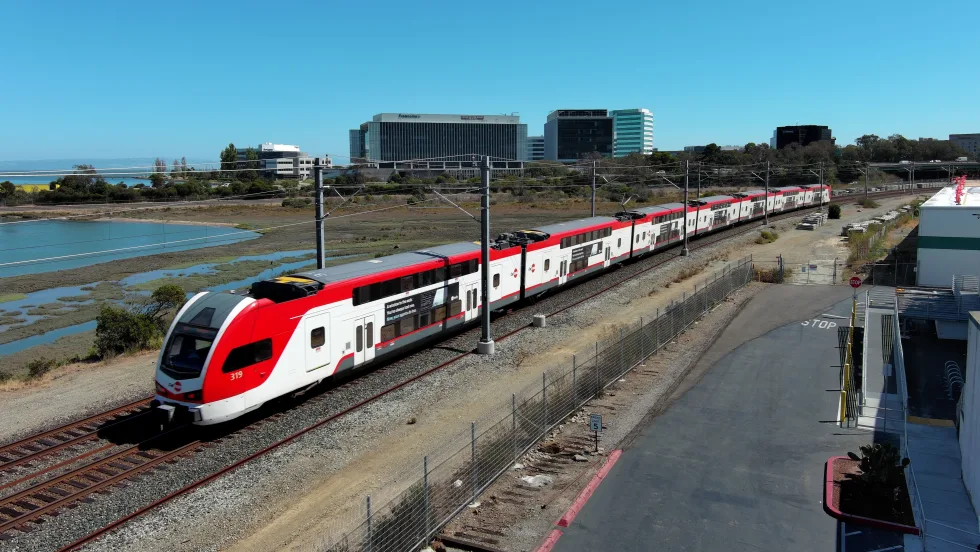
Caltrain’s Electrification Drives a New Era of Ridership Growth
The railroad’s shift to electric service has brought more frequent trains, stronger customer satisfaction, and increased ridership, earning it APTA’s Outstanding Public Transportation System award.
Read More →
Video Surveillance in Public Transit: What Riders Really Think
As video surveillance gains public acceptance, new research from Axis Communications reveals what transit riders expect from agencies when it comes to safety, privacy, and AI.
Read More →
New York MTA Launches Historic $1.9B Signal, Track Modernization Project
Funded in part by congestion pricing revenue, the project will replace nearly century-old signals along the A and C lines in Brooklyn and Queens.
Read More →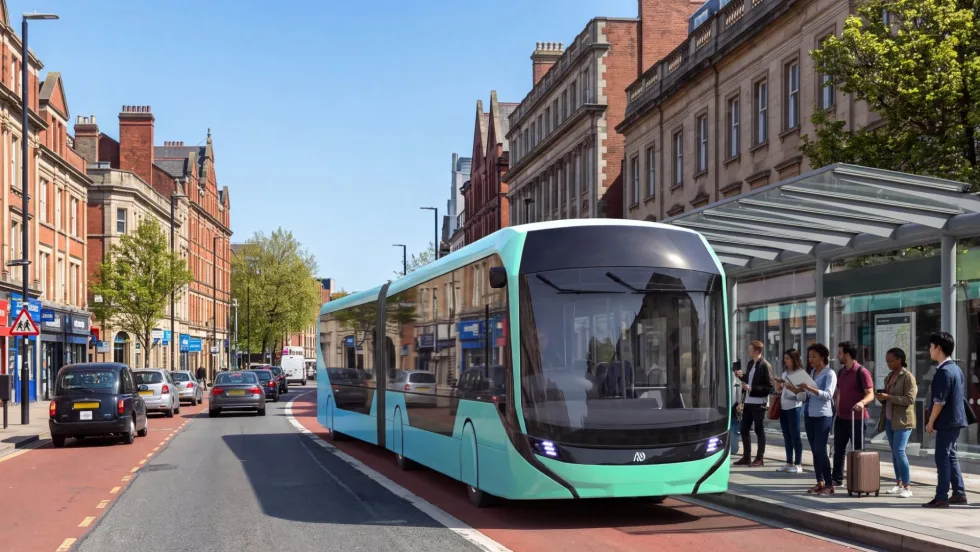
Biz Briefs: New Electric Offering from Alexander Dennis/Volvo, Transdev in Boston, and More
In METRO's latest installment, we also take a look at recent news from STV, WSP, Prevost, and more partnerships making headlines across the transportation sector.
Read More →
Roman Cornell on ABC Companies’ Evolution and the Future of Passenger Transportation
The company’s CEO discusses carrying forward a third-generation family legacy, ABC’s continued evolution in passenger transportation, support for increasingly complex fleets, and how technology and continued investment could help operators improve uptime.
Read More →
ETA CEO John Maglio on Transit Technology, Innovation, and Building Agency Trust
ETA founder and CEO John Maglio explores the evolution of transit technology, the importance of reliable systems, and how stronger partnerships can help agencies improve operations and the passenger experience.
Read More →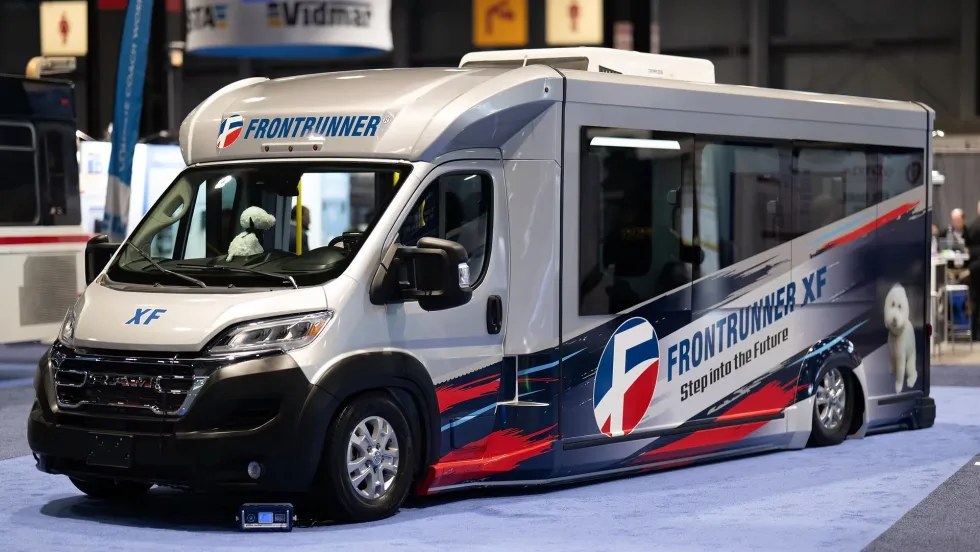
Frontrunner Bus Group Introduces XF Low-Floor Bus with Enhanced Accessibility
The new mid-sized bus features a full flat-floor design, eight-inch curbside step-in height, and zero-entry rear ramp to improve passenger access and operational flexibility.
Read More →
Building a Flexible Path to Transit Electrification with BAE's John Hroncich
John Hroncich discusses BAE Systems’ modular and scalable approach, lessons learned from decades of real-world operations, and how agencies can identify electrification strategies that fit their fleets.
Read More →
Scenes from APTA TRANSform & EXPO 2026
Transit leaders, manufacturers, and industry professionals gathered in Chicago to explore new technologies, share ideas, and discuss the future of public transportation.
Read More →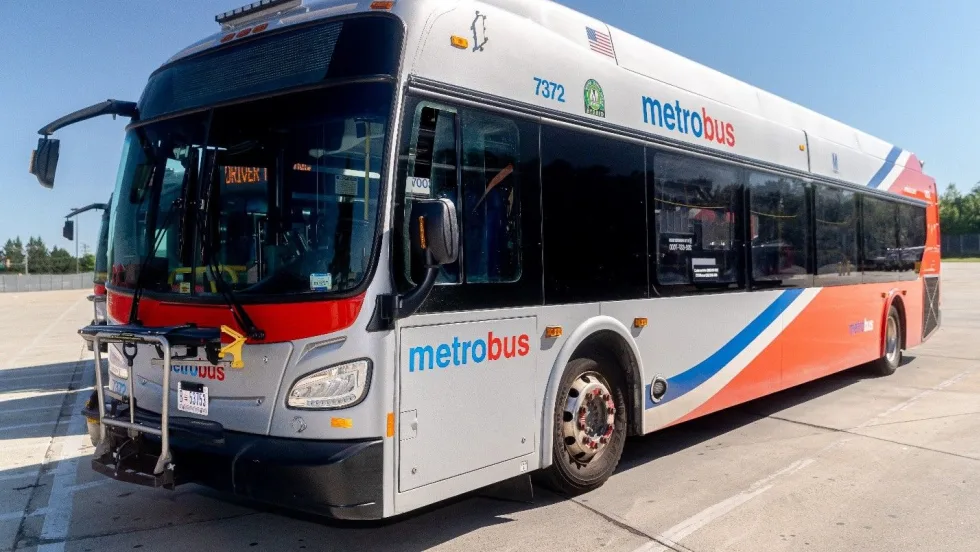
Biz Briefs: New Flyer Secures Additional 100-Bus Order from WMATA and More
In METRO's latest installment, we also take a look at recent news from Masabi, MCI, Samsara, and more partnerships making headlines across the transportation sector.
Read More →