




RELATED: HART, May Mobility demo driverless vehicle in downtown Tampa
May Mobility to launch driverless shuttle in downtown Detroit
Partnership with local real estate firm will immediately embed self-driving shuttles into the daily fabric of downtown.
June 26, 2018

May Mobility to launch driverless shuttle in downtown Detroit. Photo: May Mobility
3 min to read
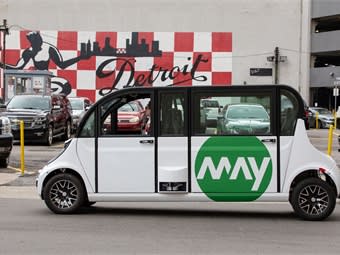
May Mobility to launch driverless shuttle in downtown Detroit. Photo: May Mobility
May Mobility, an Ann Arbor, Mich., startup building self-driving vehicles, in partnership with Bedrock, a full-service real estate firm, announced the first commercial deployment of independent autonomous vehicles on public streets in any urban core in America. The partnership will immediately embed self-driving shuttles into the daily fabric of downtown Detroit, and begin transporting passengers on June 27, 2018.
Under the partnership, May Mobility will provide a fleet of electric vehicles to Bedrock. These vehicles will transport Quicken Loans and its Family of Companies' close to 18,000 employees between their offices, parking sites, events, and other downtown destinations, beginning with a one-mile loop connecting the a local parking garage to sites in the heart of downtown Detroit.
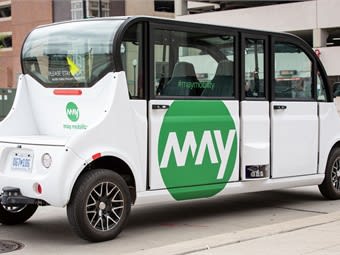
As part of the expansion, May Mobility has opened its first office outside of Ann Arbor at a new facility in Detroit. Photo: May Mobility
May Mobility maps, tests, and adds environmental sensors to routes block-by-block, which delivers a unique approach to autonomous transportation, according to the company. This helps solve parking, traffic and land management issues for municipalities, developers, and business customers across the U.S.
The vehicles are deployed among other cars, cyclists, pedestrians and more, making self-driving vehicles a normal part of everyday life. As a result, May Mobility gathers invaluable data from vehicles, riders, business and community partners, which is crucial in helping expand services to additional roads and highways in the future.
"Our technology allows us to provide fully-managed transportation services that outperform traditional services on wait time, rider satisfaction, and other metrics," said Edwin Olson, CEO and co-founder of May Mobility.
As part of the expansion, May Mobility has opened its first office outside of Ann Arbor at a new facility in Detroit. From this location, May Mobility will provide full-time operational support for the Bedrock Bricktown route, store and charge the shuttles, and coordinate future route expansion.
May Mobility's shuttle platform highlights three key focus areas:
Self-driven: Builds and ships safe, reliable, and enjoyable autonomous driving capabilities that riders love. This service is offered initially in fleets of May Mobility's six-seater electric shuttle for short distance trips, which will grow into more offerings of other fleets and service models in response to customer needs.
Community-driven: Provides the "human touch" by creating a local presence through a hands on operations support team based in local offices. May Mobility starts by designing a specific route in response to a customer's need, and continuing throughout the partnership for maintenance, upgrades, and more.
Data-driven: Offers detailed analytics and reporting to track vehicles, optimize fleet usage, and empower customers to make smarter decisions about transportation.
This approach — partnering with developers, urban planners and municipalities to understand their needs and design solutions. At launch, May Mobility will have attendants in vehicles to help orient first-time riders and to monitor the vehicles. The company will offer on-demand services and expand its suite of vehicles and services in 2019.
More New Mobility
ENC Unveils ZAVIR Medium-Duty Electric Shuttle
The new ZAVIR brand targets shuttle and paratransit operations with battery-electric and range-extended electric vehicle options.
Read More →
Public Transit Conference Returning to GFX in 2027, Call for Papers Now Open
The Call for Papers is now open, allowing transit agency professionals and industry experts to help shape the PTC educational program by submitting session ideas for consideration.
Read More →
Everett Transit, Community Transit Outline Consolidation Agreement
The proposed agreement calls for a 50% increase in bus service in Everett, a new microtransit zone, continued paratransit service, and the transfer of Everett Transit operations to Community Transit.
Read More →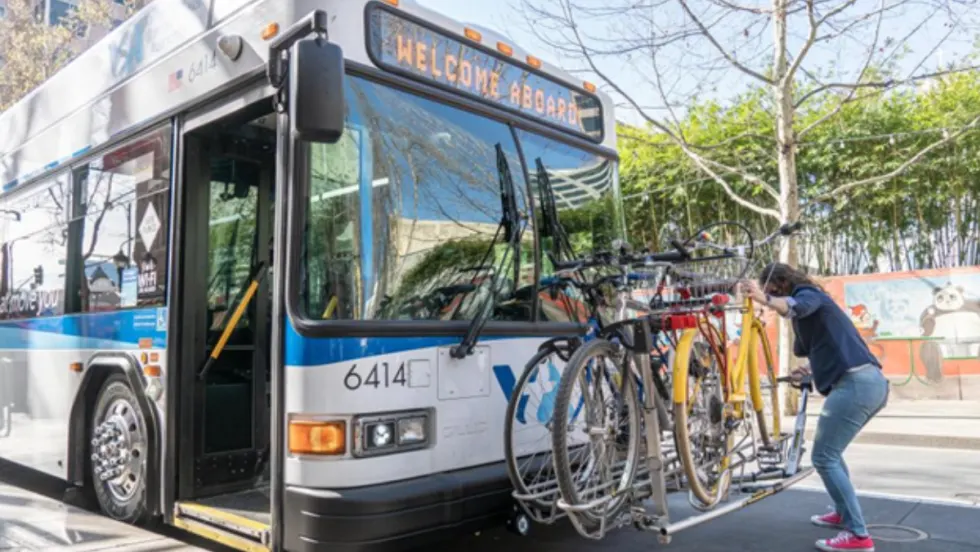
What Multimodal Data Can Tell Transit Agencies About Rider Demand
See how bike-on-bus data is giving transit agencies new insight into rider demand, capacity constraints, and gaps in first- and last-mile connections.
Read More →
From Hardware to Digital Partner: Luminator Charts Its Next Chapter
CEO Magnus Friberg discusses Luminator’s shift toward becoming a digital partner, the growing importance of software and interoperability, and how AI can help agencies improve operations and passenger experience.
Read More →
Biz Briefs: Alstom Lands Canadian Contract, LYT to Supply California TSP, and More
In METRO's latest installment, we take a look at recent news from Complete Coach Works, Beep, FlixBus, and more partnerships making headlines across the transportation sector.
Read More →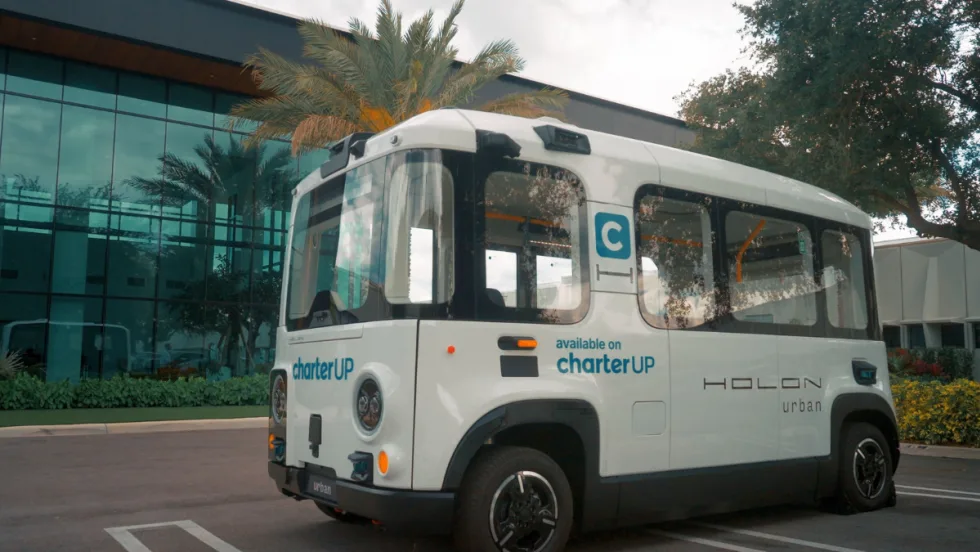
CharterUP’s Armir Harris on Technology, AI, and the Future of Group Mobility
In a recent episode of METROspectives, CharterUP Founder/CEO Armir Harris discussed the company’s evolution from an online charter bus marketplace into a technology platform supporting public- and private-sector mobility and much more.
Read More →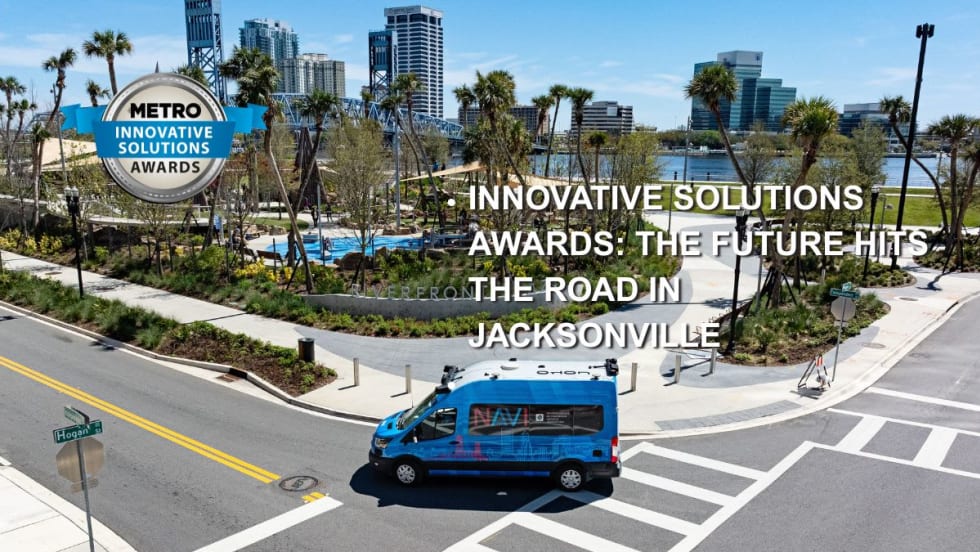
Jacksonville’s NAVI Project Charts a New Course for Autonomous Public Transportation
Through its NAVI program, JTA is showing how autonomous vehicles, intelligent infrastructure, and coordinated operations can work together to deliver everyday public transportation.
Read More →
Biz Briefs: Luminator Marks Milestone and More
From manufacturers and suppliers to transit agencies and motorcoach operators, these updates offer a snapshot of the projects, partnerships and business moves driving the industry forward.
Read More →
New Tricks for Old Bureaucracies: Joshua Schank on Making Transit Innovation Stick
Former LA Metro Chief Innovation Officer Joshua Schank discusses why good ideas aren't enough, how transit agencies can overcome resistance to change, and why today's challenges demand more innovation.
Read More →