



MBTA, WMATA Unveil Major Infrastructure Upgrades
Both projects reflect a growing effort to modernize transit systems for enhanced accessibility, improved safety, and long-term resilience.

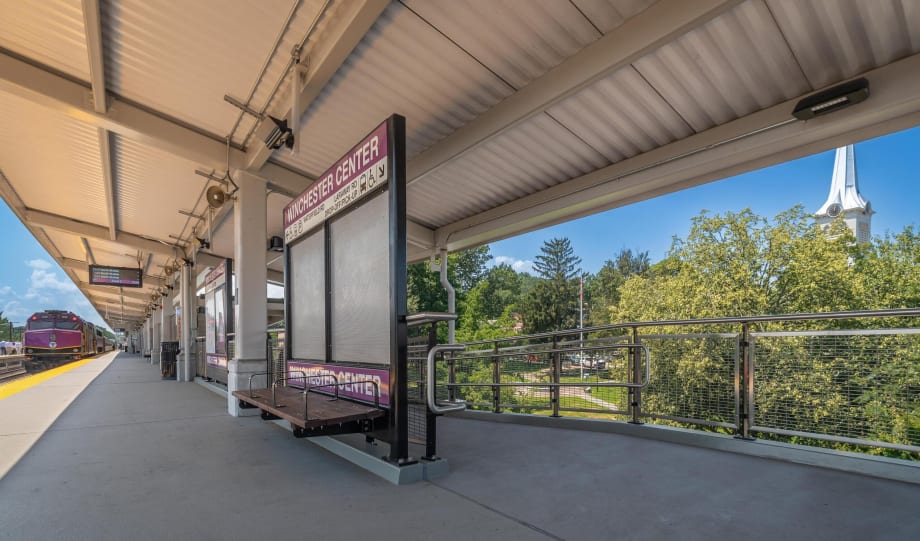
Winchester Center Station was completely inaccessible and had not seen major repairs since the 1950s. The station closed for repairs in 2021, and construction began in 2022.
Photo: The T\CEX
Boston’s MBTA and the Washington Metropolitan Area Transit Authority (WMATA) both marked milestones in infrastructure modernization with the openings of the Winchester Center Station and Bladensburg Bus Garage, respectively.
Both projects reflect a growing effort to modernize transit systems for enhanced accessibility, improved safety, and long-term resilience.
Adding Accessibility in Boston
Winchester Center Station was completely inaccessible and had not seen major repairs since the 1950s. The station closed for repairs in 2021, and construction began in 2022. The station has been partially open since September 2024.
Key station enhancements include:
Reconstructed two ramps and three new elevators to provide two fully accessible paths of travel to each platform.
A fully accessible, raised platform to accommodate longer nine-car commuter rail trains.
Upgraded canopies, signs, railings, and lighting for safety and security.
A modernized public information system that broadcasts information both audibly and visually.
Added benches, a bike storage room, and other amenities for comfort and convenience.
Updated walkways, sidewalks, and a parking lot area along Laraway Road.
New generator back-up and full emergency lighting back-up.
Bus Route 134 is anticipated to reestablish a stop at Winchester Station in late August.
“I want to thank the entire MBTA workforce, our contractors, and our state and local elected officials for their commitment to delivering a station that is modern, safe, state-of-the-art, and fully accessible to all riders,” said MBTA GM/CEO Phillip Eng. “This is another important step forward in building a more inclusive transit system — one station at a time.”
WMATA’s New Bus Garage
Meanwhile, WMATA’s multi-phase Bladensburg Bus Garage project consolidates three outdated buildings into one, state-of-the-art, sustainable operations and maintenance hub.
The garage boasts 31 maintenance bays, a body shop and paint booth, an employee wellness center, dispatch and operating support offices, a new compressed natural gas fuel yard, and four bus fueling lanes, as well as enhanced security, lighting, and landscaping around the facility’s perimeter.
The new facility will bring widespread benefits: customers will enjoy more reliable bus service, nearly 500 employees will gain a safer and more modern workplace, and WMATA will experience improved operational efficiency.
The facility is designed to achieve LEED Platinum certification, featuring solar panels and a rainwater harvesting system for bus washing.
“Our original Bladensburg facility was built in 1962 and no longer reflected Metro’s modern transit system,” said WMATA GM/CEO Randy Clarke. “We are so proud to transform one of Metro’s oldest assets, which services bus routes in the District and parts of Maryland, into one of our most advanced facilities.”
Additional Features Coming Soon
Construction of a new multi-level parking structure, which will accommodate 292 buses and feature parking spaces for employees, is scheduled to begin soon.
New, separate entrances for buses and staff, which will help traffic flow through the area, will also be part of the next phase of construction.
“The new Bladensburg Bus Garage stands as a symbol of progress, sustainability, and Metro’s unwavering commitment to service,” said WMATA Board Chair Valerie Santos. “It’s an honor to represent the WMATA Board at today’s ribbon-cutting for a facility that reflects our promise to employees and customers alike — Metro is investing boldly in the future.”
More Management

METRO Opens Submissions for 2026 Motorcoach Awards
Nominations are now being accepted for METRO Magazine’s Operator of the Year and Innovative Operator of the Year awards.
Read More →
New York MTA Advances Final Contract for Second Avenue Subway Expansion
Contract Four is the largest in the Second Avenue Subway Phase 2 project and includes construction of station infrastructure, tracks, and signals for the subway expansion, MTA officials said. Work on Contract Four will begin in 2027.
Read More →
Transit Agencies Highlight Safety Gains at National Summit
Leaders from 15 major transit systems shared crime-reduction results and safety initiatives while discussing the role of continued federal support.
Read More →

NITA Names New Leadership, Expands Reduced-Fare Program at First Board Meeting
The new regional transit authority appointed its first board chair and interim executive director while extending reduced fares across CTA, Metra, and Pace for eligible riders.
Read More →
Beyond the Checklist: A Structured Approach to Transit Maintenance
Reliability-Centered Maintenance helps transit agencies move beyond routine checklists to focus limited resources on the assets and failures that have the greatest impact on safety, reliability, and service.
Read More →
APTA 2026 Nominating Committee Selects Leadership Slate, Names Chair and Vice Chair Nominees
Leadership changes will help shape the association’s priorities and its representation of the transportation industry during the 2026–2027 term.
Read More →
DART Launches Major Security, Fare Enforcement Initiative
The 90-day demonstration will deploy coordinated security teams at five light rail stations while testing controlled access and gathering data to guide future investments.
Read More →
Advancing Fare Collection Through Technology and Innovation
Learn about delivering 1300 gates at 91 stations while managing fare evasion. Explore the large scale deployment, solution customization and real-world results that affect the region. Prepare for deployment in your region now.
Read More →
Game Day in Motion: Moving Millions During the 2026 World Cup
Between packed transit stations and team motorcoaches, see how agencies and operators across North America tackled the transportation demands of the 2026 FIFA World Cup.
Read More →
Surface Transportation Extension Averts Shutdown, Leaves Transit Funding Gap
The stopgap keeps federal transportation programs moving, but missing advance funding could complicate the transit and rail projects agencies are planning next.
Read More →