




RELATED: Tight transit budgets force Metra to rehab railcars
Metra starts next in-house railcar rehab program
The first round of the program, which began in 2010 and cost $115 million, renovated 176 railcars that were manufactured by Amerail (originally Morrison Knudson) and delivered to Metra between 1995 and 1998.
March 21, 2017
Steven Vance_Flickr_206
2 min to read
Steven Vance_Flickr_206
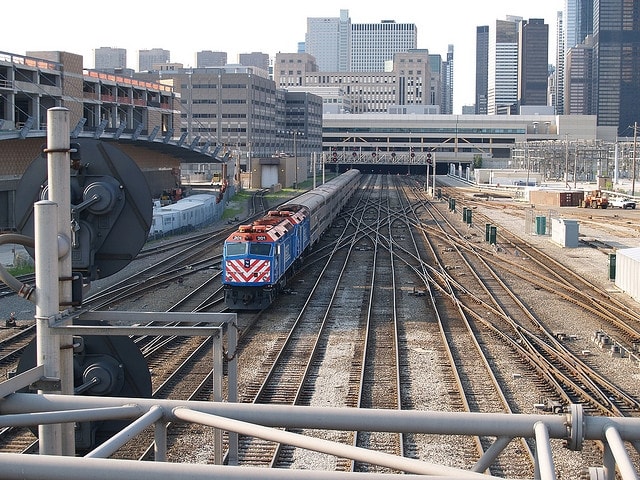
Chicago’s Metra started the next round of its in-house railcar rehabilitation program, where Metra workers with decades of know-how and experience transform old railcars to like-new condition at the agency’s 49th Street Car Shop.
The first round of the program, which began in 2010 and cost $115 million, renovated 176 railcars that were manufactured by Amerail (originally Morrison Knudson) and delivered to Metra between 1995 and 1998. The 176th and final railcar rolled out of the facility earlier this month.
The work now moves to the next round — 302 railcars that were manufactured by Nippon Sharyo and delivered to Metra between 2002 and 2008. The program will be able to rehab about 35 railcars a year until about 2020, when the facility will be expanded and capacity will increase to about 60 railcars annually. The current cost of renovating the Nippon Sharyo railcars is about $700,000 each.
“We are extremely proud of this program and the workers who have made it such a huge success,” said Metra Executive Director/CEO Don Orseno. “Not only does it produce like-new railcars thanks to our highly skilled workers, but we keep jobs and investment right here in the Chicago area. It’s truly a win-win program.”
In the program, each car is gutted and outfitted with new passenger amenities, such as electric outlets to power phones and other small electronics; sensitive-edge outer doors that will retract if they come in contact with a person or object; four new LED signs per car to display station announcements; and new toilets and bathrooms, wheelchair lifts, composite floors, and seats. The upgrades also include overhauled air conditioning systems, upgraded battery chargers used for emergency lighting, and hardware components for the federally mandated Positive Train Control safety system.
The Amerail railcars could be completely stripped and rebuilt in 32 days. But thanks to lessons learned so far and slightly different work, the 60 carmen, electricians, and sheet metal workers assigned to the program will be able to complete each Nippon Sharyo railcar in about 28 days each. The rehabs extend the life of each car by about 12 to 15 years.
In a separate program at Metra’s KYD facility, Metra workers are renovating 41 cars that were built by Budd and delivered in 1974. Between the two programs, Metra expects to renovate about 43 railcars in 2017. Metra also has two separate locomotive programs, one of them in-house, that will renovate about 18 locomotives this year.
More Rail

New York MTA Advances Final Contract for Second Avenue Subway Expansion
Contract Four is the largest in the Second Avenue Subway Phase 2 project and includes construction of station infrastructure, tracks, and signals for the subway expansion, MTA officials said. Work on Contract Four will begin in 2027.
Read More →
San Diego MTS Breaks Monthly Trolley Ridership Record
Agency officials said July’s ridership indicates MTS’s continued recovery from the pandemic.
Read More →
Report Examines NJ TRANSIT Reliability, Funding Challenges
The Garden State Initiative analysis examines the roles of Amtrak infrastructure, fleet management, and agency operations while recommending a more performance-based approach to improving reliability.
Read More →
Stadler, CapMetro Sign Long-Term Rail Fleet Support Agreement
Beginning in 2027, Stadler will provide on-site technical expertise, spare parts support, training, and obsolescence management to help extend the reliability and longevity of CapMetro’s GTW fleet.
Read More →
Biz Briefs: Alstom Lands Canadian Contract, LYT to Supply California TSP, and More
In METRO's latest installment, we take a look at recent news from Complete Coach Works, Beep, FlixBus, and more partnerships making headlines across the transportation sector.
Read More →
CATS Gold Line Marks 5 Years of Service, 2.8M Passenger Trips
With a six-mile expansion planned, the Charlotte streetcar is positioned to connect more neighborhoods and major transit hubs across the region.
Read More →
Why Simulating Pedestrian Movement Has Become Essential for Modern Rail Stations
Pedestrian microsimulation is helping rail planners identify bottlenecks, test station designs, and prepare complex transit hubs for growing passenger volumes.
Read More →
Amtrak Begins Major Construction at New York’s Sunnyside Yard
The new maintenance facility will support Amtrak’s Airo trainsets while improving maintenance efficiency and turnaround times in New York.
Read More →
Chicago Leaders Unveil Plans for O’Hare Airport Express Train
The privately developed project would offer a 15-minute trip between downtown and O’Hare’s Terminal 2, with trains operating every 15 minutes on a dedicated track. The service would use battery-electric trains and three existing freight rail rights-of-way.
Read More →
OCTA Maps Out 30-Year Strategy to Protect Coastal Rail Corridor
The draft feasibility report identifies strategies to protect the coastal rail line for decades as the agency continues near-term stabilization and sand placement efforts.
Read More →